U.S. Boeing Confirms Production and Delivery of 25 F-15 Fighter Jets for Israel
{loadposition bannertop}
{loadposition sidebarpub}
Israel has moved forward with its F-15IA fighter program after a U.S. government contract notice confirmed a multibillion-dollar Boeing award covering up to 50 aircraft. The deal underpins Israeli long-range strike capacity and deepens U.S.-Israel defense ties through the mid-2030s.
On December 29, 2025, a U.S. Department of War contract notice confirmed that Boeing in St. Louis, Missouri received a ceiling $8,577,700,000 award for the F-15 Israel Program. The notice describes a hybrid arrangement combining cost plus fixed fee with firm fixed price and fixed price incentive firm target elements, issued as an undefinitized contract action. The effort covers the design, integration, instrumentation, test, production, and delivery of 25 new F-15IA aircraft for the Israeli Air Force, with an option for 25 additional aircraft. Work is scheduled in St. Louis through December 31, 2035, with $840,000,000 in Foreign Military Sales funds obligated at the time of award.
Follow Army Recognition on Google News at this link
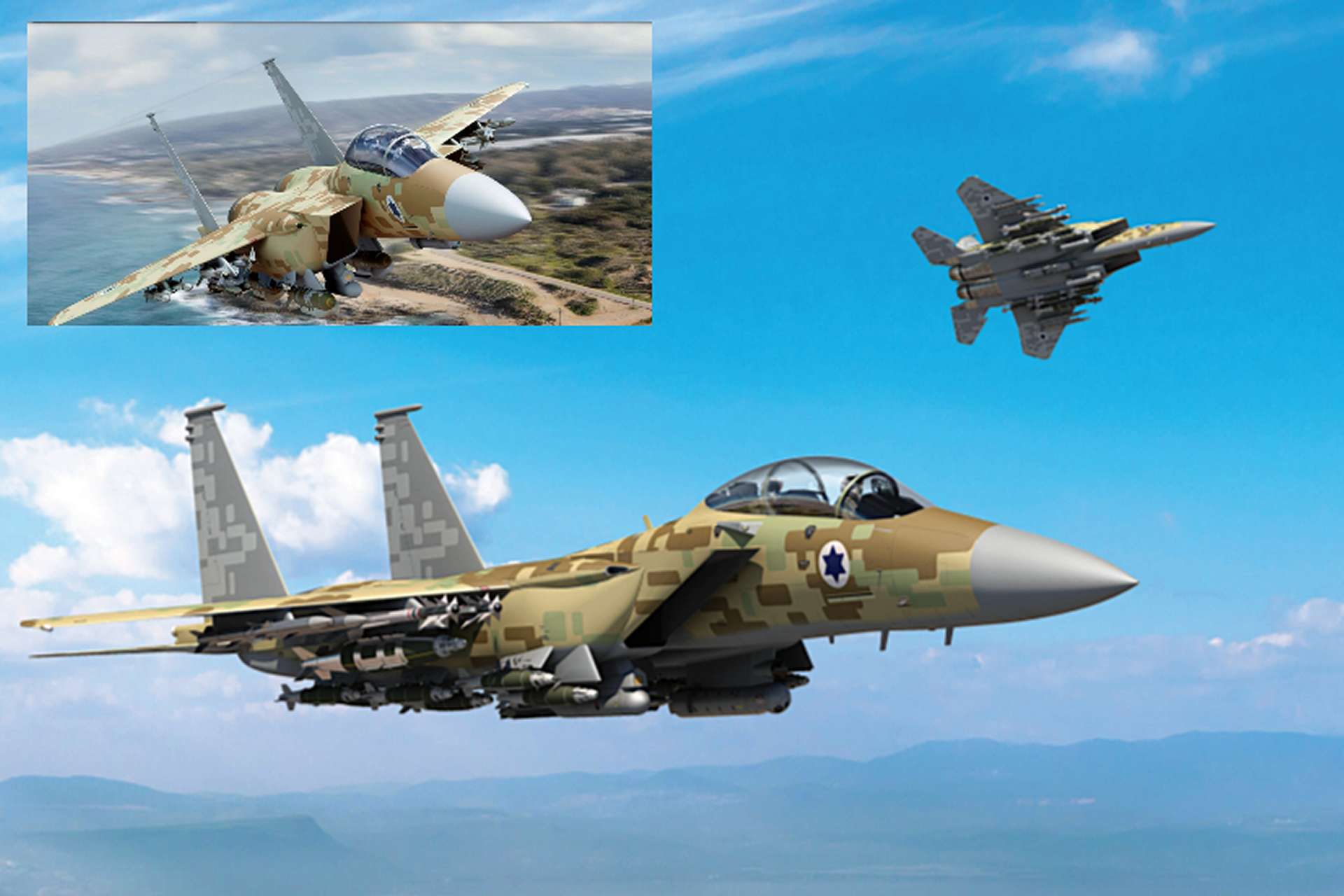
Israel has advanced its F-15IA fighter program after a U.S. contract notice confirmed an $8.58 billion Boeing award to deliver up to 50 new aircraft for the Israeli Air Force, extending long-range airpower development through 2035 (Picture Source: Boeing)
The December 29 contracting step fits into a longer disclosure trail around Israel’s next heavy fighter increment. In August 2024, the U.S. Defense Security Cooperation Agency notified Congress of a possible Foreign Military Sale covering up to 50 new F-15IA multi role fighter aircraft and mid life update modification kits for 25 existing F-15I aircraft, along with a wide set of engines, radars, mission systems, pods, launchers, guns, secure communications items, and program support. That DSCA notification estimated that deliveries could begin in 2029. However, subsequent reporting on the initial 25 aircraft deal has also referenced a later delivery start, with 2031 cited as a planning assumption in some coverage, highlighting how production sequencing and integration timelines can shift between notification estimates and contracting realities.
The contract structure matters because an undefinitized contract action typically allows a program to begin engineering and long lead activity while final scope and pricing are completed. In this case, the performance window out to 2035 underlines that the F-15IA is being treated as a multi-year integration and delivery effort rather than a simple airframe buy, with design and systems work expected to shape the final configuration and sustainment pathway.
The F-15IA is best interpreted as Israel’s customized configuration within Boeing’s latest Advanced Eagle lineage, centered on heavy payload, long-range persistence, and mission systems intended for operations in contested airspace. The publicly disclosed export package list associated with the program includes the AN-APG 82(V)1 AESA-radar, F110 GE 129 engines, Advanced Display Core Processor II, Embedded GPS/INS (EGI) devices with M Code, and the Joint Helmet Mounted Cueing System, alongside identification and secure communications elements and broader integration and test support. Together, these items point to an aircraft designed to sustain high-tempo operations with modern sensor performance, secure navigation, and resilient mission data handling, supporting both air superiority tasks and long-range strike packages that rely on reliable identification, connectivity, and deconfliction under pressure.
In terms of firepower, the F-15IA is configured to carry dense loads of air-to-air missiles using LAU-128 launchers, backed by an M61A cannon for close-in engagements and last-ditch self-defense. Boeing also notes that the newest Eagle generation can carry up to 12 AMRAAMs in certain configurations. The same heavy payload margin supports a wide mix of air-to-ground weapons, including multiple precision strike munitions and standoff ordnance, while still keeping air-to-air missiles for escort and self-protection on long-range sorties.
The mission set suggested by the disclosed configuration extends beyond classic intercept. For defensive counter air, the combination of AESA radar performance, secure navigation and identification systems, and a high missile carriage architecture supports long-duration combat air patrols, layered air defense, and sustained readiness postures where endurance and magazine depth matter as much as peak performance. For offensive counter air and escort, the same attributes support strike package protection, barrier patrols, and the ability to remain on station to counter follow-on threats after weapons expenditure elsewhere in the package. For strike, the F-15IA concept aligns with long-range interdiction and time-sensitive targeting, where payload margin allows multiple precision weapons to be carried while retaining credible air-to-air self-protection across the full ingress and egress.
The inclusion of the AN/AAQ-13 LANTIRN navigation pod in the U.S. disclosure trail adds an operationally relevant detail. The AN/AAQ-13 combines a terrain-following radar with an infrared sensor to support high-speed, low-altitude navigation at night and in adverse weather, helping crews maintain a selected clearance over terrain and manage obstacle avoidance. That matters for planners because it improves the reliability and repeatability of routing and time-on-target execution when conditions degrade, increasing operational flexibility during sustained operations.
From a geostrategic perspective, the program’s long horizon and its potential scale up to 50 aircraft have implications for regional force planning well before deliveries are completed. A new heavy fighter cohort can influence how neighboring militaries think about air defense posture, dispersal, and the resilience of critical infrastructure because sustained air operations at range depend not only on penetration profiles but also on sortie generation, endurance, and the ability to carry enough weapons to maintain pressure over time. In operational terms, heavy fighters can complement stealth aircraft by providing volume, persistence, and weapon capacity for roles such as escort, airspace control, maritime and infrastructure protection, and repeated stand-off strike carriage, allowing a force to allocate its most specialized assets to the highest value penetration or sensing tasks while retaining significant margin for sustained coverage and massed effects.
The December 29, 2025, U.S. Department of War notice formalizes a long-duration acquisition step for Israel’s next heavy fighter increment, setting a ceiling $8.58 billion framework for 25 F-15IA aircraft with an option for 25 more and a program horizon extending to 2035. The disclosed mission systems and carriage-related items support an operational logic centered on persistence, secure and modernized avionics, and high-capacity weapons employment across defensive counter air, escort, and long-range strike missions. Combined with the program’s scale and the broader political context surrounding the announcement, the F-15IA acquisition is positioned to shape Israel’s airpower generation and regional deterrence calculations well before the first aircraft enters service.
{loadposition bannertop}
{loadposition sidebarpub}
Israel has moved forward with its F-15IA fighter program after a U.S. government contract notice confirmed a multibillion-dollar Boeing award covering up to 50 aircraft. The deal underpins Israeli long-range strike capacity and deepens U.S.-Israel defense ties through the mid-2030s.
On December 29, 2025, a U.S. Department of War contract notice confirmed that Boeing in St. Louis, Missouri received a ceiling $8,577,700,000 award for the F-15 Israel Program. The notice describes a hybrid arrangement combining cost plus fixed fee with firm fixed price and fixed price incentive firm target elements, issued as an undefinitized contract action. The effort covers the design, integration, instrumentation, test, production, and delivery of 25 new F-15IA aircraft for the Israeli Air Force, with an option for 25 additional aircraft. Work is scheduled in St. Louis through December 31, 2035, with $840,000,000 in Foreign Military Sales funds obligated at the time of award.
Israel has advanced its F-15IA fighter program after a U.S. contract notice confirmed an $8.58 billion Boeing award to deliver up to 50 new aircraft for the Israeli Air Force, extending long-range airpower development through 2035 (Picture Source: Boeing)
The December 29 contracting step fits into a longer disclosure trail around Israel’s next heavy fighter increment. In August 2024, the U.S. Defense Security Cooperation Agency notified Congress of a possible Foreign Military Sale covering up to 50 new F-15IA multi role fighter aircraft and mid life update modification kits for 25 existing F-15I aircraft, along with a wide set of engines, radars, mission systems, pods, launchers, guns, secure communications items, and program support. That DSCA notification estimated that deliveries could begin in 2029. However, subsequent reporting on the initial 25 aircraft deal has also referenced a later delivery start, with 2031 cited as a planning assumption in some coverage, highlighting how production sequencing and integration timelines can shift between notification estimates and contracting realities.
The contract structure matters because an undefinitized contract action typically allows a program to begin engineering and long lead activity while final scope and pricing are completed. In this case, the performance window out to 2035 underlines that the F-15IA is being treated as a multi-year integration and delivery effort rather than a simple airframe buy, with design and systems work expected to shape the final configuration and sustainment pathway.
The F-15IA is best interpreted as Israel’s customized configuration within Boeing’s latest Advanced Eagle lineage, centered on heavy payload, long-range persistence, and mission systems intended for operations in contested airspace. The publicly disclosed export package list associated with the program includes the AN-APG 82(V)1 AESA-radar, F110 GE 129 engines, Advanced Display Core Processor II, Embedded GPS/INS (EGI) devices with M Code, and the Joint Helmet Mounted Cueing System, alongside identification and secure communications elements and broader integration and test support. Together, these items point to an aircraft designed to sustain high-tempo operations with modern sensor performance, secure navigation, and resilient mission data handling, supporting both air superiority tasks and long-range strike packages that rely on reliable identification, connectivity, and deconfliction under pressure.
In terms of firepower, the F-15IA is configured to carry dense loads of air-to-air missiles using LAU-128 launchers, backed by an M61A cannon for close-in engagements and last-ditch self-defense. Boeing also notes that the newest Eagle generation can carry up to 12 AMRAAMs in certain configurations. The same heavy payload margin supports a wide mix of air-to-ground weapons, including multiple precision strike munitions and standoff ordnance, while still keeping air-to-air missiles for escort and self-protection on long-range sorties.
The mission set suggested by the disclosed configuration extends beyond classic intercept. For defensive counter air, the combination of AESA radar performance, secure navigation and identification systems, and a high missile carriage architecture supports long-duration combat air patrols, layered air defense, and sustained readiness postures where endurance and magazine depth matter as much as peak performance. For offensive counter air and escort, the same attributes support strike package protection, barrier patrols, and the ability to remain on station to counter follow-on threats after weapons expenditure elsewhere in the package. For strike, the F-15IA concept aligns with long-range interdiction and time-sensitive targeting, where payload margin allows multiple precision weapons to be carried while retaining credible air-to-air self-protection across the full ingress and egress.
The inclusion of the AN/AAQ-13 LANTIRN navigation pod in the U.S. disclosure trail adds an operationally relevant detail. The AN/AAQ-13 combines a terrain-following radar with an infrared sensor to support high-speed, low-altitude navigation at night and in adverse weather, helping crews maintain a selected clearance over terrain and manage obstacle avoidance. That matters for planners because it improves the reliability and repeatability of routing and time-on-target execution when conditions degrade, increasing operational flexibility during sustained operations.
From a geostrategic perspective, the program’s long horizon and its potential scale up to 50 aircraft have implications for regional force planning well before deliveries are completed. A new heavy fighter cohort can influence how neighboring militaries think about air defense posture, dispersal, and the resilience of critical infrastructure because sustained air operations at range depend not only on penetration profiles but also on sortie generation, endurance, and the ability to carry enough weapons to maintain pressure over time. In operational terms, heavy fighters can complement stealth aircraft by providing volume, persistence, and weapon capacity for roles such as escort, airspace control, maritime and infrastructure protection, and repeated stand-off strike carriage, allowing a force to allocate its most specialized assets to the highest value penetration or sensing tasks while retaining significant margin for sustained coverage and massed effects.
The December 29, 2025, U.S. Department of War notice formalizes a long-duration acquisition step for Israel’s next heavy fighter increment, setting a ceiling $8.58 billion framework for 25 F-15IA aircraft with an option for 25 more and a program horizon extending to 2035. The disclosed mission systems and carriage-related items support an operational logic centered on persistence, secure and modernized avionics, and high-capacity weapons employment across defensive counter air, escort, and long-range strike missions. Combined with the program’s scale and the broader political context surrounding the announcement, the F-15IA acquisition is positioned to shape Israel’s airpower generation and regional deterrence calculations well before the first aircraft enters service.