Romanian F‑16s and Spanish-German Eurofighters Scramble as Russian Drones Breach NATO’s Eastern Shield
{loadposition bannertop}
{loadposition sidebarpub}
Romanian F-16 fighter jets and allied Eurofighter Typhoons were scrambled twice on February 26 after Russian drones targeting Ukrainian Danube ports briefly entered Romanian airspace near Tulcea County and north of Sulina, according to the Ministry of National Defence. The incident highlights growing spillover risks along NATO’s eastern flank as Moscow intensifies its drone campaign against Ukrainian infrastructure near the Black Sea corridor.
On Thursday, February 26, 2026, Romanian and allied fighter jets were scrambled twice within a few hours after Russian drones operating against Ukrainian Danube ports approached and briefly violated Romanian airspace, the Romanian Ministry of National Defence (MApN) said, as reported AGERPRES. The incident unfolded over the northern part of Tulcea County and the area north of Sulina, at a time when Russia has intensified its long-range drone campaign against Ukrainian infrastructure along the Danube. By forcing Romanian F-16s and NATO Eurofighter Typhoons into real interception missions, the episode turned the Black Sea frontier into a concrete test of the Alliance’s air policing posture. For Bucharest and its allies, it underlined how attacks directed at Ukraine are increasingly brushing against NATO territory and probing the eastern flank’s ability to react.
Follow Army Recognition on Google News at this link
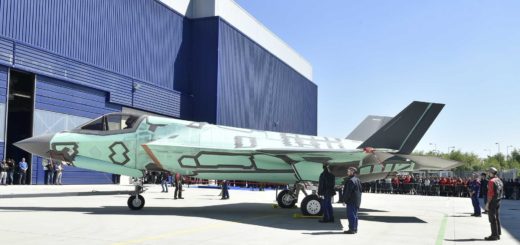
Romanian F-16s and NATO Eurofighters were scrambled twice after Russian drones targeting Ukrainian Danube ports briefly violated Romanian airspace along the Black Sea border, testing the Alliance’s eastern flank air policing posture (Picture Source: Spanish Air Force / Romanian Air Force / Britannica)
Romania’s Ministry of National Defence said in a statement, as reported by AGERPRES, that the first alert was triggered at around 16:25 local time, when air defence radars detected a drone flying close to the border with Ukraine during a new Russian strike on the Danube ports. Two Romanian F-16s on quick reaction alert were immediately launched from Fetești Air Base under standard air policing procedures, marking the first response of the day by national assets. As the aircraft climbed to investigate the contact, residents in the northern part of Tulcea County received a RO-ALERT warning message issued by the General Inspectorate for Emergency Situations on the basis of data from the Air Force. The tracked unmanned aircraft remained outside Romanian airspace in this first case, and alert measures were lifted roughly an hour later, around 17:30, once the situation was assessed as no longer posing a direct threat.
The picture changed again around 18:00, when another unmanned aerial vehicle was detected heading toward Romanian territory along the same sector. This time, a mixed pair of Eurofighter Typhoons was scrambled from the 57th Mihail Kogălniceanu Air Base near the Black Sea coast, one jet belonging to the German Air Force and the other to the Spanish Air and Space Force. A second RO-ALERT message was sent to the population in north-eastern Tulcea County as the aircraft moved to intercept. According to MApN, this drone briefly crossed into Romanian national airspace north of Sulina before leaving around 18:30, without reported casualties or damage on the ground. Army Recognition had previously reported that Spanish Eurofighter Typhoons had joined the NATO quick reaction alert detachment in Romania to conduct exactly this type of operation, and the February 26 scramble confirmed that the multinational deployment is now engaged in real-world missions against Russian drones on NATO’s Black Sea flank.
The type of aircraft launched and the bases involved illustrate how Romania’s air defence architecture has been reinforced under the pressure of the war in Ukraine. Romanian F-16s acquired from partner countries and upgraded to modern standards now constitute the backbone of national air policing, capable of rapid take-off from Fetești to cover the Danube Delta and coastal sectors with contemporary radar, secure datalinks and a full set of short- and medium-range air-to-air missiles. Eurofighter Typhoons deployed by Germany and Spain at Mihail Kogălniceanu add another layer to this posture, combining long-range sensors, a wide engagement envelope and seamless integration into NATO’s integrated air and missile defence network. In practical terms, this allows Romanian and allied jets to be tasked successively or in mixed formations, depending on the axis of approach, and to coordinate their actions through a common command-and-control chain that fuses national and Alliance radar data.
This latest incident does not occur in isolation. Since autumn 2023, Romanian authorities have repeatedly reported drone fragments and wreckage found on their territory following Russian strikes on Ukrainian river ports, as salvos of long-range drones skim the border and the Danube Delta en route to targets such as Reni and Izmail. On several occasions, including in 2025, Romanian airspace has been violated more deeply, prompting scrambles of F-16s and allied fighters, activation of RO-ALERT messages, and formal diplomatic reactions. The pattern suggests a gradual escalation from isolated debris and marginal overflights to deliberate flight paths that brush or cross NATO borders. For Russia, routing drones along the Black Sea and the Danube corridor allows it to pressure Ukrainian logistic hubs while operating at the very edge of Alliance territory, turning Romania into a frontline state even when it is not directly targeted.
At the tactical level, the events of February 26 highlight both the strengths and the constraints of the current quick reaction alert posture. Having Romanian F-16s respond to the first detection and German-Spanish Eurofighters to the second, from two distinct bases, demonstrates the redundancy built into NATO’s air policing arrangements over the eastern flank. Intercepting relatively slow, low-flying unmanned systems is, however, a complex mission: drones present a small radar cross-section, often fly at low altitude, and can follow unpredictable trajectories, which complicates detection, tracking and engagement while civil air traffic and Ukrainian military operations continue nearby. The use of RO-ALERT to warn local residents, combined with strict rules of engagement designed to avoid unnecessary escalation, shows that authorities are managing not only a military threat but also the safety of civilians in an area where Ukrainian and Russian drones, NATO fighters and commercial aircraft share a crowded sky.
Strategically, these recurring incidents underscore how the Black Sea region has become a tightly contested security space where NATO and Russia operate in immediate proximity. Each new breach of Romanian airspace, even when brief and without physical damage, raises the risk of miscalculation and adds pressure on allied decision-makers to clarify red lines and adjust rules of engagement. For Romania, the repeated need to scramble fighters to confront Russian drones reinforces its role as a test case for NATO’s credibility on the eastern flank. For allied capitals, the deployment of German and Spanish Eurofighters on Romanian soil is a concrete expression of burden-sharing: any challenge to Romania’s skies is treated as a shared problem, not a bilateral dispute between Bucharest and Moscow. At the same time, the choice by Russian planners to fly drones so close to NATO borders suggests a deliberate effort to probe reaction times, study radar coverage and gauge political tolerance, all while maintaining pressure on Ukrainian infrastructure and Black Sea shipping routes.
The latest violation north of Sulina confirms that the airspace over the Danube Delta and the Black Sea coast has become one of the most sensitive contact zones between NATO and Russia. Romanian F-16s and allied Eurofighter Typhoons are no longer conducting mainly symbolic patrols but are being sent repeatedly to shadow, deter and, if needed, confront unmanned aircraft linked to the war in Ukraine. If such incursions continue or deepen, Romania and its partners may have to reinforce ground-based air defence in the region, extend air policing rotations and refine engagement procedures for drones operating on the edge of NATO territory. Whether this narrow frontier evolves into a zone of stable deterrence or a potential flashpoint will depend as much on political decisions in allied and Russian capitals as on the vigilance of pilots, controllers and radar operators along Romania’s exposed Black Sea border.
Written by Teoman S. Nicanci – Defense Analyst, Army Recognition Group
Teoman S. Nicanci holds degrees in Political Science, Comparative and International Politics, and International Relations and Diplomacy from leading Belgian universities, with research focused on Russian strategic behavior, defense technology, and modern warfare. He is a defense analyst at Army Recognition, specializing in the global defense industry, military armament, and emerging defense technologies.

{loadposition bannertop}
{loadposition sidebarpub}
Romanian F-16 fighter jets and allied Eurofighter Typhoons were scrambled twice on February 26 after Russian drones targeting Ukrainian Danube ports briefly entered Romanian airspace near Tulcea County and north of Sulina, according to the Ministry of National Defence. The incident highlights growing spillover risks along NATO’s eastern flank as Moscow intensifies its drone campaign against Ukrainian infrastructure near the Black Sea corridor.
On Thursday, February 26, 2026, Romanian and allied fighter jets were scrambled twice within a few hours after Russian drones operating against Ukrainian Danube ports approached and briefly violated Romanian airspace, the Romanian Ministry of National Defence (MApN) said, as reported AGERPRES. The incident unfolded over the northern part of Tulcea County and the area north of Sulina, at a time when Russia has intensified its long-range drone campaign against Ukrainian infrastructure along the Danube. By forcing Romanian F-16s and NATO Eurofighter Typhoons into real interception missions, the episode turned the Black Sea frontier into a concrete test of the Alliance’s air policing posture. For Bucharest and its allies, it underlined how attacks directed at Ukraine are increasingly brushing against NATO territory and probing the eastern flank’s ability to react.
Romanian F-16s and NATO Eurofighters were scrambled twice after Russian drones targeting Ukrainian Danube ports briefly violated Romanian airspace along the Black Sea border, testing the Alliance’s eastern flank air policing posture (Picture Source: Spanish Air Force / Romanian Air Force / Britannica)
Romania’s Ministry of National Defence said in a statement, as reported by AGERPRES, that the first alert was triggered at around 16:25 local time, when air defence radars detected a drone flying close to the border with Ukraine during a new Russian strike on the Danube ports. Two Romanian F-16s on quick reaction alert were immediately launched from Fetești Air Base under standard air policing procedures, marking the first response of the day by national assets. As the aircraft climbed to investigate the contact, residents in the northern part of Tulcea County received a RO-ALERT warning message issued by the General Inspectorate for Emergency Situations on the basis of data from the Air Force. The tracked unmanned aircraft remained outside Romanian airspace in this first case, and alert measures were lifted roughly an hour later, around 17:30, once the situation was assessed as no longer posing a direct threat.
The picture changed again around 18:00, when another unmanned aerial vehicle was detected heading toward Romanian territory along the same sector. This time, a mixed pair of Eurofighter Typhoons was scrambled from the 57th Mihail Kogălniceanu Air Base near the Black Sea coast, one jet belonging to the German Air Force and the other to the Spanish Air and Space Force. A second RO-ALERT message was sent to the population in north-eastern Tulcea County as the aircraft moved to intercept. According to MApN, this drone briefly crossed into Romanian national airspace north of Sulina before leaving around 18:30, without reported casualties or damage on the ground. Army Recognition had previously reported that Spanish Eurofighter Typhoons had joined the NATO quick reaction alert detachment in Romania to conduct exactly this type of operation, and the February 26 scramble confirmed that the multinational deployment is now engaged in real-world missions against Russian drones on NATO’s Black Sea flank.
The type of aircraft launched and the bases involved illustrate how Romania’s air defence architecture has been reinforced under the pressure of the war in Ukraine. Romanian F-16s acquired from partner countries and upgraded to modern standards now constitute the backbone of national air policing, capable of rapid take-off from Fetești to cover the Danube Delta and coastal sectors with contemporary radar, secure datalinks and a full set of short- and medium-range air-to-air missiles. Eurofighter Typhoons deployed by Germany and Spain at Mihail Kogălniceanu add another layer to this posture, combining long-range sensors, a wide engagement envelope and seamless integration into NATO’s integrated air and missile defence network. In practical terms, this allows Romanian and allied jets to be tasked successively or in mixed formations, depending on the axis of approach, and to coordinate their actions through a common command-and-control chain that fuses national and Alliance radar data.
This latest incident does not occur in isolation. Since autumn 2023, Romanian authorities have repeatedly reported drone fragments and wreckage found on their territory following Russian strikes on Ukrainian river ports, as salvos of long-range drones skim the border and the Danube Delta en route to targets such as Reni and Izmail. On several occasions, including in 2025, Romanian airspace has been violated more deeply, prompting scrambles of F-16s and allied fighters, activation of RO-ALERT messages, and formal diplomatic reactions. The pattern suggests a gradual escalation from isolated debris and marginal overflights to deliberate flight paths that brush or cross NATO borders. For Russia, routing drones along the Black Sea and the Danube corridor allows it to pressure Ukrainian logistic hubs while operating at the very edge of Alliance territory, turning Romania into a frontline state even when it is not directly targeted.
At the tactical level, the events of February 26 highlight both the strengths and the constraints of the current quick reaction alert posture. Having Romanian F-16s respond to the first detection and German-Spanish Eurofighters to the second, from two distinct bases, demonstrates the redundancy built into NATO’s air policing arrangements over the eastern flank. Intercepting relatively slow, low-flying unmanned systems is, however, a complex mission: drones present a small radar cross-section, often fly at low altitude, and can follow unpredictable trajectories, which complicates detection, tracking and engagement while civil air traffic and Ukrainian military operations continue nearby. The use of RO-ALERT to warn local residents, combined with strict rules of engagement designed to avoid unnecessary escalation, shows that authorities are managing not only a military threat but also the safety of civilians in an area where Ukrainian and Russian drones, NATO fighters and commercial aircraft share a crowded sky.
Strategically, these recurring incidents underscore how the Black Sea region has become a tightly contested security space where NATO and Russia operate in immediate proximity. Each new breach of Romanian airspace, even when brief and without physical damage, raises the risk of miscalculation and adds pressure on allied decision-makers to clarify red lines and adjust rules of engagement. For Romania, the repeated need to scramble fighters to confront Russian drones reinforces its role as a test case for NATO’s credibility on the eastern flank. For allied capitals, the deployment of German and Spanish Eurofighters on Romanian soil is a concrete expression of burden-sharing: any challenge to Romania’s skies is treated as a shared problem, not a bilateral dispute between Bucharest and Moscow. At the same time, the choice by Russian planners to fly drones so close to NATO borders suggests a deliberate effort to probe reaction times, study radar coverage and gauge political tolerance, all while maintaining pressure on Ukrainian infrastructure and Black Sea shipping routes.
The latest violation north of Sulina confirms that the airspace over the Danube Delta and the Black Sea coast has become one of the most sensitive contact zones between NATO and Russia. Romanian F-16s and allied Eurofighter Typhoons are no longer conducting mainly symbolic patrols but are being sent repeatedly to shadow, deter and, if needed, confront unmanned aircraft linked to the war in Ukraine. If such incursions continue or deepen, Romania and its partners may have to reinforce ground-based air defence in the region, extend air policing rotations and refine engagement procedures for drones operating on the edge of NATO territory. Whether this narrow frontier evolves into a zone of stable deterrence or a potential flashpoint will depend as much on political decisions in allied and Russian capitals as on the vigilance of pilots, controllers and radar operators along Romania’s exposed Black Sea border.
Written by Teoman S. Nicanci – Defense Analyst, Army Recognition Group
Teoman S. Nicanci holds degrees in Political Science, Comparative and International Politics, and International Relations and Diplomacy from leading Belgian universities, with research focused on Russian strategic behavior, defense technology, and modern warfare. He is a defense analyst at Army Recognition, specializing in the global defense industry, military armament, and emerging defense technologies.