British F-35B Stealth Fighters Achieve First Combat Kill After Downing Hostile Drones Over Jordan
{loadposition bannertop}
{loadposition sidebarpub}
Royal British Air Force F-35B Lightning II fighters operating from RAF Akrotiri shot down hostile drones over Jordanian airspace on 3 March 2026, marking the aircraft’s first confirmed combat kill in RAF service. The engagement highlights the growing role of fifth-generation fighters in counter-drone air defense missions across the Middle East.
On 3 March 2026, the UK Ministry of Defence confirmed that Royal Air Force F-35B Lightning II aircraft, operating from RAF Akrotiri, had successfully engaged and destroyed hostile drones over Jordanian airspace. The incident marks the first confirmed combat kill by an RAF F-35 during operational deployment. Occurring amid a surge in Iranian-linked drone activity targeting British and allied interests, the engagement highlights the expanding role of the UK’s fifth-generation fighter fleet in regional air and missile defence across the Eastern Mediterranean and the wider Middle East.
Follow Army Recognition on Google News at this link
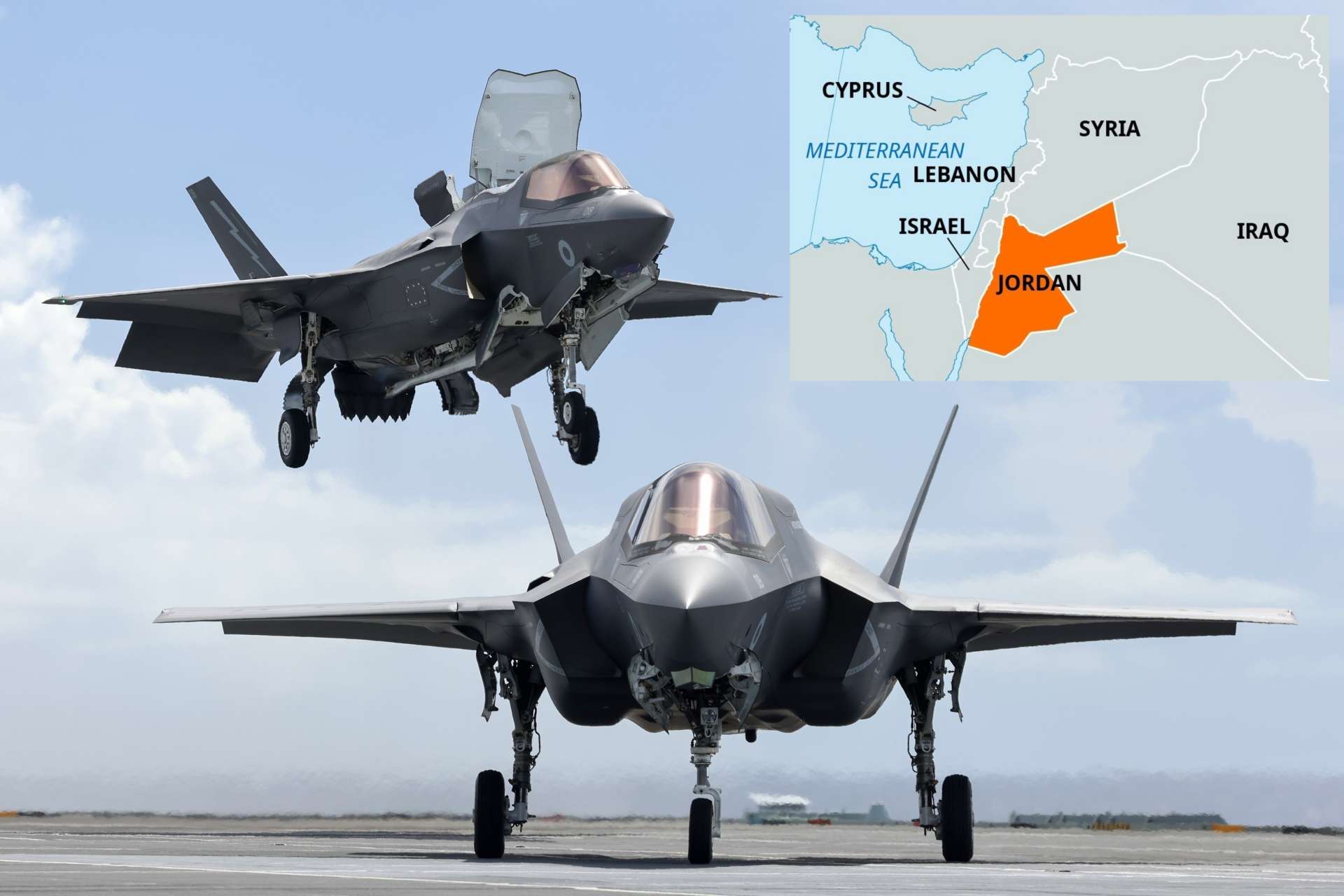
Royal Air Force F-35B Lightning II fighters operating from RAF Akrotiri shot down hostile drones over Jordanian airspace on 3 March 2026, marking the first confirmed combat kill for the UK’s fifth-generation fighter fleet while supporting coalition air defence against Iranian-linked drone threats (Royal Air Force / Britannica)
The Ministry of Defence reported that RAF F-35B jets operating from RAF Akrotiri conducted air-to-air engagements over Jordan, shooting down uncrewed aerial systems in defence of Jordanian airspace and coalition interests. The F-35Bs were supported by RAF Typhoon fighters providing combat air patrols and by a Voyager air-to-air refuelling aircraft that extended the on-station time of the defensive package. In parallel, a British Counter-Uncrewed Aerial Systems team neutralised drones in Iraq as they headed towards Coalition forces, and an RAF Typhoon operating with the joint UK–Qatar 12 Squadron intercepted and destroyed an Iranian one-way attack drone aimed at Qatar. Together, these actions illustrate a coordinated, multi-domain response in which UK forces are engaging hostile systems across several airspaces within a single 24-hour period.
The F-35B is a fifth-generation, short take-off and vertical landing (STOVL) multirole fighter designed to fuse data from a suite of advanced sensors into a single, coherent tactical picture for the pilot. Its AN/APG-81 active electronically scanned array radar, electro-optical targeting system, Distributed Aperture System and comprehensive electronic warfare suite allow it to detect, classify and track small, low-signature threats such as drones at range, while remaining difficult to detect itself. In a counter-UAS role, this combination of stealth, 360-degree situational awareness and secure data links enables the aircraft to act as both a forward sensor node and a shooter, prosecuting beyond-visual-range engagements under tight rules of engagement while feeding the recognised air picture back into the wider coalition network.
Operating alongside the F-35Bs, the Royal Air Force Typhoon provides a high-end, fourth-generation complement optimised for rapid reaction and sustained combat air patrols. With a high thrust-to-weight ratio, agile flight characteristics and a proven air-to-air weapons suite, the Typhoon is well-suited to intercepting fast-moving or maneuvering threats and to maintain a visible deterrent presence in contested airspace. Its integration with the Voyager multi-role tanker transport, based on the Airbus A330 MRTT platform, is critical: Voyager is the RAF’s sole air-to-air refuelling tanker, able to support simultaneous refuelling of multiple fast jets through underwing pods while also carrying passengers and cargo. By flying racetrack refuelling orbits in safe airspace, Voyager extends the endurance and reach of both F-35s and Typhoons, allowing the UK to maintain continuous defensive coverage from the Eastern Mediterranean to the Gulf.
For the F-35B force, this engagement is a milestone in its operational history. Since entering RAF service, the Lightning force has built up experience through exercises, deployments to RAF Akrotiri and carrier strike operations, including sorties from the UK’s Queen Elizabeth-class aircraft carriers in support of counter-Daesh missions. Until now, however, its missions had largely involved intelligence, surveillance and reconnaissance, deterrent presence and potential stand-off strike, rather than confirmed air-to-air kills. This first combat shootdown demonstrates that the UK’s fifth-generation fleet is not only technically mature but also fully integrated into real-world rules of engagement, command and control arrangements and coalition air tasking orders in a complex theatre.
The events described by the Ministry of Defence highlight a layered air and missile defence concept built around a distributed kill chain. In Jordanian airspace, stealthy F-35Bs could operate forward, using their sensor fusion to detect incoming drones early in the engagement timeline, while Typhoons flew higher-altitude combat air patrols to provide visible deterrence and rapid-reaction intercept capacity. Ground-based C-UAS specialists in Iraq added another layer, employing specialised sensors and effectors to defeat drones headed towards coalition bases, while the 12 Squadron Typhoon in Qatar executed a clean air-to-air missile engagement against a one-way attack drone directed at a critical Gulf partner. This distributed posture complicates any adversary’s targeting calculus, as drones can be engaged at multiple points along their flight path, from launch area to terminal approach.
The fact that RAF F-35Bs flying from Akrotiri are conducting air-defence sorties over Jordan carries important geostrategic implications. It confirms that the Lightning force is being used as a shield for regional partners and for critical air corridors, not as a platform for unilateral offensive strikes. By defending Jordanian airspace and intercepting drones that could potentially threaten Israel, Cyprus or approaches towards southern Europe, the UK is reinforcing a protective air umbrella that spans from the Levant to the Eastern Mediterranean. This posture reassures partners that British fifth-generation assets are committed to preserving their sovereignty and protecting shared infrastructure, from air bases and ports to energy installations and key transit routes, while signalling to Tehran and its proxies that drone attacks will be met with measured but decisive defensive action.
The wider deployment described in the same government announcement further underlines this strategic message. The Type 45 destroyer HMS Dragon, equipped with the Sea Viper air defence system capable of launching multiple missiles in seconds and guiding numerous interceptors simultaneously, is being sent to the Eastern Mediterranean alongside Royal Navy Wildcat helicopters armed with Martlet “drone-busting” missiles. At sea level, this adds a robust naval layer to the UK’s integrated air and missile defence posture, protecting maritime approaches and shipping lanes. In the air, the combination of F-35, Typhoon, Voyager and C-UAS teams creates a multi-domain defensive shield that is highly mobile, rapidly scalable and interoperable with allied forces, consistent with the UK’s strategic emphasis on using bases such as Akrotiri, and partnerships across the Eastern Mediterranean, to support operations across Europe and the Middle East.
The first operational shootdown by RAF F-35Bs, the near-simultaneous engagements by Typhoon fighters and ground-based C-UAS teams, and the deployment of HMS Dragon and Wildcat helicopters send a clear signal that the United Kingdom is prepared to defend its forces, its citizens and its allies against evolving drone threats. This is not an offensive air campaign but a calibrated, rules-based defensive posture that uses some of the most capable air and naval assets in Europe to protect shared airspace and critical infrastructure from destabilising attacks. As drones become central to modern coercion strategies in the Middle East, the UK’s ability to integrate fifth-generation fighters, legacy combat aircraft, tankers, ships and specialised counter-UAS units into a single, coherent defensive architecture will remain a key factor in regional stability and in the protection of British and allied interests.
Written by Teoman S. Nicanci – Defense Analyst, Army Recognition Group
Teoman S. Nicanci holds degrees in Political Science, Comparative and International Politics, and International Relations and Diplomacy from leading Belgian universities, with research focused on Russian strategic behavior, defense technology, and modern warfare. He is a defense analyst at Army Recognition, specializing in the global defense industry, military armament, and emerging defense technologies.
{loadposition bannertop}
{loadposition sidebarpub}
Royal British Air Force F-35B Lightning II fighters operating from RAF Akrotiri shot down hostile drones over Jordanian airspace on 3 March 2026, marking the aircraft’s first confirmed combat kill in RAF service. The engagement highlights the growing role of fifth-generation fighters in counter-drone air defense missions across the Middle East.
On 3 March 2026, the UK Ministry of Defence confirmed that Royal Air Force F-35B Lightning II aircraft, operating from RAF Akrotiri, had successfully engaged and destroyed hostile drones over Jordanian airspace. The incident marks the first confirmed combat kill by an RAF F-35 during operational deployment. Occurring amid a surge in Iranian-linked drone activity targeting British and allied interests, the engagement highlights the expanding role of the UK’s fifth-generation fighter fleet in regional air and missile defence across the Eastern Mediterranean and the wider Middle East.
Royal Air Force F-35B Lightning II fighters operating from RAF Akrotiri shot down hostile drones over Jordanian airspace on 3 March 2026, marking the first confirmed combat kill for the UK’s fifth-generation fighter fleet while supporting coalition air defence against Iranian-linked drone threats (Royal Air Force / Britannica)
The Ministry of Defence reported that RAF F-35B jets operating from RAF Akrotiri conducted air-to-air engagements over Jordan, shooting down uncrewed aerial systems in defence of Jordanian airspace and coalition interests. The F-35Bs were supported by RAF Typhoon fighters providing combat air patrols and by a Voyager air-to-air refuelling aircraft that extended the on-station time of the defensive package. In parallel, a British Counter-Uncrewed Aerial Systems team neutralised drones in Iraq as they headed towards Coalition forces, and an RAF Typhoon operating with the joint UK–Qatar 12 Squadron intercepted and destroyed an Iranian one-way attack drone aimed at Qatar. Together, these actions illustrate a coordinated, multi-domain response in which UK forces are engaging hostile systems across several airspaces within a single 24-hour period.
The F-35B is a fifth-generation, short take-off and vertical landing (STOVL) multirole fighter designed to fuse data from a suite of advanced sensors into a single, coherent tactical picture for the pilot. Its AN/APG-81 active electronically scanned array radar, electro-optical targeting system, Distributed Aperture System and comprehensive electronic warfare suite allow it to detect, classify and track small, low-signature threats such as drones at range, while remaining difficult to detect itself. In a counter-UAS role, this combination of stealth, 360-degree situational awareness and secure data links enables the aircraft to act as both a forward sensor node and a shooter, prosecuting beyond-visual-range engagements under tight rules of engagement while feeding the recognised air picture back into the wider coalition network.
Operating alongside the F-35Bs, the Royal Air Force Typhoon provides a high-end, fourth-generation complement optimised for rapid reaction and sustained combat air patrols. With a high thrust-to-weight ratio, agile flight characteristics and a proven air-to-air weapons suite, the Typhoon is well-suited to intercepting fast-moving or maneuvering threats and to maintain a visible deterrent presence in contested airspace. Its integration with the Voyager multi-role tanker transport, based on the Airbus A330 MRTT platform, is critical: Voyager is the RAF’s sole air-to-air refuelling tanker, able to support simultaneous refuelling of multiple fast jets through underwing pods while also carrying passengers and cargo. By flying racetrack refuelling orbits in safe airspace, Voyager extends the endurance and reach of both F-35s and Typhoons, allowing the UK to maintain continuous defensive coverage from the Eastern Mediterranean to the Gulf.
For the F-35B force, this engagement is a milestone in its operational history. Since entering RAF service, the Lightning force has built up experience through exercises, deployments to RAF Akrotiri and carrier strike operations, including sorties from the UK’s Queen Elizabeth-class aircraft carriers in support of counter-Daesh missions. Until now, however, its missions had largely involved intelligence, surveillance and reconnaissance, deterrent presence and potential stand-off strike, rather than confirmed air-to-air kills. This first combat shootdown demonstrates that the UK’s fifth-generation fleet is not only technically mature but also fully integrated into real-world rules of engagement, command and control arrangements and coalition air tasking orders in a complex theatre.
The events described by the Ministry of Defence highlight a layered air and missile defence concept built around a distributed kill chain. In Jordanian airspace, stealthy F-35Bs could operate forward, using their sensor fusion to detect incoming drones early in the engagement timeline, while Typhoons flew higher-altitude combat air patrols to provide visible deterrence and rapid-reaction intercept capacity. Ground-based C-UAS specialists in Iraq added another layer, employing specialised sensors and effectors to defeat drones headed towards coalition bases, while the 12 Squadron Typhoon in Qatar executed a clean air-to-air missile engagement against a one-way attack drone directed at a critical Gulf partner. This distributed posture complicates any adversary’s targeting calculus, as drones can be engaged at multiple points along their flight path, from launch area to terminal approach.
The fact that RAF F-35Bs flying from Akrotiri are conducting air-defence sorties over Jordan carries important geostrategic implications. It confirms that the Lightning force is being used as a shield for regional partners and for critical air corridors, not as a platform for unilateral offensive strikes. By defending Jordanian airspace and intercepting drones that could potentially threaten Israel, Cyprus or approaches towards southern Europe, the UK is reinforcing a protective air umbrella that spans from the Levant to the Eastern Mediterranean. This posture reassures partners that British fifth-generation assets are committed to preserving their sovereignty and protecting shared infrastructure, from air bases and ports to energy installations and key transit routes, while signalling to Tehran and its proxies that drone attacks will be met with measured but decisive defensive action.
The wider deployment described in the same government announcement further underlines this strategic message. The Type 45 destroyer HMS Dragon, equipped with the Sea Viper air defence system capable of launching multiple missiles in seconds and guiding numerous interceptors simultaneously, is being sent to the Eastern Mediterranean alongside Royal Navy Wildcat helicopters armed with Martlet “drone-busting” missiles. At sea level, this adds a robust naval layer to the UK’s integrated air and missile defence posture, protecting maritime approaches and shipping lanes. In the air, the combination of F-35, Typhoon, Voyager and C-UAS teams creates a multi-domain defensive shield that is highly mobile, rapidly scalable and interoperable with allied forces, consistent with the UK’s strategic emphasis on using bases such as Akrotiri, and partnerships across the Eastern Mediterranean, to support operations across Europe and the Middle East.
The first operational shootdown by RAF F-35Bs, the near-simultaneous engagements by Typhoon fighters and ground-based C-UAS teams, and the deployment of HMS Dragon and Wildcat helicopters send a clear signal that the United Kingdom is prepared to defend its forces, its citizens and its allies against evolving drone threats. This is not an offensive air campaign but a calibrated, rules-based defensive posture that uses some of the most capable air and naval assets in Europe to protect shared airspace and critical infrastructure from destabilising attacks. As drones become central to modern coercion strategies in the Middle East, the UK’s ability to integrate fifth-generation fighters, legacy combat aircraft, tankers, ships and specialised counter-UAS units into a single, coherent defensive architecture will remain a key factor in regional stability and in the protection of British and allied interests.
Written by Teoman S. Nicanci – Defense Analyst, Army Recognition Group
Teoman S. Nicanci holds degrees in Political Science, Comparative and International Politics, and International Relations and Diplomacy from leading Belgian universities, with research focused on Russian strategic behavior, defense technology, and modern warfare. He is a defense analyst at Army Recognition, specializing in the global defense industry, military armament, and emerging defense technologies.