UK Sends 120,000 UAVs to Ukraine in Largest Drone Package of the War
{loadposition bannertop}
{loadposition sidebarpub}
The United Kingdom is sending 120,000 drones to Ukraine, marking its largest unmanned systems package since the war began. The move reinforces Kyiv’s battlefield resilience as drones become central to modern combat operations.
London confirmed the expanded delivery as the Defence Secretary traveled to Berlin to co-chair a Ukraine Defence Contact Group meeting, coordinating allied military support. The package is expected to include reconnaissance UAVs, first-person view strike drones, and loitering munitions to expand Ukraine’s targeting reach and battlefield persistence through 2026. British officials framed the effort as a direct response to urgent operational demand, where high-volume, low-cost systems are reshaping attrition and tactical tempo across the front line.
Related Topic: UK and Ukraine Agree to Jointly Produce Thousands of Octopus-100 Interceptor Combat Drones
Overview of unmanned systems likely included in the UK drone package for Ukraine, including ISR, logistics, and long-range platforms from Tekever, Malloy Aeronautics, and Windracers, although no official breakdown has been released (Picture source: Tekever, Malloy Aeronautics, Windracers)
This decision comes as the intensity of drone warfare in Ukraine reaches new levels. Russian forces launched approximately 6,500 one-way attack drones in March 2026 alone, reflecting a rising operational tempo and sustained pressure on Ukrainian air defences. In this environment, the British effort aims not only to replenish Ukrainian inventories but also to expand the range of available capabilities, from long-range strike to logistics support and maritime operations.
The UK Ministry of Defence stated on 15 April 2026 that the package includes several categories of drones already tested on the Ukrainian battlefield, including long-range strike systems, intelligence, surveillance and reconnaissance capabilities, as well as logistics and maritime drones. This structure reflects lessons drawn from more than two years of high-intensity conflict and the need to sustain dispersed operations across an extended frontline.
Part of the deliveries may rely on systems developed by companies such as Tekever, Malloy Aeronautics, and Windracers, which are referenced in the official announcement. However, no public details specify the exact models included in the package, leading to assessments based on equipment already supplied to Ukraine in recent months.
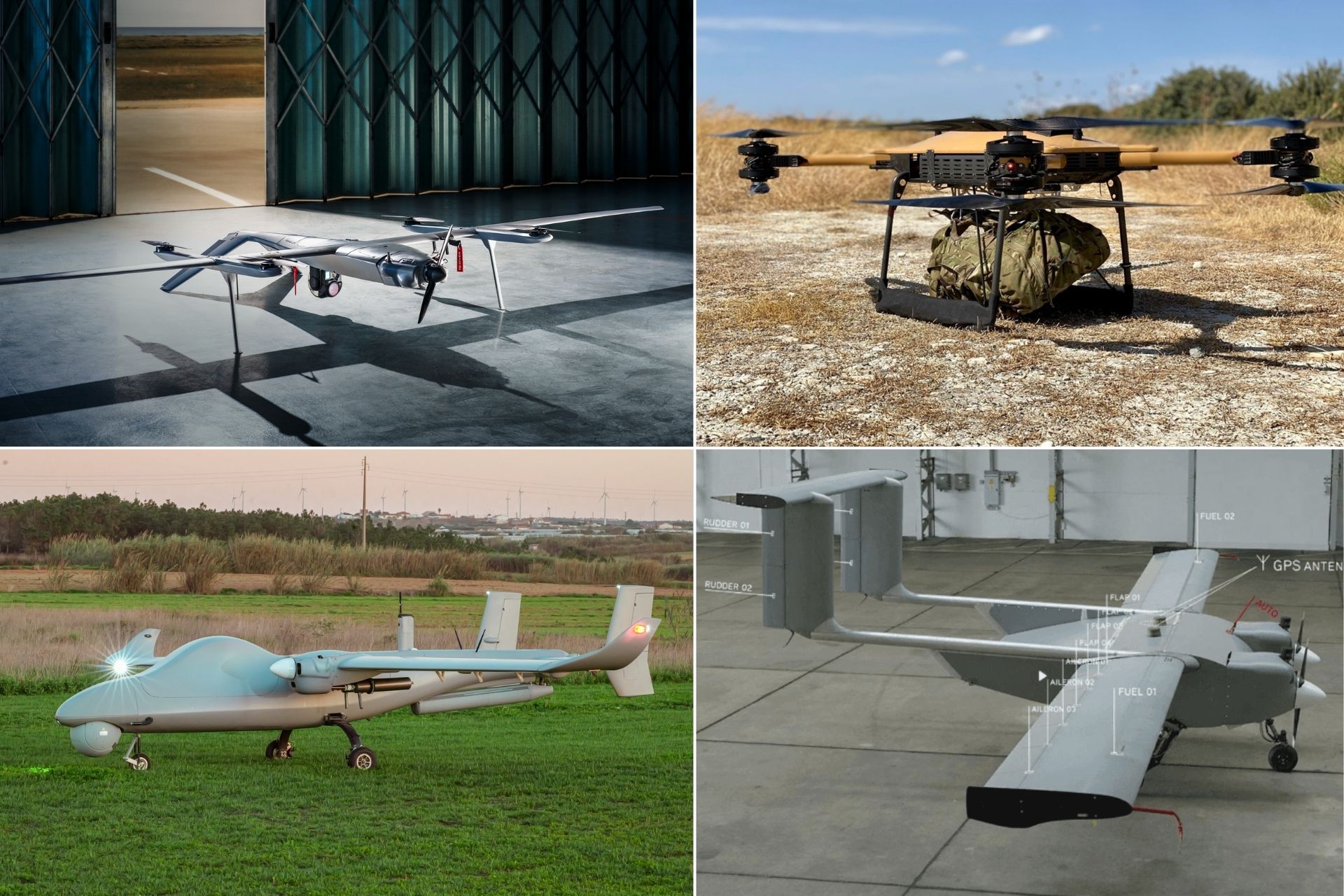
The Tekever AR3 drone, developed by the Portuguese company Tekever but integrated into UK-supported programmes, offers endurance of up to 16 hours and carries electro-optical and infrared sensors, enabling day and night reconnaissance missions over distances exceeding 100 kilometres, depending on configuration. Its larger counterpart, the AR5, also developed by Tekever, incorporates satellite communication links, allowing beyond-line-of-sight control and endurance approaching 20 hours, which is suited for extended surveillance missions.
At the same time, the T-150 heavy-lift drone, developed by the UK-based company Malloy Aeronautics, is designed for logistics missions with a payload capacity of up to 68 kilograms. It enables the delivery of ammunition, medical supplies, or spare parts to frontline units without exposing ground convoys to artillery fire or drone strikes. Systems such as the ULTRA unmanned cargo aircraft, developed by the British company Windracers, are intended to transport heavier loads over longer distances, potentially exceeding several hundred kilometres depending on payload and mission profile, although precise parameters vary with configuration.
These systems are no longer experimental assets but are already in operational use under combat conditions in Ukraine. Their integration into Ukrainian force structures reflects a broader shift toward distributed and network-enabled warfare, where smaller units rely on autonomous or remotely piloted systems to offset limitations in manpower or conventional firepower.
The British announcement also highlights the industrial dimension of this effort. A substantial share of the funding is directed toward domestic companies, reinforcing the United Kingdom’s defence technological and industrial base while accelerating development cycles in unmanned systems. This approach aligns with a broader trend across NATO, where the rapid evolution of low-cost, high-technology military equipment is reshaping procurement priorities and industrial strategies.
In addition, the drone package forms part of a wider £3 billion military assistance programme for Ukraine in 2026. This includes the parallel delivery of artillery ammunition and air defence missiles, reflecting an approach that combines immediate operational requirements with longer-term force resilience. Previous commitments, such as the provision of Lightweight Multirole Missile systems, indicate a continued focus on countering aerial threats across multiple layers.
Finally, this effort takes place within a multilateral framework centred on the Ukraine Defence Contact Group, which coordinates support from more than 50 countries. The United Kingdom’s role as co-chair alongside Germany underscores its intention to remain a central actor in organising Western assistance, while ensuring coherence and interoperability among allied contributions.
Written By Erwan Halna du Fretay – Defense Analyst, Army Recognition GroupErwan Halna du Fretay holds a Master’s degree in International Relations and has experience studying conflicts and global arms transfers. His research interests lie in security and strategic studies, particularly the dynamics of the defense industry, the evolution of military technologies, and the strategic transformation of armed forces.
{loadposition bannertop}
{loadposition sidebarpub}
The United Kingdom is sending 120,000 drones to Ukraine, marking its largest unmanned systems package since the war began. The move reinforces Kyiv’s battlefield resilience as drones become central to modern combat operations.
London confirmed the expanded delivery as the Defence Secretary traveled to Berlin to co-chair a Ukraine Defence Contact Group meeting, coordinating allied military support. The package is expected to include reconnaissance UAVs, first-person view strike drones, and loitering munitions to expand Ukraine’s targeting reach and battlefield persistence through 2026. British officials framed the effort as a direct response to urgent operational demand, where high-volume, low-cost systems are reshaping attrition and tactical tempo across the front line.
Related Topic: UK and Ukraine Agree to Jointly Produce Thousands of Octopus-100 Interceptor Combat Drones
Overview of unmanned systems likely included in the UK drone package for Ukraine, including ISR, logistics, and long-range platforms from Tekever, Malloy Aeronautics, and Windracers, although no official breakdown has been released (Picture source: Tekever, Malloy Aeronautics, Windracers)
This decision comes as the intensity of drone warfare in Ukraine reaches new levels. Russian forces launched approximately 6,500 one-way attack drones in March 2026 alone, reflecting a rising operational tempo and sustained pressure on Ukrainian air defences. In this environment, the British effort aims not only to replenish Ukrainian inventories but also to expand the range of available capabilities, from long-range strike to logistics support and maritime operations.
The UK Ministry of Defence stated on 15 April 2026 that the package includes several categories of drones already tested on the Ukrainian battlefield, including long-range strike systems, intelligence, surveillance and reconnaissance capabilities, as well as logistics and maritime drones. This structure reflects lessons drawn from more than two years of high-intensity conflict and the need to sustain dispersed operations across an extended frontline.
Part of the deliveries may rely on systems developed by companies such as Tekever, Malloy Aeronautics, and Windracers, which are referenced in the official announcement. However, no public details specify the exact models included in the package, leading to assessments based on equipment already supplied to Ukraine in recent months.
The Tekever AR3 drone, developed by the Portuguese company Tekever but integrated into UK-supported programmes, offers endurance of up to 16 hours and carries electro-optical and infrared sensors, enabling day and night reconnaissance missions over distances exceeding 100 kilometres, depending on configuration. Its larger counterpart, the AR5, also developed by Tekever, incorporates satellite communication links, allowing beyond-line-of-sight control and endurance approaching 20 hours, which is suited for extended surveillance missions.
At the same time, the T-150 heavy-lift drone, developed by the UK-based company Malloy Aeronautics, is designed for logistics missions with a payload capacity of up to 68 kilograms. It enables the delivery of ammunition, medical supplies, or spare parts to frontline units without exposing ground convoys to artillery fire or drone strikes. Systems such as the ULTRA unmanned cargo aircraft, developed by the British company Windracers, are intended to transport heavier loads over longer distances, potentially exceeding several hundred kilometres depending on payload and mission profile, although precise parameters vary with configuration.
These systems are no longer experimental assets but are already in operational use under combat conditions in Ukraine. Their integration into Ukrainian force structures reflects a broader shift toward distributed and network-enabled warfare, where smaller units rely on autonomous or remotely piloted systems to offset limitations in manpower or conventional firepower.
The British announcement also highlights the industrial dimension of this effort. A substantial share of the funding is directed toward domestic companies, reinforcing the United Kingdom’s defence technological and industrial base while accelerating development cycles in unmanned systems. This approach aligns with a broader trend across NATO, where the rapid evolution of low-cost, high-technology military equipment is reshaping procurement priorities and industrial strategies.
In addition, the drone package forms part of a wider £3 billion military assistance programme for Ukraine in 2026. This includes the parallel delivery of artillery ammunition and air defence missiles, reflecting an approach that combines immediate operational requirements with longer-term force resilience. Previous commitments, such as the provision of Lightweight Multirole Missile systems, indicate a continued focus on countering aerial threats across multiple layers.
Finally, this effort takes place within a multilateral framework centred on the Ukraine Defence Contact Group, which coordinates support from more than 50 countries. The United Kingdom’s role as co-chair alongside Germany underscores its intention to remain a central actor in organising Western assistance, while ensuring coherence and interoperability among allied contributions.
Written By Erwan Halna du Fretay – Defense Analyst, Army Recognition Group
Erwan Halna du Fretay holds a Master’s degree in International Relations and has experience studying conflicts and global arms transfers. His research interests lie in security and strategic studies, particularly the dynamics of the defense industry, the evolution of military technologies, and the strategic transformation of armed forces.