Ukraine to receive 16 French Rafale fighter jets by 2029 for deep strike operations against Russia
{loadposition bannertop}
{loadposition sidebarpub}
France and Ukraine signed a bilateral defense roadmap in Paris on July 13, 2026, launching a long-term integration program to equip the Ukrainian Air Force with French-made Rafale fighter jets. The agreement secures the purchase of an initial batch of 16 Rafale multirole aircraft scheduled for delivery between 2028 and 2029. This procurement marks a strategic transition for Ukraine from immediate operational stopgap transfers toward a structured, multi-decade modernization of its tactical aviation fleet to replace Soviet-era combat aircraft.
The bilateral defense agreement establishes the procurement of 16 Rafale fighter jets alongside next-generation SAMP/T NG air defense batteries and advanced radar networks. It additionally grants Ukraine industrial licenses for the domestic production of SCALP-EG cruise missiles, Aster 30 interceptors, and AASM precision-guided bombs to ensure sovereign manufacturing capability.
Related topic: French Ambassador confirms Rafale fighters will soon join Ukraine’s F-16 and Gripen fleets
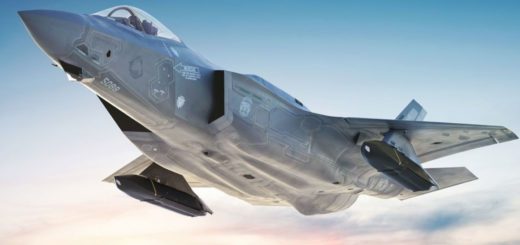
Alongside the 16 Rafale fighters, the agreement also includes SAMP/T NG air defense batteries, additional radar systems, expanded missile deliveries, as well as production licenses covering AASM precision-guided bombs, SCALP-EG cruise missiles, and Aster interceptor missiles. (Picture source: Dassault Aviation)
On July 13, 2026, France and Ukraine signed a bilateral defense roadmap that launches the long-term integration of the Rafale fighter jet into the Ukrainian Air Force through the acquisition of an initial batch of 16 units scheduled for delivery in 2028-2029. Announced by French President Emmanuel Macron following the Coalition of the Willing meeting in Paris, the agreement also includes SAMP/T NG air defense batteries, additional radar systems, pilot and maintainer training, expanded missile deliveries, and production licenses covering AASM precision-guided bombs, SCALP-EG cruise missiles, and Aster interceptor missiles. The roadmap implements the declaration of intent signed in November 2025, which established a long-term objective of acquiring up to 100 Rafales together with French-produced air defense assets.
Unlike previous transfers of Western fighter jets intended to satisfy immediate operational requirements, the Rafale program follows a conventional procurement cycle based on new production, infrastructure development, logistics, weapons integration, and personnel generation. The agreement therefore establishes the framework for replacing Soviet-era tactical aviation through a force-generation process extending well into the 2030s while simultaneously expanding Ukraine’s domestic defense industrial capacity. The first procurement covers 16 Rafale jets, corresponding to the size of one tactical fighter squadron once conversion aircraft, maintenance reserve, and attrition reserve are considered.
Macron stated that pilot and maintenance training will begin during the coming months, allowing operational conversion to progress while Dassault Aviation manufactures the aircraft. The production timeline reflects the current Rafale order book, which already includes deliveries for France, Indonesia, Serbia, the United Arab Emirates and other export customers, making immediate transfers from existing French inventories unlikely. Beyond the aircraft themselves, the acquisition includes mission planning infrastructure, maintenance equipment, logistics support, simulator training, weapons integration and sustainment contracts. This transforms the program and requires the parallel development of qualified personnel, technical support organizations, and operational doctrine before the first aircraft enter Ukrainian service.
The Rafale introduces a substantially different capability than the Mirage 2000-5F previously transferred by France. While the Mirage fleet primarily strengthens Ukraine’s interception capability against cruise missiles and airborne threats, the Rafale is intended to execute air superiority, deep strike, suppression of enemy air defenses, tactical reconnaissance, close air support and maritime strike with a single aircraft type. Its integration therefore supports the gradual replacement of several Soviet combat aircraft families, including MiG-29 fighters, Su-27 air superiority fighters, Su-24M strike aircraft and part of the Su-25 ground attack fleet. Instead of maintaining separate aircraft optimized for individual missions, Ukraine progressively shifts toward a multirole force in which mission specialization is determined primarily by software configuration, sensor employment and weapon load.
This reduces fleet fragmentation, simplifies long-term logistics and increases operational flexibility while standardizing maintenance and pilot qualification around fewer aircraft types. Aircraft entering production for Ukraine during 2028 are expected to conform to the Rafale F4 production standard. The F4 combines the Thales RBE2 active electronically scanned array radar, Front Sector Optronics infrared search and track system, and the Spectra electronic warfare suite into an integrated sensor architecture capable of simultaneously managing air-to-air surveillance, precision strike support, electronic threat detection and passive target tracking. Tactical data links permit continuous exchange of target tracks, engagement status and sensor information with other aircraft and command networks, allowing Rafales to engage targets detected by external sensors without relying exclusively on their own radar emissions.
Software architecture has been redesigned around incremental updates, enabling new weapons, electronic warfare functions and mission applications to be integrated without major structural modification. Predictive maintenance continuously monitors aircraft systems to identify component degradation before failure, reducing unscheduled maintenance events and increasing fleet availability, an important factor for a force initially limited to only 16 Rafales. The Rafale occupies the heavy segment of Ukraine’s future tactical aviation inventory. Powered by two Safran M88-2 turbofan engines generating 50 kN dry thrust and 75 kN with afterburner each, the French fighter reaches a maximum takeoff weight of 24.5 tonnes while carrying more than 4.7 tonnes of internal fuel and up to 9.5 tonnes of external stores distributed across 14 hardpoints.
By comparison, an F-16AM/BM MLU operates with a maximum takeoff weight below 20 tonnes and a smaller payload, while the Gripen E combines lower structural weight with reduced fuel and weapons capacity in exchange for lower sustainment requirements. The Rafale’s additional structural margin permits simultaneous carriage of SCALP-EG cruise missiles, Meteor or MICA air-to-air missiles, external fuel tanks and targeting or reconnaissance pods without major payload compromises. This configuration supports longer combat radius, greater loiter time and heavier stand-off strike packages than lighter Western fighters operating from the same theater. The aircraft can therefore perform deep interdiction missions without requiring separate escort or dedicated strike aircraft for many target sets.
Survivability depends primarily on the interaction between sensors, electronic warfare and stand-off employment rather than aerodynamic performance alone. The SPECTRA integrates radar warning receivers, electronic support measures, missile warning sensors, active jamming transmitters and automatic expendable countermeasure management into a unified defensive suite capable of detecting, classifying and responding to multiple threats simultaneously. Combined with the OSF infrared sensor, the Rafale can identify airborne targets passively before activating the RBE2 radar when tactical conditions permit. The AESA radar itself supports simultaneous air-to-air target tracking, synthetic aperture ground mapping, terrain following and precision weapon guidance during the same mission.
Nevertheless, the Rafale would continue operating against layered Russian air defense systems that include S-300, S-400, Buk-M3, Tor-M2, Pantsir-S1 and long-range fighter interception. Operational success would therefore continue to depend on stand-off weapons, electronic attack, intelligence support, route planning, decoys and coordinated multi-aircraft strike packages rather than direct penetration of defended airspace. The industrial component of the agreement extends beyond aviation. France authorized licensed production inside Ukraine of AASM precision-guided bombs, SCALP-EG cruise missiles and Aster interceptor missiles, linking aircraft procurement directly with sovereign munition production.
The Rafale already integrates Meteor, MICA EM, MICA IR, SCALP-EG, AASM and AM39 Exocet missiles within a common digital mission architecture, reducing future integration work because both aircraft and weapons originate from the same industrial ecosystem. Domestic production shortens replenishment timelines, reduces dependence on cross-border deliveries and increases resilience against supply chain disruption during prolonged combat operations. At the same time, additional radar systems and SAMP/T NG batteries strengthen the air defense architecture protecting air bases, maintenance facilities and logistical infrastructure supporting the Rafale fleet. The roadmap therefore establishes an integrated French combat system combining aircraft, precision weapons, ground-based air defense, sensors and industrial production.
The Rafale will eventually operate within a mixed Western fighter inventory projected to include 75 to 98 F-16AM/BM MLUs, 15-40 Mirage 2000-5Fs, an initial Gripen fleet with expansion toward 100 to 150 aircraft and up to 100 Rafales over the longer term. In such a structure, F-16s would likely remain the numerical backbone for routine defensive counter-air and conventional strike operations, Mirage 2000-5Fs would continue specializing in interception, while Gripens would emphasize dispersed operations from austere bases with comparatively limited logistical support requirements.
The Rafale would occupy the high-end strike component responsible for long-range precision attack, maritime strike, offensive counter-air, and suppression of enemy air defenses requiring greater payload, endurance, and sensor capability. Its operational effectiveness, however, will remain directly linked to the availability of SCALP-EG inventories, Meteor missiles, secure tactical communications, airborne early warning, intelligence support, electronic warfare assets, hardened air bases and the ability to sustain high sortie generation rates under continued Russian long-range missile and drone attacks. Even after its introduction, Ukraine’s air campaign would continue relying primarily on coordinated stand-off engagements rather than repeated penetration of Russia’s integrated air defense network.
Written by Jérôme Brahy
Jérôme Brahy is a defense analyst and documentalist at Army Recognition. He specializes in naval modernization, aviation, drones, armored vehicles, and artillery, with a focus on strategic developments in the United States, China, Ukraine, Russia, Türkiye, and Belgium. His analyses go beyond the facts, providing context, identifying key actors, and explaining why defense news matters on a global scale.
Explore More Defense News
• Land Defense News• Naval Defense News• Defense Aerospace News
{loadposition bannertop}
{loadposition sidebarpub}
France and Ukraine signed a bilateral defense roadmap in Paris on July 13, 2026, launching a long-term integration program to equip the Ukrainian Air Force with French-made Rafale fighter jets. The agreement secures the purchase of an initial batch of 16 Rafale multirole aircraft scheduled for delivery between 2028 and 2029. This procurement marks a strategic transition for Ukraine from immediate operational stopgap transfers toward a structured, multi-decade modernization of its tactical aviation fleet to replace Soviet-era combat aircraft.
The bilateral defense agreement establishes the procurement of 16 Rafale fighter jets alongside next-generation SAMP/T NG air defense batteries and advanced radar networks. It additionally grants Ukraine industrial licenses for the domestic production of SCALP-EG cruise missiles, Aster 30 interceptors, and AASM precision-guided bombs to ensure sovereign manufacturing capability.
Related topic: French Ambassador confirms Rafale fighters will soon join Ukraine’s F-16 and Gripen fleets
Alongside the 16 Rafale fighters, the agreement also includes SAMP/T NG air defense batteries, additional radar systems, expanded missile deliveries, as well as production licenses covering AASM precision-guided bombs, SCALP-EG cruise missiles, and Aster interceptor missiles. (Picture source: Dassault Aviation)
On July 13, 2026, France and Ukraine signed a bilateral defense roadmap that launches the long-term integration of the Rafale fighter jet into the Ukrainian Air Force through the acquisition of an initial batch of 16 units scheduled for delivery in 2028-2029. Announced by French President Emmanuel Macron following the Coalition of the Willing meeting in Paris, the agreement also includes SAMP/T NG air defense batteries, additional radar systems, pilot and maintainer training, expanded missile deliveries, and production licenses covering AASM precision-guided bombs, SCALP-EG cruise missiles, and Aster interceptor missiles. The roadmap implements the declaration of intent signed in November 2025, which established a long-term objective of acquiring up to 100 Rafales together with French-produced air defense assets.
Unlike previous transfers of Western fighter jets intended to satisfy immediate operational requirements, the Rafale program follows a conventional procurement cycle based on new production, infrastructure development, logistics, weapons integration, and personnel generation. The agreement therefore establishes the framework for replacing Soviet-era tactical aviation through a force-generation process extending well into the 2030s while simultaneously expanding Ukraine’s domestic defense industrial capacity. The first procurement covers 16 Rafale jets, corresponding to the size of one tactical fighter squadron once conversion aircraft, maintenance reserve, and attrition reserve are considered.
Macron stated that pilot and maintenance training will begin during the coming months, allowing operational conversion to progress while Dassault Aviation manufactures the aircraft. The production timeline reflects the current Rafale order book, which already includes deliveries for France, Indonesia, Serbia, the United Arab Emirates and other export customers, making immediate transfers from existing French inventories unlikely. Beyond the aircraft themselves, the acquisition includes mission planning infrastructure, maintenance equipment, logistics support, simulator training, weapons integration and sustainment contracts. This transforms the program and requires the parallel development of qualified personnel, technical support organizations, and operational doctrine before the first aircraft enter Ukrainian service.
The Rafale introduces a substantially different capability than the Mirage 2000-5F previously transferred by France. While the Mirage fleet primarily strengthens Ukraine’s interception capability against cruise missiles and airborne threats, the Rafale is intended to execute air superiority, deep strike, suppression of enemy air defenses, tactical reconnaissance, close air support and maritime strike with a single aircraft type. Its integration therefore supports the gradual replacement of several Soviet combat aircraft families, including MiG-29 fighters, Su-27 air superiority fighters, Su-24M strike aircraft and part of the Su-25 ground attack fleet. Instead of maintaining separate aircraft optimized for individual missions, Ukraine progressively shifts toward a multirole force in which mission specialization is determined primarily by software configuration, sensor employment and weapon load.
This reduces fleet fragmentation, simplifies long-term logistics and increases operational flexibility while standardizing maintenance and pilot qualification around fewer aircraft types. Aircraft entering production for Ukraine during 2028 are expected to conform to the Rafale F4 production standard. The F4 combines the Thales RBE2 active electronically scanned array radar, Front Sector Optronics infrared search and track system, and the Spectra electronic warfare suite into an integrated sensor architecture capable of simultaneously managing air-to-air surveillance, precision strike support, electronic threat detection and passive target tracking. Tactical data links permit continuous exchange of target tracks, engagement status and sensor information with other aircraft and command networks, allowing Rafales to engage targets detected by external sensors without relying exclusively on their own radar emissions.
Software architecture has been redesigned around incremental updates, enabling new weapons, electronic warfare functions and mission applications to be integrated without major structural modification. Predictive maintenance continuously monitors aircraft systems to identify component degradation before failure, reducing unscheduled maintenance events and increasing fleet availability, an important factor for a force initially limited to only 16 Rafales. The Rafale occupies the heavy segment of Ukraine’s future tactical aviation inventory. Powered by two Safran M88-2 turbofan engines generating 50 kN dry thrust and 75 kN with afterburner each, the French fighter reaches a maximum takeoff weight of 24.5 tonnes while carrying more than 4.7 tonnes of internal fuel and up to 9.5 tonnes of external stores distributed across 14 hardpoints.
By comparison, an F-16AM/BM MLU operates with a maximum takeoff weight below 20 tonnes and a smaller payload, while the Gripen E combines lower structural weight with reduced fuel and weapons capacity in exchange for lower sustainment requirements. The Rafale’s additional structural margin permits simultaneous carriage of SCALP-EG cruise missiles, Meteor or MICA air-to-air missiles, external fuel tanks and targeting or reconnaissance pods without major payload compromises. This configuration supports longer combat radius, greater loiter time and heavier stand-off strike packages than lighter Western fighters operating from the same theater. The aircraft can therefore perform deep interdiction missions without requiring separate escort or dedicated strike aircraft for many target sets.
Survivability depends primarily on the interaction between sensors, electronic warfare and stand-off employment rather than aerodynamic performance alone. The SPECTRA integrates radar warning receivers, electronic support measures, missile warning sensors, active jamming transmitters and automatic expendable countermeasure management into a unified defensive suite capable of detecting, classifying and responding to multiple threats simultaneously. Combined with the OSF infrared sensor, the Rafale can identify airborne targets passively before activating the RBE2 radar when tactical conditions permit. The AESA radar itself supports simultaneous air-to-air target tracking, synthetic aperture ground mapping, terrain following and precision weapon guidance during the same mission.
Nevertheless, the Rafale would continue operating against layered Russian air defense systems that include S-300, S-400, Buk-M3, Tor-M2, Pantsir-S1 and long-range fighter interception. Operational success would therefore continue to depend on stand-off weapons, electronic attack, intelligence support, route planning, decoys and coordinated multi-aircraft strike packages rather than direct penetration of defended airspace. The industrial component of the agreement extends beyond aviation. France authorized licensed production inside Ukraine of AASM precision-guided bombs, SCALP-EG cruise missiles and Aster interceptor missiles, linking aircraft procurement directly with sovereign munition production.
The Rafale already integrates Meteor, MICA EM, MICA IR, SCALP-EG, AASM and AM39 Exocet missiles within a common digital mission architecture, reducing future integration work because both aircraft and weapons originate from the same industrial ecosystem. Domestic production shortens replenishment timelines, reduces dependence on cross-border deliveries and increases resilience against supply chain disruption during prolonged combat operations. At the same time, additional radar systems and SAMP/T NG batteries strengthen the air defense architecture protecting air bases, maintenance facilities and logistical infrastructure supporting the Rafale fleet. The roadmap therefore establishes an integrated French combat system combining aircraft, precision weapons, ground-based air defense, sensors and industrial production.
The Rafale will eventually operate within a mixed Western fighter inventory projected to include 75 to 98 F-16AM/BM MLUs, 15-40 Mirage 2000-5Fs, an initial Gripen fleet with expansion toward 100 to 150 aircraft and up to 100 Rafales over the longer term. In such a structure, F-16s would likely remain the numerical backbone for routine defensive counter-air and conventional strike operations, Mirage 2000-5Fs would continue specializing in interception, while Gripens would emphasize dispersed operations from austere bases with comparatively limited logistical support requirements.
The Rafale would occupy the high-end strike component responsible for long-range precision attack, maritime strike, offensive counter-air, and suppression of enemy air defenses requiring greater payload, endurance, and sensor capability. Its operational effectiveness, however, will remain directly linked to the availability of SCALP-EG inventories, Meteor missiles, secure tactical communications, airborne early warning, intelligence support, electronic warfare assets, hardened air bases and the ability to sustain high sortie generation rates under continued Russian long-range missile and drone attacks. Even after its introduction, Ukraine’s air campaign would continue relying primarily on coordinated stand-off engagements rather than repeated penetration of Russia’s integrated air defense network.
Written by Jérôme Brahy
Jérôme Brahy is a defense analyst and documentalist at Army Recognition. He specializes in naval modernization, aviation, drones, armored vehicles, and artillery, with a focus on strategic developments in the United States, China, Ukraine, Russia, Türkiye, and Belgium. His analyses go beyond the facts, providing context, identifying key actors, and explaining why defense news matters on a global scale.
Explore More Defense News
• Land Defense News
• Naval Defense News
• Defense Aerospace News