U.S. Air Force Eyes a Vertical Takeoff Bomber for Indo-Pacific Operations
{loadposition bannertop}
{loadposition sidebarpub}
The U.S. Air Force is studying a vertical takeoff and landing strategic strike aircraft capable of flying long-range missions without relying on conventional runways. The concept could strengthen U.S. operational flexibility in the Indo-Pacific, where major air bases may be vulnerable during a high-intensity conflict.
The early-stage effort reflects the Air Force’s search for new ways to sustain long-range strike operations from dispersed locations if traditional airfields are damaged or inaccessible. While the B-21 Raider remains the backbone of the future bomber fleet, officials are also examining whether advanced vertical takeoff technology could provide an additional option for penetrating contested environments and expanding strategic strike capabilities.
Related News: U.S. to Build Bell X-76 High-Speed Vertical Takeoff Aircraft for Runway-Independent Combat
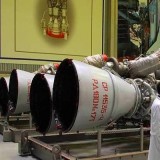
New Frontier Aerospace is developing the reusable Mjölnir liquid-propellant rocket engine and signed a Cooperative Research and Development Agreement with the Air Force Institute of Technology in 2025 to continue work on a hypersonic vertical takeoff aircraft(Picture source: New Frontier Aerospace)
The initiative comes only months after the acceleration of the B-21 program. In February, the U.S. Air Force announced an agreement with Northrop Grumman to increase production of the new stealth bomber by 25 percent, supported by $4.5 billion in funding provided through the One Big Beautiful Bill Act enacted in July 2025. While the B-21 is expected to become the backbone of the U.S. strategic bomber fleet, the new effort suggests the development of a complementary capability focused on improving operational survivability in highly contested environments.
According to an article published on July 29, 2026, by Steve Trimble in Aviation Week, the journalist obtained access to solicitation documents issued by Air Force Global Strike Command concerning a reusable vertical takeoff and landing aircraft prototype. The documents, which are not publicly available, outline the command’s requirements for the program. Aviation Week reports that industry responses are due by August 4 and that a contract could be awarded within 30 to 45 days.
The concept calls for an aircraft powered by a liquid-propellant rocket engine. After taking off vertically, the aircraft would transition to horizontal flight before accelerating to potentially supersonic or even hypersonic speeds. Once its strike mission is completed, it would return to its launch site and land vertically, allowing the platform to be reused without relying on conventional runway infrastructure. The documents also identify several key technologies, including autonomous flight control, thrust vector control, aerodynamic control surfaces designed for flight transitions, cryogenic propellant management, and materials capable of withstanding extremely high temperatures.
This approach considerably limits the number of companies capable of meeting the requirement. New Frontier Aerospace currently appears to be the industrial candidate most closely aligned with Air Force Global Strike Command’s specifications. The company is developing the reusable Mjölnir liquid-propellant rocket engine and signed a Cooperative Research and Development Agreement with the Air Force Institute of Technology in 2025 to continue work on a hypersonic vertical takeoff aircraft. Its Rocketplane concept, intended initially for military applications before possible adaptation for commercial transport, shares several characteristics with those described in the documents reviewed by Steve Trimble.
Other companies nevertheless possess capabilities that could become relevant if the program’s specifications evolve. Shield AI is developing the X-BAT, an autonomous VTOL combat aircraft intended for operations in contested environments. Rather than using rocket propulsion, the aircraft relies on a vectored-thrust turbojet, but it addresses the same operational objective of dispersing air assets and reducing dependence on conventional runways. Bell Textron continues development of its demonstrator under DARPA’s SPRINT program, while Aurora Flight Sciences has extensive experience with experimental VTOL aircraft architectures. Meanwhile, companies such as Hermeus and Venus Aerospace are advancing hypersonic technologies, although neither currently offers a vertical takeoff solution.
The program is part of a broader U.S. military effort to reduce dependence on conventional airfield infrastructure. DARPA is already funding the SPRINT program to develop high-speed aircraft capable of operating from very short or damaged runways. Air Force Global Strike Command’s requirement goes a step further by seeking a true vertical takeoff and landing capability, directly addressing the possibility that major air bases could be neutralized during the opening phase of a conflict against an opponent equipped with long-range strike capabilities.
From an operational perspective, such a platform would provide the U.S. military with greater flexibility. By eliminating the need for a conventional runway, it could operate from austere sites, sections of roadway, or dispersed forward locations across island chains. Combined with very high speed and autonomous flight, this architecture could reduce response times while making enemy targeting more complex. Recovering the aircraft at its launch site would also support a sustained operational tempo, even in an environment where airfield infrastructure is regularly targeted by precision strikes.
Beyond its technological dimension, the initiative reflects the continued evolution of U.S. strategy toward strike capabilities designed to remain operational in increasingly contested environments. If the concept progresses into an operational program, it could establish a new category of platform positioned between the strategic bomber, the reusable hypersonic vehicle, and space-access systems. Such a development is likely to be closely monitored by China and Russia, both of which continue to invest in long-range strike capabilities and technologies intended to preserve operational freedom against increasingly integrated air defense networks.
Written By Erwan Halna du Fretay – Defense Analyst, Army Recognition GroupErwan Halna du Fretay holds a Master’s degree in International Relations and has experience studying conflicts and global arms transfers. His research interests lie in Security and strategic studies, particularly the dynamics of the defense industry, the evolution of military technologies, and the strategic transformation of armed forces.
{loadposition bannertop}
{loadposition sidebarpub}
The U.S. Air Force is studying a vertical takeoff and landing strategic strike aircraft capable of flying long-range missions without relying on conventional runways. The concept could strengthen U.S. operational flexibility in the Indo-Pacific, where major air bases may be vulnerable during a high-intensity conflict.
The early-stage effort reflects the Air Force’s search for new ways to sustain long-range strike operations from dispersed locations if traditional airfields are damaged or inaccessible. While the B-21 Raider remains the backbone of the future bomber fleet, officials are also examining whether advanced vertical takeoff technology could provide an additional option for penetrating contested environments and expanding strategic strike capabilities.
Related News: U.S. to Build Bell X-76 High-Speed Vertical Takeoff Aircraft for Runway-Independent Combat
New Frontier Aerospace is developing the reusable Mjölnir liquid-propellant rocket engine and signed a Cooperative Research and Development Agreement with the Air Force Institute of Technology in 2025 to continue work on a hypersonic vertical takeoff aircraft(Picture source: New Frontier Aerospace)
The initiative comes only months after the acceleration of the B-21 program. In February, the U.S. Air Force announced an agreement with Northrop Grumman to increase production of the new stealth bomber by 25 percent, supported by $4.5 billion in funding provided through the One Big Beautiful Bill Act enacted in July 2025. While the B-21 is expected to become the backbone of the U.S. strategic bomber fleet, the new effort suggests the development of a complementary capability focused on improving operational survivability in highly contested environments.
According to an article published on July 29, 2026, by Steve Trimble in Aviation Week, the journalist obtained access to solicitation documents issued by Air Force Global Strike Command concerning a reusable vertical takeoff and landing aircraft prototype. The documents, which are not publicly available, outline the command’s requirements for the program. Aviation Week reports that industry responses are due by August 4 and that a contract could be awarded within 30 to 45 days.
The concept calls for an aircraft powered by a liquid-propellant rocket engine. After taking off vertically, the aircraft would transition to horizontal flight before accelerating to potentially supersonic or even hypersonic speeds. Once its strike mission is completed, it would return to its launch site and land vertically, allowing the platform to be reused without relying on conventional runway infrastructure. The documents also identify several key technologies, including autonomous flight control, thrust vector control, aerodynamic control surfaces designed for flight transitions, cryogenic propellant management, and materials capable of withstanding extremely high temperatures.
This approach considerably limits the number of companies capable of meeting the requirement. New Frontier Aerospace currently appears to be the industrial candidate most closely aligned with Air Force Global Strike Command’s specifications. The company is developing the reusable Mjölnir liquid-propellant rocket engine and signed a Cooperative Research and Development Agreement with the Air Force Institute of Technology in 2025 to continue work on a hypersonic vertical takeoff aircraft. Its Rocketplane concept, intended initially for military applications before possible adaptation for commercial transport, shares several characteristics with those described in the documents reviewed by Steve Trimble.
Other companies nevertheless possess capabilities that could become relevant if the program’s specifications evolve. Shield AI is developing the X-BAT, an autonomous VTOL combat aircraft intended for operations in contested environments. Rather than using rocket propulsion, the aircraft relies on a vectored-thrust turbojet, but it addresses the same operational objective of dispersing air assets and reducing dependence on conventional runways. Bell Textron continues development of its demonstrator under DARPA’s SPRINT program, while Aurora Flight Sciences has extensive experience with experimental VTOL aircraft architectures. Meanwhile, companies such as Hermeus and Venus Aerospace are advancing hypersonic technologies, although neither currently offers a vertical takeoff solution.
The program is part of a broader U.S. military effort to reduce dependence on conventional airfield infrastructure. DARPA is already funding the SPRINT program to develop high-speed aircraft capable of operating from very short or damaged runways. Air Force Global Strike Command’s requirement goes a step further by seeking a true vertical takeoff and landing capability, directly addressing the possibility that major air bases could be neutralized during the opening phase of a conflict against an opponent equipped with long-range strike capabilities.
From an operational perspective, such a platform would provide the U.S. military with greater flexibility. By eliminating the need for a conventional runway, it could operate from austere sites, sections of roadway, or dispersed forward locations across island chains. Combined with very high speed and autonomous flight, this architecture could reduce response times while making enemy targeting more complex. Recovering the aircraft at its launch site would also support a sustained operational tempo, even in an environment where airfield infrastructure is regularly targeted by precision strikes.
Beyond its technological dimension, the initiative reflects the continued evolution of U.S. strategy toward strike capabilities designed to remain operational in increasingly contested environments. If the concept progresses into an operational program, it could establish a new category of platform positioned between the strategic bomber, the reusable hypersonic vehicle, and space-access systems. Such a development is likely to be closely monitored by China and Russia, both of which continue to invest in long-range strike capabilities and technologies intended to preserve operational freedom against increasingly integrated air defense networks.
Written By Erwan Halna du Fretay – Defense Analyst, Army Recognition Group
Erwan Halna du Fretay holds a Master’s degree in International Relations and has experience studying conflicts and global arms transfers. His research interests lie in Security and strategic studies, particularly the dynamics of the defense industry, the evolution of military technologies, and the strategic transformation of armed forces.