Russia Advances Su-57 Program with a New Configuration Built Around Operational Lessons
{loadposition bannertop}
{loadposition sidebarpub}
Russia’s United Aircraft Corporation has delivered a new batch of Su-57 fifth-generation fighters in a revised technical configuration, according to a September 24, 2026 announcement reported by TASS, with changes informed by operational experience. The updated production standard is intended to expand the fighter’s combat flexibility as Russia continues adapting the Su-57 to evolving battlefield requirements.
The new configuration broadens the missions available to the Su-57 and supports the integration of additional aerial weapons, although UAC has not disclosed the specific systems introduced in this batch. The delivery highlights Russia’s effort to feed combat lessons directly into serial production, potentially accelerating improvements in weapons employment and overall mission capability across its fifth-generation fighter fleet.
Related Topic: Su-57D’s Combat AI Program Shows How Russia Envisions Warfare Beyond Fifth-Generation Fighters
Russia’s latest Su-57 delivery highlights how combat experience is shaping new production configurations, weapons integration and the fighter fleet’s continuing evolution (Picture Source: UAC)
On September 24, 2026, Russia’s United Aircraft Corporation announced the delivery of a new batch of Su-57 multirole fighter aircraft to the Russian Aerospace Forces, marking another stage in the continuing modernization of the country’s fifth-generation combat aviation fleet. According to TASS, citing UAC and Rostec, the newly produced aircraft were handed over in what officials described as a “new technical configuration” shaped in part by lessons accumulated during operational employment. Beyond increasing the number of aircraft available to the service, the delivery draws attention to the evolving production standard of the Su-57 and the effort to incorporate operational experience into newly manufactured fighters.
The delivered aircraft completed a full cycle of factory testing before acceptance, including evaluations in different operating modes by Russian Defense Ministry pilots, after which they flew to their assigned airfield. UAC did not disclose the number of fighters included in the batch. The corporation stressed, however, that Su-57 aircraft currently leaving the production line differ from those produced during the earlier phase of Russian combat operations in Ukraine, describing the platform as having undergone substantial transformation during that period. The testing and acceptance process also shows that these aircraft are being delivered as operational production examples rather than experimental platforms, placing growing emphasis on UAC’s ability to manufacture, test and introduce successive configurations while maintaining the required production tempo.
Combat Experience Reshapes the Su-57 Production Standard
That distinction is central to understanding the latest delivery. The Su-57 program is increasingly being presented not simply as a fifth-generation aircraft moving through serial production, but as an evolving combat platform whose configuration can be adjusted as operational lessons, new subsystems and weapons mature. UAC has explicitly stated that development and modernization have been influenced by extensive experience gained during combat operations. At the same time, the corporation has not publicly detailed which sensors, avionics, electronic-warfare equipment, communications systems, software changes or airframe modifications distinguish the September batch. Combat experience may influence several of these areas, but attributing specific undisclosed hardware changes to these aircraft would go beyond the information released by UAC.
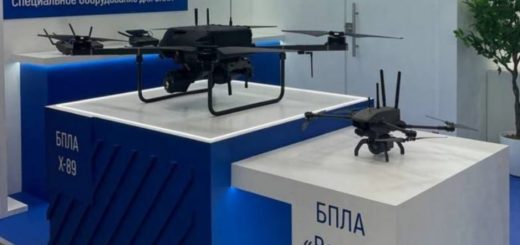
One of the clearest indicators of the direction of this evolution concerns the aircraft’s weapons architecture. A Russian Aerospace Forces pilot quoted in the announcement said that the new technical configuration would broaden the range of missions assigned to the Su-57 and that capabilities incorporated into its weapons system would enable the use of new types of aerial weapons. This suggests that modernization is being pursued not only to improve individual aircraft characteristics but also to expand the fighter’s operational flexibility across air-to-air and strike missions. Rostec has separately presented new weapons and unmanned systems intended for the wider Su-57 family, providing useful context for the program’s development, although those announcements do not establish that every newly displayed system is already integrated into the aircraft delivered in September.
The latest handover also fits into a broader pattern of progressive changes within Su-57 production. Earlier deliveries have similarly been described by Russian industry as incorporating updated technical configurations and revised weapons capabilities, indicating that modernization is being introduced alongside continuing serial manufacture rather than being treated solely as a future mid-life upgrade. This approach can shorten the interval between operational feedback, engineering modification, testing and fielding. It also makes each production batch potentially relevant to understanding how the baseline aircraft is evolving. The available public information does not establish that all recent batches share an identical configuration, however, making direct technical comparisons between individual deliveries difficult without more detailed disclosures from UAC or the Russian Defense Ministry.
From Aircraft Modernization to Fleet-Level Capability
From an operational perspective, the broader issue is how efficiently these successive improvements can be translated from individual production batches into fleet-wide capability. Introducing combat-derived modifications during serial production can allow an aircraft program to respond more rapidly to emerging requirements, new weapons and changes in the electronic or tactical environment. At the same time, operating aircraft built to different standards can create considerations involving training, maintenance, software support, spare parts and configuration management if upgrades are not eventually standardized across the fleet. There is currently insufficient public information to determine how extensively such differences exist within Russia’s operational Su-57 force. The undisclosed size of the September batch also prevents a precise assessment of how much the delivery changes the overall composition or availability of the fleet.
The September delivery ultimately highlights a transition in the Su-57 program from establishing an initial fifth-generation capability toward managing an aircraft that is being continuously revised as production continues. The most important measure of this process will not be any single batch or individual technical modification, but Russia’s ability to manufacture the aircraft at scale, integrate new weapons and onboard systems, maintain common operational standards and distribute improved capabilities across the active fleet. For defense planners monitoring the program, the central question is increasingly the relationship between technological evolution and force generation: how quickly combat-derived improvements can move from operational experience to the production line, and how effectively those improvements can be converted into sustained military capability.
Explore More Defense News
• Land Defense News• Naval Defense News• Defense Aerospace News
Written by Teoman S. Nicanci – Defense Analyst, Army Recognition Group
Teoman S. Nicanci holds degrees in Political Science, Comparative and International Politics, and International Relations and Diplomacy from leading Belgian universities, with research focused on Russian strategic behavior, defense technology, and modern warfare. He is a defense analyst at Army Recognition, specializing in the global defense industry, military armament, and emerging defense technologies.
{loadposition bannertop}
{loadposition sidebarpub}
Russia’s United Aircraft Corporation has delivered a new batch of Su-57 fifth-generation fighters in a revised technical configuration, according to a September 24, 2026 announcement reported by TASS, with changes informed by operational experience. The updated production standard is intended to expand the fighter’s combat flexibility as Russia continues adapting the Su-57 to evolving battlefield requirements.
The new configuration broadens the missions available to the Su-57 and supports the integration of additional aerial weapons, although UAC has not disclosed the specific systems introduced in this batch. The delivery highlights Russia’s effort to feed combat lessons directly into serial production, potentially accelerating improvements in weapons employment and overall mission capability across its fifth-generation fighter fleet.
Related Topic: Su-57D’s Combat AI Program Shows How Russia Envisions Warfare Beyond Fifth-Generation Fighters
Russia’s latest Su-57 delivery highlights how combat experience is shaping new production configurations, weapons integration and the fighter fleet’s continuing evolution (Picture Source: UAC)
On September 24, 2026, Russia’s United Aircraft Corporation announced the delivery of a new batch of Su-57 multirole fighter aircraft to the Russian Aerospace Forces, marking another stage in the continuing modernization of the country’s fifth-generation combat aviation fleet. According to TASS, citing UAC and Rostec, the newly produced aircraft were handed over in what officials described as a “new technical configuration” shaped in part by lessons accumulated during operational employment. Beyond increasing the number of aircraft available to the service, the delivery draws attention to the evolving production standard of the Su-57 and the effort to incorporate operational experience into newly manufactured fighters.
The delivered aircraft completed a full cycle of factory testing before acceptance, including evaluations in different operating modes by Russian Defense Ministry pilots, after which they flew to their assigned airfield. UAC did not disclose the number of fighters included in the batch. The corporation stressed, however, that Su-57 aircraft currently leaving the production line differ from those produced during the earlier phase of Russian combat operations in Ukraine, describing the platform as having undergone substantial transformation during that period. The testing and acceptance process also shows that these aircraft are being delivered as operational production examples rather than experimental platforms, placing growing emphasis on UAC’s ability to manufacture, test and introduce successive configurations while maintaining the required production tempo.
Combat Experience Reshapes the Su-57 Production Standard
That distinction is central to understanding the latest delivery. The Su-57 program is increasingly being presented not simply as a fifth-generation aircraft moving through serial production, but as an evolving combat platform whose configuration can be adjusted as operational lessons, new subsystems and weapons mature. UAC has explicitly stated that development and modernization have been influenced by extensive experience gained during combat operations. At the same time, the corporation has not publicly detailed which sensors, avionics, electronic-warfare equipment, communications systems, software changes or airframe modifications distinguish the September batch. Combat experience may influence several of these areas, but attributing specific undisclosed hardware changes to these aircraft would go beyond the information released by UAC.
One of the clearest indicators of the direction of this evolution concerns the aircraft’s weapons architecture. A Russian Aerospace Forces pilot quoted in the announcement said that the new technical configuration would broaden the range of missions assigned to the Su-57 and that capabilities incorporated into its weapons system would enable the use of new types of aerial weapons. This suggests that modernization is being pursued not only to improve individual aircraft characteristics but also to expand the fighter’s operational flexibility across air-to-air and strike missions. Rostec has separately presented new weapons and unmanned systems intended for the wider Su-57 family, providing useful context for the program’s development, although those announcements do not establish that every newly displayed system is already integrated into the aircraft delivered in September.
The latest handover also fits into a broader pattern of progressive changes within Su-57 production. Earlier deliveries have similarly been described by Russian industry as incorporating updated technical configurations and revised weapons capabilities, indicating that modernization is being introduced alongside continuing serial manufacture rather than being treated solely as a future mid-life upgrade. This approach can shorten the interval between operational feedback, engineering modification, testing and fielding. It also makes each production batch potentially relevant to understanding how the baseline aircraft is evolving. The available public information does not establish that all recent batches share an identical configuration, however, making direct technical comparisons between individual deliveries difficult without more detailed disclosures from UAC or the Russian Defense Ministry.
From Aircraft Modernization to Fleet-Level Capability
From an operational perspective, the broader issue is how efficiently these successive improvements can be translated from individual production batches into fleet-wide capability. Introducing combat-derived modifications during serial production can allow an aircraft program to respond more rapidly to emerging requirements, new weapons and changes in the electronic or tactical environment. At the same time, operating aircraft built to different standards can create considerations involving training, maintenance, software support, spare parts and configuration management if upgrades are not eventually standardized across the fleet. There is currently insufficient public information to determine how extensively such differences exist within Russia’s operational Su-57 force. The undisclosed size of the September batch also prevents a precise assessment of how much the delivery changes the overall composition or availability of the fleet.
The September delivery ultimately highlights a transition in the Su-57 program from establishing an initial fifth-generation capability toward managing an aircraft that is being continuously revised as production continues. The most important measure of this process will not be any single batch or individual technical modification, but Russia’s ability to manufacture the aircraft at scale, integrate new weapons and onboard systems, maintain common operational standards and distribute improved capabilities across the active fleet. For defense planners monitoring the program, the central question is increasingly the relationship between technological evolution and force generation: how quickly combat-derived improvements can move from operational experience to the production line, and how effectively those improvements can be converted into sustained military capability.
Explore More Defense News
• Land Defense News
• Naval Defense News
• Defense Aerospace News
Written by Teoman S. Nicanci – Defense Analyst, Army Recognition Group
Teoman S. Nicanci holds degrees in Political Science, Comparative and International Politics, and International Relations and Diplomacy from leading Belgian universities, with research focused on Russian strategic behavior, defense technology, and modern warfare. He is a defense analyst at Army Recognition, specializing in the global defense industry, military armament, and emerging defense technologies.