Australia and U.S. Strengthen Indo-Pacific Long-Range Strike Readiness in Major Munitions Exercise
{loadposition bannertop}
{loadposition sidebarpub}
Australia and the United States have strengthened their ability to sustain long-range precision strikes by completing Exercise Death Strike: Trident Fury at Dyess Air Force Base, demonstrating that allied crews can generate combat-ready munitions under operational pressure. Reported by U.S. Strategic Command on July 22, 2026, the exercise underscored that the effectiveness of weapons such as the JASSM depends not only on the missile itself but on the ability of multinational teams to rapidly prepare, adapt, and regenerate strike capability in a contested environment.
The exercise focused on continuous production of conventional bombs and JASSMs while crews responded to changing operational tasking, validating interoperable weapons-generation procedures rather than scripted routines. Australia’s participation highlights a broader Indo-Pacific trend toward allied sustainment, resilience, and integrated long-range strike operations, reinforcing deterrence by ensuring precision weapons can be generated and rearmed even during prolonged, high-intensity conflict.
Related Topic: Australia’s AH-64E Apache Sharpens Combat Readiness for High-Intensity Indo-Pacific Operations
U.S. and Australian forces tested around-the-clock JASSM and conventional weapons production at Dyess Air Force Base to strengthen allied long-range strike readiness for contested Indo-Pacific operations (Picture Source: U.S. Air Force)
On July 22, 2026, U.S. Strategic Command reported that American and Australian personnel had completed Exercise Death Strike: Trident Fury at Dyess Air Force Base, Texas. Held from June 22 to 25, the large-scale exercise brought together the U.S. Air Force, U.S. Marine Corps and Royal Australian Air Force for continuous munitions production under simulated operational pressure. According to the official account published by the 7th Bomb Wing, the event tested combat production, operational planning and interoperability. Its broader relevance lies in a central reality of modern air warfare: long-range strike capability depends on allied crews being able to prepare, move and regenerate precision weapons after operations become contested.
Hosted by the 7th Munitions Squadron as an Air Force Global Strike Command Capabilities Exercise, Trident Fury began with the release of an air tasking order requiring personnel to assess available stocks, select munition lots and move components to designated production areas. Crews then entered 24-hour operations, building weapons and delivering them to the flightline for inspection and evaluation. Daily fragmentary-order changes forced the multinational teams to revise priorities while maintaining production, replacing scripted procedures with realistic decision-making under pressure. The objective was not simply to place allied personnel in the same facility, but to determine whether they could translate rapidly changing operational requirements into a supportable weapons plan.
A major training milestone involved Multi-Role Pylon Loads inside the weapons armament facility. Using a launcher load frame, technicians conducted a rapid magazine-reload-style process and secured heavy conventional bombs and Joint Air-to-Surface Standoff Missiles, or JASSMs, directly onto launcher racks. This backshop activity is a critical part of bomber force generation because it can move time-consuming preparation away from the aircraft parking area, allowing missile configuration and aircraft maintenance to proceed in parallel. Trident Fury did not disclose production times, missile quantities or comparisons with standard loading procedures, but the training demonstrated the supporting work required before a standoff weapon can reach an aircraft.
The JASSM activity carries added weight at Dyess, home of the 7th Bomb Wing and the U.S. Air Force’s only formal B-1B training unit. The B-1B Lancer can carry a conventional payload of up to 75,000 pounds and has an advertised capacity of up to 24 AGM-158A JASSMs, giving a small bomber formation the potential to generate a substantial precision-standoff salvo. Yet that capacity depends on missiles being inspected, transported, configured and matched with launcher assemblies while crews respond to revised tasking and safety requirements. The official Trident Fury announcement does not state that a B-1B flew during the exercise, that a JASSM was loaded aboard an aircraft or which missile variant was handled. It also does not indicate whether the weapons were live, inert or training assets.
Trident Fury also appears to represent an evolution in the Death Strike exercise series. During Death Strike 25-03 in September 2025, Dyess personnel moved and generated the installation’s JASSM inventory, delivered missiles to the flightline and loaded inert weapons onto B-1B bombers. The 2026 event expanded that concept by integrating personnel from different Air Force commands, the Air National Guard, Air Force Reserve, Marine Corps and RAAF into specialized JASSM and conventional bomb-production areas. The progression points to a shift from validating the internal surge capacity of a single bomber base toward testing whether a multinational workforce can sustain the weapons-generation chain under changing and austere conditions.
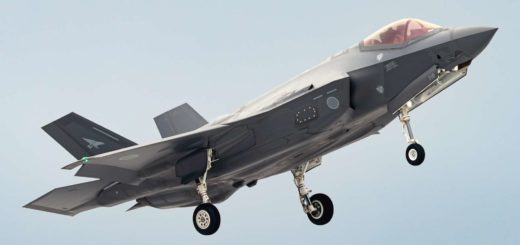
Australia’s participation gives the exercise a clear Indo-Pacific dimension. RAAF armament specialists from No. 6 Squadron and No. 77 Squadron worked alongside U.S. personnel, with Australian technicians taking the lead during a short-notice conventional bomb build on the final day. No. 6 Squadron operates the EA-18G Growler electronic-attack aircraft, while No. 77 Squadron operates the F-35A Lightning II. Their involvement does not mean Growler or F-35 tactics were tested at Dyess, but it placed personnel from two capabilities associated with penetrating or degrading advanced air-defence networks inside the support system behind U.S. long-range strike operations. This experience aligns with Australia’s strategy of denial, its investment in extended-range JASSM weapons and its effort to strengthen sustainment, operational resilience and cooperation with the United States.
The deterrence signal from Trident Fury extends beyond the B-1B or JASSM as individual systems. It lies in the prospect of U.S. and Australian personnel using compatible procedures to transform stored munitions into combat-ready loads despite limited tooling, reduced infrastructure and rapidly changing orders. The exercise did not reveal stockpile depth, production rates or how long multinational operations could be sustained, leaving important questions about missile availability and industrial replenishment unanswered. Even so, the message from Dyess was direct: allied long-range strike power begins on the production pad, where trained crews must be able to adapt, reload and keep the weapons chain moving across distant and contested theatres.
Explore More Defense News
• Land Defense News• Naval Defense News• Defense Aerospace News
{loadposition bannertop}
{loadposition sidebarpub}
Australia and the United States have strengthened their ability to sustain long-range precision strikes by completing Exercise Death Strike: Trident Fury at Dyess Air Force Base, demonstrating that allied crews can generate combat-ready munitions under operational pressure. Reported by U.S. Strategic Command on July 22, 2026, the exercise underscored that the effectiveness of weapons such as the JASSM depends not only on the missile itself but on the ability of multinational teams to rapidly prepare, adapt, and regenerate strike capability in a contested environment.
The exercise focused on continuous production of conventional bombs and JASSMs while crews responded to changing operational tasking, validating interoperable weapons-generation procedures rather than scripted routines. Australia’s participation highlights a broader Indo-Pacific trend toward allied sustainment, resilience, and integrated long-range strike operations, reinforcing deterrence by ensuring precision weapons can be generated and rearmed even during prolonged, high-intensity conflict.
Related Topic: Australia’s AH-64E Apache Sharpens Combat Readiness for High-Intensity Indo-Pacific Operations
U.S. and Australian forces tested around-the-clock JASSM and conventional weapons production at Dyess Air Force Base to strengthen allied long-range strike readiness for contested Indo-Pacific operations (Picture Source: U.S. Air Force)
On July 22, 2026, U.S. Strategic Command reported that American and Australian personnel had completed Exercise Death Strike: Trident Fury at Dyess Air Force Base, Texas. Held from June 22 to 25, the large-scale exercise brought together the U.S. Air Force, U.S. Marine Corps and Royal Australian Air Force for continuous munitions production under simulated operational pressure. According to the official account published by the 7th Bomb Wing, the event tested combat production, operational planning and interoperability. Its broader relevance lies in a central reality of modern air warfare: long-range strike capability depends on allied crews being able to prepare, move and regenerate precision weapons after operations become contested.
Hosted by the 7th Munitions Squadron as an Air Force Global Strike Command Capabilities Exercise, Trident Fury began with the release of an air tasking order requiring personnel to assess available stocks, select munition lots and move components to designated production areas. Crews then entered 24-hour operations, building weapons and delivering them to the flightline for inspection and evaluation. Daily fragmentary-order changes forced the multinational teams to revise priorities while maintaining production, replacing scripted procedures with realistic decision-making under pressure. The objective was not simply to place allied personnel in the same facility, but to determine whether they could translate rapidly changing operational requirements into a supportable weapons plan.
A major training milestone involved Multi-Role Pylon Loads inside the weapons armament facility. Using a launcher load frame, technicians conducted a rapid magazine-reload-style process and secured heavy conventional bombs and Joint Air-to-Surface Standoff Missiles, or JASSMs, directly onto launcher racks. This backshop activity is a critical part of bomber force generation because it can move time-consuming preparation away from the aircraft parking area, allowing missile configuration and aircraft maintenance to proceed in parallel. Trident Fury did not disclose production times, missile quantities or comparisons with standard loading procedures, but the training demonstrated the supporting work required before a standoff weapon can reach an aircraft.
The JASSM activity carries added weight at Dyess, home of the 7th Bomb Wing and the U.S. Air Force’s only formal B-1B training unit. The B-1B Lancer can carry a conventional payload of up to 75,000 pounds and has an advertised capacity of up to 24 AGM-158A JASSMs, giving a small bomber formation the potential to generate a substantial precision-standoff salvo. Yet that capacity depends on missiles being inspected, transported, configured and matched with launcher assemblies while crews respond to revised tasking and safety requirements. The official Trident Fury announcement does not state that a B-1B flew during the exercise, that a JASSM was loaded aboard an aircraft or which missile variant was handled. It also does not indicate whether the weapons were live, inert or training assets.
Trident Fury also appears to represent an evolution in the Death Strike exercise series. During Death Strike 25-03 in September 2025, Dyess personnel moved and generated the installation’s JASSM inventory, delivered missiles to the flightline and loaded inert weapons onto B-1B bombers. The 2026 event expanded that concept by integrating personnel from different Air Force commands, the Air National Guard, Air Force Reserve, Marine Corps and RAAF into specialized JASSM and conventional bomb-production areas. The progression points to a shift from validating the internal surge capacity of a single bomber base toward testing whether a multinational workforce can sustain the weapons-generation chain under changing and austere conditions.
Australia’s participation gives the exercise a clear Indo-Pacific dimension. RAAF armament specialists from No. 6 Squadron and No. 77 Squadron worked alongside U.S. personnel, with Australian technicians taking the lead during a short-notice conventional bomb build on the final day. No. 6 Squadron operates the EA-18G Growler electronic-attack aircraft, while No. 77 Squadron operates the F-35A Lightning II. Their involvement does not mean Growler or F-35 tactics were tested at Dyess, but it placed personnel from two capabilities associated with penetrating or degrading advanced air-defence networks inside the support system behind U.S. long-range strike operations. This experience aligns with Australia’s strategy of denial, its investment in extended-range JASSM weapons and its effort to strengthen sustainment, operational resilience and cooperation with the United States.
The deterrence signal from Trident Fury extends beyond the B-1B or JASSM as individual systems. It lies in the prospect of U.S. and Australian personnel using compatible procedures to transform stored munitions into combat-ready loads despite limited tooling, reduced infrastructure and rapidly changing orders. The exercise did not reveal stockpile depth, production rates or how long multinational operations could be sustained, leaving important questions about missile availability and industrial replenishment unanswered. Even so, the message from Dyess was direct: allied long-range strike power begins on the production pad, where trained crews must be able to adapt, reload and keep the weapons chain moving across distant and contested theatres.
Explore More Defense News
• Land Defense News
• Naval Defense News
• Defense Aerospace News