First B-52J bomber flight approaches as US Air Force completes Rolls-Royce F130 engine review
{loadposition bannertop}
{loadposition sidebarpub}
The U.S. Air Force has cleared the B-52 Commercial Engine Replacement Program through Critical Design Review, confirming on May 4, 2026, that integration of the Rolls-Royce F130 engine can move into prototype aircraft modification and flight testing. The milestone keeps the B-52J modernization effort on track to transform a Cold War-era strategic bomber into a long-range standoff strike aircraft with greater endurance, lower tanker dependency, and improved survivability for operations against heavily defended targets.
The F130-powered B-52J will combine more efficient propulsion with AESA radar, digital avionics, Link 16 connectivity, and expanded electronic warfare systems to support future cruise missile and hypersonic strike missions alongside the B-21 Raider. By extending the operational life of 76 bombers into the 2050s, the program preserves a high-capacity arsenal aircraft capable of carrying massive conventional or nuclear payloads across intercontinental distances while adapting to Indo-Pacific long-range warfare requirements.
Related topic: How the B-52J upgrade will keep the US B-52 Stratofortress strategic bomber flying for a historic 100 years
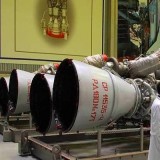
The Rolls-Royce F130 will give the B-52J lower fuel consumption, longer range, reduced maintenance workload, higher reliability, greater electrical power for modern onboard systems, and simpler logistics compared with the 1960s-era TF33 engines it replaces. (Picture source: Army Recognition based on Boeing visual)
On May 4, 2026, the U.S. Air Force confirmed the completion of the Critical Design Review (CDR) for the B-52 Commercial Engine Replacement Program (CERP), clearing the way for the modification of the first two B-52H bombers that will become B-52J test assets. The review validated the propulsion integration architecture, redesigned nacelles and pylons, electrical generation systems, software interfaces, airflow characteristics, and aircraft-level compatibility required to integrate the Rolls-Royce F130 turbofan onto airframes originally manufactured between 1961 and 1962.
Boeing will perform the modifications at San Antonio, Texas, before the B-52s transfer to Edwards AFB for developmental and operational testing. The engine replacement program remains one element of a broader B-52J modernization package that also includes AESA radar integration, digital avionics, Link 16 connectivity, updated cockpit architecture, and expanded electronic warfare systems. Current Air Force planning retains 76 upgraded B-52J bombers in operational service into the 2050s, extending the bomber’s projected lifespan toward a century after first entering service.
Initial Operational Capability is now projected near 2033 after delays caused by integration issues, funding shortfalls, and schedule conflicts across parallel B-52 modernization efforts. The Air Force initiated the re-engining effort because sustainment projections for the TF33-PW-103 engine deteriorated significantly beyond the 2030 timeframe. The TF33 entered service during the early 1960s as the U.S. military’s first operational turbofan and accumulated more than 72 million flight hours across the B-52, KC-135, E-3, and C-141 fleets. More than 1,000 TF33 engines remained operational as of 2024, but depot maintenance requirements continued increasing.
These requirements are due to turbine fatigue, corrosion, parts obsolescence, and the contraction of the supplier base supporting a design derived from 1950s-era JT3D and J57 engines. Structural analysis of the B-52H fleet, however, concluded that the airframe itself retained sufficient fatigue life for operations into the 2050s, if propulsion, electrical, and mission systems were modernized. Air Force planners, therefore, compared the cost and technical risk of developing a completely new non-stealth bomber against extending the B-52 fleet through re-engining and subsystem replacement.
The service concluded that replacing engines on the existing fleet represented the lower-risk and lower-cost option while preserving an aircraft already capable of carrying 70,000 to 80,000 lb of mixed conventional and nuclear ordnance over intercontinental distances. CERP formally entered the Middle Tier Acquisition rapid prototyping pathway in September 2018 with a target procurement of approximately 650 engines, including reserve inventory, for the 76-aircraft operational fleet. The propulsion replacement strategy intentionally avoided major structural redesign by selecting an engine within the same thrust class as the TF33.
The existing TF33-PW-103 generates between 17,000 and 21,000 lb of thrust depending on operating conditions, while the F130 produces roughly 17,000 lb, allowing the Air Force to preserve the B-52’s eight-engine arrangement and avoid expensive wing reinforcement or aerodynamic restructuring. Unlike the TF33, which still uses analog hydromechanical controls, the F130 incorporates a Full Authority Digital Engine Control (FADEC) architecture for automated thrust management, diagnostics, and engine health monitoring. The F130 derives from the BR725 commercial turbofan engine used in the Gulfstream G650 and G650ER business jets, and belongs to the BR700 engine family, which accumulated more than 30 million flight hours before B-52 integration work began.
The engine uses a 50-inch swept fan with 24 blades and operates with a bypass ratio near 4.2:1, substantially higher than the TF33’s low-bypass configuration. Rolls-Royce estimates the propulsion change will reduce fuel consumption by 20-30%, depending on mission profile, while also lowering specific fuel consumption and vibration loads across the aircraft. The company also designed the engine around an extended on-wing service life, with Air Force planning assuming significantly reduced depot overhaul frequency compared with the TF33s currently sustaining B-52 operations.
The operational impact of the propulsion replacement extends beyond maintenance savings and directly affects range, sortie generation, and tanker dependency. The B-52H currently possesses an unrefueled range of nearly 8,800 miles, with a ferry range of 10,145 miles, but TF33 fuel consumption imposes significant tanker support requirements during long-range strike operations. With the F130, the B-52J could potentially see its combat radius exceed 11,000 miles and its ferry range surpass 13,000 miles, figures consistent with the projected ~30% reduction in fuel consumption, although these remain non-official estimates from analysts and aerospace engineers.
The propulsion replacement also addresses one of the largest manpower burdens within the B-52 fleet, as TF33 sustainment currently requires extensive inspection and repair work on turbine sections and aging support components. Another operational change concerns logistics simplification inside the B-52’s dual-engine pods. TF33 installations require separate left and right engine arrangements that are not interchangeable, increasing spare inventory complexity, whereas all F130 engines are fully interchangeable regardless of installation position. The modernization also introduces significantly greater onboard electrical generation capacity through new Integrated Drive Generators installed with each engine.
The additional electrical output is required because the B-52J will integrate higher-demand systems, including the Raytheon AN/APG-79 AESA radar, digital avionics architecture, Link 16 connectivity, and future electronic warfare equipment that exceeds the electrical limits of the TF33. However, integrating the F130 requires substantially more engineering work than a direct engine swap because the original B-52 propulsion arrangement was never designed for a modern commercial-derived turbofan. Boeing redesigned nacelles, pylons, inlet geometry, electrical systems, cockpit interfaces, and software architecture while attempting to minimize structural modifications to the airframe.
The new nacelles are physically larger than the ones used by the TF33 and mounted closer to the wing through shortened struts to improve aerodynamic integration and reduce structural loads. Spirit AeroSystems initially received contracts to manufacture the nacelles and struts before Boeing later acquired the company. Wind tunnel evaluations and simulation work identified airflow distortion and inlet operability problems associated with the bomber’s side-by-side dual-engine pod arrangement, particularly during crosswind conditions and turbulent airflow environments. Boeing subsequently conducted a digital redesign of the inlet geometry after test data showed that non-uniform airflow conditions could degrade engine operability and thrust stability.
The US Air Force also integrated completely redesigned electrical distribution systems and internal rewiring because future mission systems require substantially greater onboard power generation than the aircraft’s original Cold War-era architecture can support. The F130 propulsion test campaign relied on multiple facilities to validate both engine performance and integration behavior before prototype aircraft modification begins. Rolls-Royce started Rapid Twin Pod Tests at NASA Stennis Space Center in 2023 using a representative dual-engine pod configuration replicating the B-52 installation geometry.
The tests examined inlet airflow behavior, crosswind effects, inlet distortion, and turbulent operating conditions associated with the B-52’s unusual eight-engine layout. Sea-level testing later proceeded at the upgraded Test Cell 114 facility in Indianapolis, where engineers evaluated initial software releases and gathered performance data needed for certification and integration work. In early 2026, Rolls-Royce completed altitude and operability testing at the Arnold Engineering Development Complex in Tennessee. The test series included sustained high-altitude operating conditions, airflow distortion simulations, and Integrated Drive Generator validation performed jointly with Boeing to confirm stable electrical output under operational flight conditions.
The Air Force used the resulting data to validate digital airflow and operability models developed earlier through the virtual Power Pod Prototype and Virtual System Prototype architecture. The testing sequence was structured specifically to reduce integration risk before the first modified B-52J aircraft enters flight trials at Edwards AFB. Boeing received a $2.04 billion task order in December 2025 covering post-Critical Design Review integration, aircraft modification and testing activities extending into 2033. Initial work focuses on two prototype B-52J bombers used for developmental and operational testing before broader fleet conversion begins.
Earlier Air Force planning documents identified 11 Low-Rate Initial Production aircraft supporting operational test and evaluation activities before six Full-Rate Production modification lots convert the remainder of the fleet. The Air Force Operational Test and Evaluation Center will be responsible for assessing operational effectiveness, suitability, and survivability across nuclear, conventional, and training mission sets. Initial Operational Capability was originally targeted near 2030 before shifting toward 2033 after underestimated integration complexity, material sequencing issues, and funding constraints affected the schedule.
Full modernization of the operational fleet is expected to continue well into the 2030s as B-52Hs rotate through modification lines while bomber units maintain ongoing operational commitments. The Air Force also evaluated options to accelerate production through rapid fielding authorities, but retained the phased conversion structure because of testing and integration dependencies across multiple modernization programs. The B-52J modernization package combines this propulsion replacement with a major restructuring of the aircraft’s combat systems architecture.
A central element is the integration of the Raytheon AN/APG-79 Active Electronically Scanned Array radar, replacing the legacy mechanically scanned radar currently installed on the B-52H. The AESA radar improves maritime targeting, terrain mapping, electronic warfare support, and target tracking performance while providing compatibility with future networked strike operations. Cockpit modernization introduces digital displays, revised crew interfaces, updated communications systems, and navigation architecture integrated through Link 16 connectivity.
Planned electronic warfare upgrades include integration of the AN/ALQ-249(V)1 defensive jamming system and expansion of digital mission management capabilities. Future operational planning focuses on employment of cruise missiles, JDAMs, maritime strike weapons, and hypersonic systems such as the Hypersonic Attack Cruise Missile from outside advanced air defense engagement zones, alongside the B-21 Raider stealth bomber. Current planning anticipates earlier decline of the B-1B and B-2 fleets because of sustainment cost and availability concerns, leaving the B-21 Raider and B-52J as the primary long-range bomber force after the 2030s.
Within that structure, the B-52J fills the role of a high-capacity arsenal aircraft capable of carrying large quantities of standoff weapons over intercontinental distances while operating from bases located far outside contested regions. Indo-Pacific operational planning increasingly emphasizes distributed strike operations and long-range missile employment against targets protected by advanced air defense networks, making the B-52’s endurance and payload more operationally relevant than the B-21’s direct penetration capability for some mission profiles. Air Force planning currently retains roughly 76 upgraded B-52Js in operational service into the 2050s, potentially extending B-52 service life toward 100 years after the aircraft originally entered service, which would make the Stratofortress one of the longest-serving combat aircraft programs in military aviation history.
Written by Jérôme Brahy
Jérôme Brahy is a defense analyst and documentalist at Army Recognition. He specializes in naval modernization, aviation, drones, armored vehicles, and artillery, with a focus on strategic developments in the United States, China, Ukraine, Russia, Türkiye, and Belgium. His analyses go beyond the facts, providing context, identifying key actors, and explaining why defense news matters on a global scale.

{loadposition bannertop}
{loadposition sidebarpub}
The U.S. Air Force has cleared the B-52 Commercial Engine Replacement Program through Critical Design Review, confirming on May 4, 2026, that integration of the Rolls-Royce F130 engine can move into prototype aircraft modification and flight testing. The milestone keeps the B-52J modernization effort on track to transform a Cold War-era strategic bomber into a long-range standoff strike aircraft with greater endurance, lower tanker dependency, and improved survivability for operations against heavily defended targets.
The F130-powered B-52J will combine more efficient propulsion with AESA radar, digital avionics, Link 16 connectivity, and expanded electronic warfare systems to support future cruise missile and hypersonic strike missions alongside the B-21 Raider. By extending the operational life of 76 bombers into the 2050s, the program preserves a high-capacity arsenal aircraft capable of carrying massive conventional or nuclear payloads across intercontinental distances while adapting to Indo-Pacific long-range warfare requirements.
Related topic: How the B-52J upgrade will keep the US B-52 Stratofortress strategic bomber flying for a historic 100 years
The Rolls-Royce F130 will give the B-52J lower fuel consumption, longer range, reduced maintenance workload, higher reliability, greater electrical power for modern onboard systems, and simpler logistics compared with the 1960s-era TF33 engines it replaces. (Picture source: Army Recognition based on Boeing visual)
On May 4, 2026, the U.S. Air Force confirmed the completion of the Critical Design Review (CDR) for the B-52 Commercial Engine Replacement Program (CERP), clearing the way for the modification of the first two B-52H bombers that will become B-52J test assets. The review validated the propulsion integration architecture, redesigned nacelles and pylons, electrical generation systems, software interfaces, airflow characteristics, and aircraft-level compatibility required to integrate the Rolls-Royce F130 turbofan onto airframes originally manufactured between 1961 and 1962.
Boeing will perform the modifications at San Antonio, Texas, before the B-52s transfer to Edwards AFB for developmental and operational testing. The engine replacement program remains one element of a broader B-52J modernization package that also includes AESA radar integration, digital avionics, Link 16 connectivity, updated cockpit architecture, and expanded electronic warfare systems. Current Air Force planning retains 76 upgraded B-52J bombers in operational service into the 2050s, extending the bomber’s projected lifespan toward a century after first entering service.
Initial Operational Capability is now projected near 2033 after delays caused by integration issues, funding shortfalls, and schedule conflicts across parallel B-52 modernization efforts. The Air Force initiated the re-engining effort because sustainment projections for the TF33-PW-103 engine deteriorated significantly beyond the 2030 timeframe. The TF33 entered service during the early 1960s as the U.S. military’s first operational turbofan and accumulated more than 72 million flight hours across the B-52, KC-135, E-3, and C-141 fleets. More than 1,000 TF33 engines remained operational as of 2024, but depot maintenance requirements continued increasing.
These requirements are due to turbine fatigue, corrosion, parts obsolescence, and the contraction of the supplier base supporting a design derived from 1950s-era JT3D and J57 engines. Structural analysis of the B-52H fleet, however, concluded that the airframe itself retained sufficient fatigue life for operations into the 2050s, if propulsion, electrical, and mission systems were modernized. Air Force planners, therefore, compared the cost and technical risk of developing a completely new non-stealth bomber against extending the B-52 fleet through re-engining and subsystem replacement.
The service concluded that replacing engines on the existing fleet represented the lower-risk and lower-cost option while preserving an aircraft already capable of carrying 70,000 to 80,000 lb of mixed conventional and nuclear ordnance over intercontinental distances. CERP formally entered the Middle Tier Acquisition rapid prototyping pathway in September 2018 with a target procurement of approximately 650 engines, including reserve inventory, for the 76-aircraft operational fleet. The propulsion replacement strategy intentionally avoided major structural redesign by selecting an engine within the same thrust class as the TF33.
The existing TF33-PW-103 generates between 17,000 and 21,000 lb of thrust depending on operating conditions, while the F130 produces roughly 17,000 lb, allowing the Air Force to preserve the B-52’s eight-engine arrangement and avoid expensive wing reinforcement or aerodynamic restructuring. Unlike the TF33, which still uses analog hydromechanical controls, the F130 incorporates a Full Authority Digital Engine Control (FADEC) architecture for automated thrust management, diagnostics, and engine health monitoring. The F130 derives from the BR725 commercial turbofan engine used in the Gulfstream G650 and G650ER business jets, and belongs to the BR700 engine family, which accumulated more than 30 million flight hours before B-52 integration work began.
The engine uses a 50-inch swept fan with 24 blades and operates with a bypass ratio near 4.2:1, substantially higher than the TF33’s low-bypass configuration. Rolls-Royce estimates the propulsion change will reduce fuel consumption by 20-30%, depending on mission profile, while also lowering specific fuel consumption and vibration loads across the aircraft. The company also designed the engine around an extended on-wing service life, with Air Force planning assuming significantly reduced depot overhaul frequency compared with the TF33s currently sustaining B-52 operations.
The operational impact of the propulsion replacement extends beyond maintenance savings and directly affects range, sortie generation, and tanker dependency. The B-52H currently possesses an unrefueled range of nearly 8,800 miles, with a ferry range of 10,145 miles, but TF33 fuel consumption imposes significant tanker support requirements during long-range strike operations. With the F130, the B-52J could potentially see its combat radius exceed 11,000 miles and its ferry range surpass 13,000 miles, figures consistent with the projected ~30% reduction in fuel consumption, although these remain non-official estimates from analysts and aerospace engineers.
The propulsion replacement also addresses one of the largest manpower burdens within the B-52 fleet, as TF33 sustainment currently requires extensive inspection and repair work on turbine sections and aging support components. Another operational change concerns logistics simplification inside the B-52’s dual-engine pods. TF33 installations require separate left and right engine arrangements that are not interchangeable, increasing spare inventory complexity, whereas all F130 engines are fully interchangeable regardless of installation position. The modernization also introduces significantly greater onboard electrical generation capacity through new Integrated Drive Generators installed with each engine.
The additional electrical output is required because the B-52J will integrate higher-demand systems, including the Raytheon AN/APG-79 AESA radar, digital avionics architecture, Link 16 connectivity, and future electronic warfare equipment that exceeds the electrical limits of the TF33. However, integrating the F130 requires substantially more engineering work than a direct engine swap because the original B-52 propulsion arrangement was never designed for a modern commercial-derived turbofan. Boeing redesigned nacelles, pylons, inlet geometry, electrical systems, cockpit interfaces, and software architecture while attempting to minimize structural modifications to the airframe.
The new nacelles are physically larger than the ones used by the TF33 and mounted closer to the wing through shortened struts to improve aerodynamic integration and reduce structural loads. Spirit AeroSystems initially received contracts to manufacture the nacelles and struts before Boeing later acquired the company. Wind tunnel evaluations and simulation work identified airflow distortion and inlet operability problems associated with the bomber’s side-by-side dual-engine pod arrangement, particularly during crosswind conditions and turbulent airflow environments. Boeing subsequently conducted a digital redesign of the inlet geometry after test data showed that non-uniform airflow conditions could degrade engine operability and thrust stability.
The US Air Force also integrated completely redesigned electrical distribution systems and internal rewiring because future mission systems require substantially greater onboard power generation than the aircraft’s original Cold War-era architecture can support. The F130 propulsion test campaign relied on multiple facilities to validate both engine performance and integration behavior before prototype aircraft modification begins. Rolls-Royce started Rapid Twin Pod Tests at NASA Stennis Space Center in 2023 using a representative dual-engine pod configuration replicating the B-52 installation geometry.
The tests examined inlet airflow behavior, crosswind effects, inlet distortion, and turbulent operating conditions associated with the B-52’s unusual eight-engine layout. Sea-level testing later proceeded at the upgraded Test Cell 114 facility in Indianapolis, where engineers evaluated initial software releases and gathered performance data needed for certification and integration work. In early 2026, Rolls-Royce completed altitude and operability testing at the Arnold Engineering Development Complex in Tennessee. The test series included sustained high-altitude operating conditions, airflow distortion simulations, and Integrated Drive Generator validation performed jointly with Boeing to confirm stable electrical output under operational flight conditions.
The Air Force used the resulting data to validate digital airflow and operability models developed earlier through the virtual Power Pod Prototype and Virtual System Prototype architecture. The testing sequence was structured specifically to reduce integration risk before the first modified B-52J aircraft enters flight trials at Edwards AFB. Boeing received a $2.04 billion task order in December 2025 covering post-Critical Design Review integration, aircraft modification and testing activities extending into 2033. Initial work focuses on two prototype B-52J bombers used for developmental and operational testing before broader fleet conversion begins.
Earlier Air Force planning documents identified 11 Low-Rate Initial Production aircraft supporting operational test and evaluation activities before six Full-Rate Production modification lots convert the remainder of the fleet. The Air Force Operational Test and Evaluation Center will be responsible for assessing operational effectiveness, suitability, and survivability across nuclear, conventional, and training mission sets. Initial Operational Capability was originally targeted near 2030 before shifting toward 2033 after underestimated integration complexity, material sequencing issues, and funding constraints affected the schedule.
Full modernization of the operational fleet is expected to continue well into the 2030s as B-52Hs rotate through modification lines while bomber units maintain ongoing operational commitments. The Air Force also evaluated options to accelerate production through rapid fielding authorities, but retained the phased conversion structure because of testing and integration dependencies across multiple modernization programs. The B-52J modernization package combines this propulsion replacement with a major restructuring of the aircraft’s combat systems architecture.
A central element is the integration of the Raytheon AN/APG-79 Active Electronically Scanned Array radar, replacing the legacy mechanically scanned radar currently installed on the B-52H. The AESA radar improves maritime targeting, terrain mapping, electronic warfare support, and target tracking performance while providing compatibility with future networked strike operations. Cockpit modernization introduces digital displays, revised crew interfaces, updated communications systems, and navigation architecture integrated through Link 16 connectivity.
Planned electronic warfare upgrades include integration of the AN/ALQ-249(V)1 defensive jamming system and expansion of digital mission management capabilities. Future operational planning focuses on employment of cruise missiles, JDAMs, maritime strike weapons, and hypersonic systems such as the Hypersonic Attack Cruise Missile from outside advanced air defense engagement zones, alongside the B-21 Raider stealth bomber. Current planning anticipates earlier decline of the B-1B and B-2 fleets because of sustainment cost and availability concerns, leaving the B-21 Raider and B-52J as the primary long-range bomber force after the 2030s.
Within that structure, the B-52J fills the role of a high-capacity arsenal aircraft capable of carrying large quantities of standoff weapons over intercontinental distances while operating from bases located far outside contested regions. Indo-Pacific operational planning increasingly emphasizes distributed strike operations and long-range missile employment against targets protected by advanced air defense networks, making the B-52’s endurance and payload more operationally relevant than the B-21’s direct penetration capability for some mission profiles. Air Force planning currently retains roughly 76 upgraded B-52Js in operational service into the 2050s, potentially extending B-52 service life toward 100 years after the aircraft originally entered service, which would make the Stratofortress one of the longest-serving combat aircraft programs in military aviation history.
Written by Jérôme Brahy
Jérôme Brahy is a defense analyst and documentalist at Army Recognition. He specializes in naval modernization, aviation, drones, armored vehicles, and artillery, with a focus on strategic developments in the United States, China, Ukraine, Russia, Türkiye, and Belgium. His analyses go beyond the facts, providing context, identifying key actors, and explaining why defense news matters on a global scale.