France’s H160M Guépard Helicopter Conducts First Live Firing with Onboard Weapon Systems
{loadposition bannertop}
{loadposition sidebarpub}
France has completed the first weapons-firing campaign for the H160M Guépard, with the DGA and Airbus Helicopters testing the aircraft at Cazaux, the DGA reported on July 15, 2026. The milestone moves the joint light helicopter closer to operational service by validating its ability to deliver firepower while maintaining safe and stable flight.
The campaign tested the Guépard’s 12.7 mm forward-firing gun, cabin-door weapons, countermeasure dispensers and mission computer in flight. The results support its future role as a flexible armed platform for reconnaissance, escort, protection and light-attack missions across France’s armed forces.
Related topic: U.S. Air Force F-16 Fighter Flies Under AI Control as DARPA Expands VENOM Combat Tests.
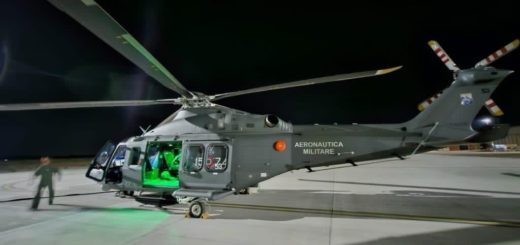
France’s H160M Guépard completed its first firing campaign at Cazaux, testing a 12,7 mm axial gun pod, door-mounted weapons, precision rifle employment, defensive decoys, and the helicopter’s mission management system (Picture source: Airbus).
The principal tested armament was an externally mounted axial gun pod containing a 12.7 mm machine gun. Although the DGA used the French term “pod canon,” Airbus identifies the weapon by calibre and type as a 12.7 mm machine gun rather than an automatic cannon. FN Herstal states that its digital D-Pod family is being qualified on the H160M; the pod contains the FN M3P heavy machine gun, which has a cyclic rate of approximately 1,100 rounds per minute and retains cartridge links and, depending on the configuration, spent cases. Neither the DGA nor Airbus has publicly confirmed that the precise pod fired at Cazaux was the FN D-Pod, so that association should not yet be treated as the definitive production selection.
Operationally, the 12.7 mm weapon fills the gap between a door-mounted rifle-calibre machine gun and the Tiger attack helicopter’s 30 mm cannon. It is suitable for suppressing infantry, damaging trucks, radar equipment, communications sites, and other lightly protected targets, but it is not an efficient weapon against modern infantry fighting vehicles or main battle tanks. The more important development is the firing-control architecture. Airbus says automatic target tracking can command the Guépard’s yaw and pitch through the autopilot to maintain the attack line. This reduces the amount of manual correction required from the pilot and should improve dispersion during short firing passes, particularly at low altitude where turbulence, terrain avoidance and exposure time limit the firing window.
The cabin armament provides different effects. Airbus lists a 7.62 mm pintle-mounted machine gun and an articulated mounting for a precision rifle, while the DGA reported that both a machine gun and precision rifle were employed during the campaign. The 7.62 mm weapon is intended primarily for flank protection, landing-zone suppression, and immediate defence during troop insertion or extraction. The precision-rifle installation is intended for selective engagement from the cabin, including against an individual firing position, an engine block, or sensitive equipment where a burst from the axial weapon would create excessive risk. The French authorities have not disclosed the rifle model, ammunition type, engagement distance, or stabilization performance, and those details remain relevant to judging its practical accuracy from a vibrating helicopter.
The current gun configuration is only the first level of the planned armament package. The DGA states that conventional rockets, laser-guided rockets, and MBDA Akeron LP missiles remain under study, while Airbus has already designed the weapon pylons and structural reinforcements to accept additional effectors. French documentation associates the Guépard with 68 mm rocket launchers, and Airbus previously stated that guided rockets would form part of the intended armament. These weapons would provide a lower-cost precision option against vehicles, boats and fixed positions at ranges beyond heavy-machine-gun fire, although launcher capacity, warhead selection and the service-specific loadouts have not yet been formally frozen.
Akeron LP would represent a larger change in tactical employment. MBDA gives the missile a weight below 40 kg, a length of 1.7 metres in its canister, a diameter of 150 mm, and a minimum intended range of eight kilometres. Its seeker combines infrared imaging, visible-band imaging, and semi-active laser guidance, while a two-way radio-frequency data link allows the crew to update the target, change the impact point, or use designation from another helicopter, ground team, or unmanned aerial vehicle. Lock-on before launch and lock-on after launch modes permit the Guépard to fire from behind terrain rather than maintaining continuous direct sight of the target. This would give the helicopter an anti-armour and anti-infrastructure role, but integration remains a study rather than a qualified capability.
The firing campaign also included the first airborne tests of the mission assistant and the release of defensive decoys. The Guépard combines Thales FlytX avionics, large cockpit touchscreens, the TopOwl helmet-mounted sight used on the Tiger, Safran’s Euroflir 410 electro-optical sensor and the Thales AirMaster C X-band AESA radar. Airbus intends this level of automation to allow two pilots to manage navigation, sensors, communications, and weapons without a third mission-system operator. The AirMaster C is reported by the DGA to be about 30 percent smaller, lighter, and less power-intensive than the radar generation it replaces. Decoy release testing is therefore relevant not simply as a mechanical check, but as validation of the command chain linking threat information, the mission computer, and the countermeasure dispensers.
The Guépard has a maximum take-off weight of 6,050 kg, a 13.4-metre main rotor, a published range of 848 km under Airbus test conditions, and accommodation for two pilots with five equipped commandos. France plans 169 aircraft: 80 for the Army, 49 for the Navy, and 40 for the Air and Space Force, replacing the Gazelle, Fennec, Panther, Dauphin, and Alouette III fleets. Airbus states that deliveries are due to begin in late 2028, while the commander of French Army aviation has indicated that the first Army evaluation aircraft should reach GAMSTAT in early 2029. The distinction probably reflects industrial delivery followed by state acceptance and military evaluation. The first firing campaign is therefore significant because it reduces integration risk before qualification, but it does not yet demonstrate a complete operational weapons package. The remaining tests must establish accuracy, reliability, ammunition compatibility, sensor-to-shooter timelines, and performance with realistic loads before the first operational unit, the 3rd Combat Helicopter Regiment, can field the aircraft.
Explore More Defense News
• Land Defense News• Naval Defense News• Defense Aerospace News
Written by Evan Lerouvillois, Defense Analyst.
Evan studied International Relations, and quickly specialized in defense and security. He is particularly interested in the influence of the defense sector on global geopolitics, and analyzes how technological innovations in defense, arms export contracts, and military strategies influence the international geopolitical scene.
{loadposition bannertop}
{loadposition sidebarpub}
France has completed the first weapons-firing campaign for the H160M Guépard, with the DGA and Airbus Helicopters testing the aircraft at Cazaux, the DGA reported on July 15, 2026. The milestone moves the joint light helicopter closer to operational service by validating its ability to deliver firepower while maintaining safe and stable flight.
The campaign tested the Guépard’s 12.7 mm forward-firing gun, cabin-door weapons, countermeasure dispensers and mission computer in flight. The results support its future role as a flexible armed platform for reconnaissance, escort, protection and light-attack missions across France’s armed forces.
Related topic: U.S. Air Force F-16 Fighter Flies Under AI Control as DARPA Expands VENOM Combat Tests.
France’s H160M Guépard completed its first firing campaign at Cazaux, testing a 12,7 mm axial gun pod, door-mounted weapons, precision rifle employment, defensive decoys, and the helicopter’s mission management system (Picture source: Airbus).
The principal tested armament was an externally mounted axial gun pod containing a 12.7 mm machine gun. Although the DGA used the French term “pod canon,” Airbus identifies the weapon by calibre and type as a 12.7 mm machine gun rather than an automatic cannon. FN Herstal states that its digital D-Pod family is being qualified on the H160M; the pod contains the FN M3P heavy machine gun, which has a cyclic rate of approximately 1,100 rounds per minute and retains cartridge links and, depending on the configuration, spent cases. Neither the DGA nor Airbus has publicly confirmed that the precise pod fired at Cazaux was the FN D-Pod, so that association should not yet be treated as the definitive production selection.
Operationally, the 12.7 mm weapon fills the gap between a door-mounted rifle-calibre machine gun and the Tiger attack helicopter’s 30 mm cannon. It is suitable for suppressing infantry, damaging trucks, radar equipment, communications sites, and other lightly protected targets, but it is not an efficient weapon against modern infantry fighting vehicles or main battle tanks. The more important development is the firing-control architecture. Airbus says automatic target tracking can command the Guépard’s yaw and pitch through the autopilot to maintain the attack line. This reduces the amount of manual correction required from the pilot and should improve dispersion during short firing passes, particularly at low altitude where turbulence, terrain avoidance and exposure time limit the firing window.
The cabin armament provides different effects. Airbus lists a 7.62 mm pintle-mounted machine gun and an articulated mounting for a precision rifle, while the DGA reported that both a machine gun and precision rifle were employed during the campaign. The 7.62 mm weapon is intended primarily for flank protection, landing-zone suppression, and immediate defence during troop insertion or extraction. The precision-rifle installation is intended for selective engagement from the cabin, including against an individual firing position, an engine block, or sensitive equipment where a burst from the axial weapon would create excessive risk. The French authorities have not disclosed the rifle model, ammunition type, engagement distance, or stabilization performance, and those details remain relevant to judging its practical accuracy from a vibrating helicopter.
The current gun configuration is only the first level of the planned armament package. The DGA states that conventional rockets, laser-guided rockets, and MBDA Akeron LP missiles remain under study, while Airbus has already designed the weapon pylons and structural reinforcements to accept additional effectors. French documentation associates the Guépard with 68 mm rocket launchers, and Airbus previously stated that guided rockets would form part of the intended armament. These weapons would provide a lower-cost precision option against vehicles, boats and fixed positions at ranges beyond heavy-machine-gun fire, although launcher capacity, warhead selection and the service-specific loadouts have not yet been formally frozen.
Akeron LP would represent a larger change in tactical employment. MBDA gives the missile a weight below 40 kg, a length of 1.7 metres in its canister, a diameter of 150 mm, and a minimum intended range of eight kilometres. Its seeker combines infrared imaging, visible-band imaging, and semi-active laser guidance, while a two-way radio-frequency data link allows the crew to update the target, change the impact point, or use designation from another helicopter, ground team, or unmanned aerial vehicle. Lock-on before launch and lock-on after launch modes permit the Guépard to fire from behind terrain rather than maintaining continuous direct sight of the target. This would give the helicopter an anti-armour and anti-infrastructure role, but integration remains a study rather than a qualified capability.
The firing campaign also included the first airborne tests of the mission assistant and the release of defensive decoys. The Guépard combines Thales FlytX avionics, large cockpit touchscreens, the TopOwl helmet-mounted sight used on the Tiger, Safran’s Euroflir 410 electro-optical sensor and the Thales AirMaster C X-band AESA radar. Airbus intends this level of automation to allow two pilots to manage navigation, sensors, communications, and weapons without a third mission-system operator. The AirMaster C is reported by the DGA to be about 30 percent smaller, lighter, and less power-intensive than the radar generation it replaces. Decoy release testing is therefore relevant not simply as a mechanical check, but as validation of the command chain linking threat information, the mission computer, and the countermeasure dispensers.
The Guépard has a maximum take-off weight of 6,050 kg, a 13.4-metre main rotor, a published range of 848 km under Airbus test conditions, and accommodation for two pilots with five equipped commandos. France plans 169 aircraft: 80 for the Army, 49 for the Navy, and 40 for the Air and Space Force, replacing the Gazelle, Fennec, Panther, Dauphin, and Alouette III fleets. Airbus states that deliveries are due to begin in late 2028, while the commander of French Army aviation has indicated that the first Army evaluation aircraft should reach GAMSTAT in early 2029. The distinction probably reflects industrial delivery followed by state acceptance and military evaluation. The first firing campaign is therefore significant because it reduces integration risk before qualification, but it does not yet demonstrate a complete operational weapons package. The remaining tests must establish accuracy, reliability, ammunition compatibility, sensor-to-shooter timelines, and performance with realistic loads before the first operational unit, the 3rd Combat Helicopter Regiment, can field the aircraft.
Explore More Defense News
• Land Defense News
• Naval Defense News
• Defense Aerospace News
Written by Evan Lerouvillois, Defense Analyst.
Evan studied International Relations, and quickly specialized in defense and security. He is particularly interested in the influence of the defense sector on global geopolitics, and analyzes how technological innovations in defense, arms export contracts, and military strategies influence the international geopolitical scene.