Russia Converts Geran-2 into FPV Drone Carrier for Deep Strike Attacks in Ukraine
{loadposition bannertop}
{loadposition sidebarpub}
Ukraine’s Darknode anti-Shahed battalion reported on March 10 that it had destroyed a Russian Geran-2, the Russian version of the Iranian Shahed-136, configured to carry two FPV drones.
Operators from Ukraine’s Darknode air-defense unit intercepted a modified Geran-2, the Russian-built variant of the Iranian Shahed-136, carrying two FPV drones mounted on its wing. Reporting from Militarnyi and Defense Express indicates the drone was destroyed before payload release, leaving its intended mission unclear. The configuration suggests Russia is testing a two-stage strike system that combines long-range autonomous navigation with short-range, operator-guided terminal attacks.
Read also: Ukraine Deploys JEDI Interceptor Drone to Destroy Russian Shahed Swarms in New Air Defense Layer
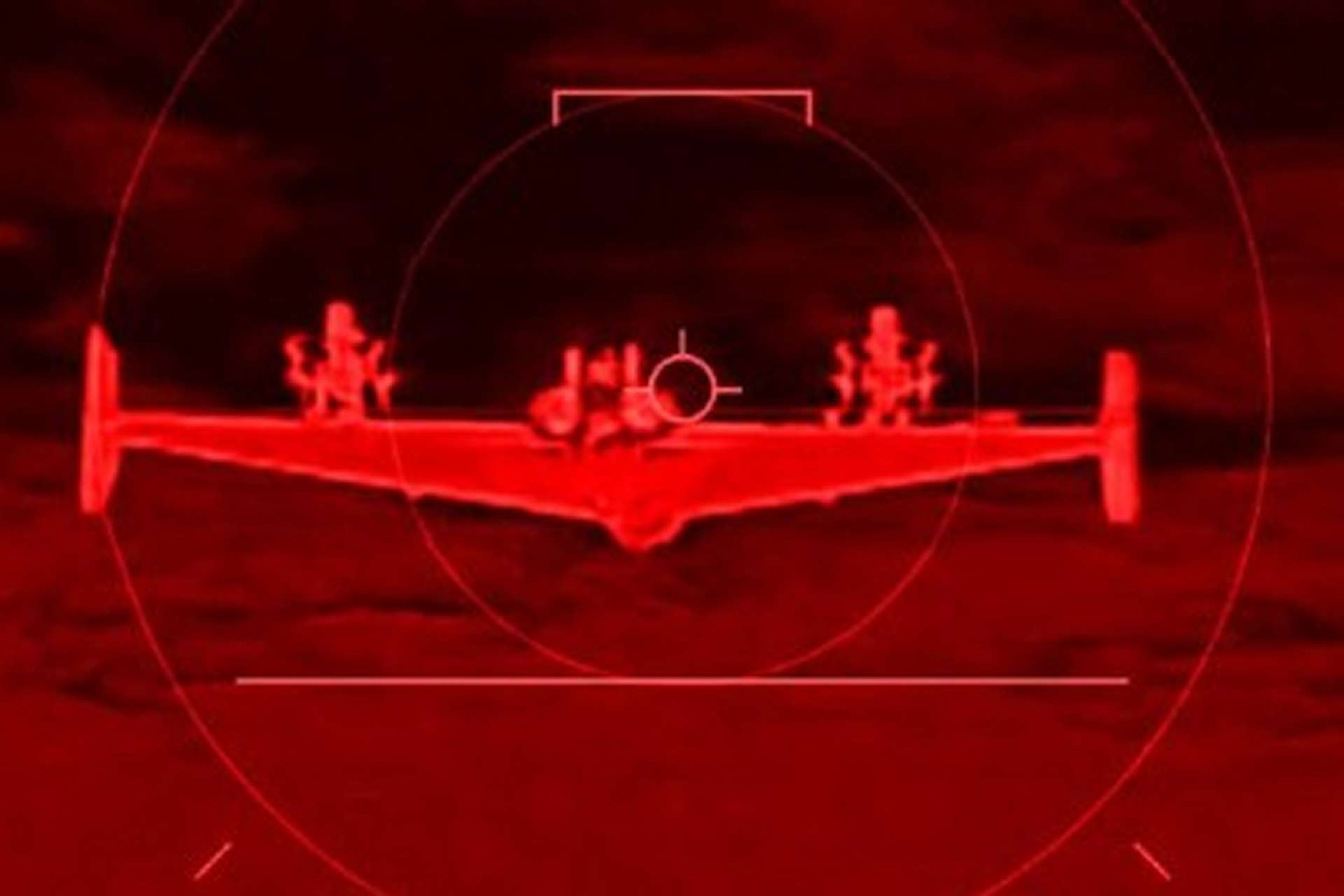
Ukrainian Darknode air-defense operators reportedly intercepted a Russian Geran-2/Shahed-136 modified to carry two FPV drones, revealing an emerging tactic to extend short-range drone strikes deep behind the frontline (Picture source: Ukraine MoD).
According to Darknode, the target was engaged during a night mission and had two FPV drones mounted on its lifting wing. Ukrainian operators could not determine whether the aircraft was tasked for reconnaissance, terminal attack, or both, because it was destroyed before any payload release, but that ambiguity itself underscores the flexibility Russia is seeking in the Geran-2 family.
In baseline form, the Shahed-136/Geran-2 is a delta-wing one-way attack UAV about 3.5 meters long with a 2.5-meter wingspan, a rear-mounted MD-550 piston engine, satellite-guided navigation, and a warhead usually assessed at about 50 kilograms, with heavier Russian variants reaching 90 kilograms at the cost of range. Public estimates place its reach at roughly 1,000 to 2,000 kilometers, which is why the airframe can penetrate Ukraine’s rear areas well beyond the classic FPV battlespace.
What makes the new configuration especially important is that the Geran-2 was never designed as a reusable tactical mothership. It was designed as a cheap autonomous deep-strike munition. Yet Russia has steadily added cameras, radio modems, jam-resistant navigation, infrared sensors, AI-enabled onboard processing, and even experimental MANPADS installations to Shahed derivatives, showing an active effort to turn a relatively simple airframe into a modular, multi-role family rather than a single-purpose kamikaze drone.
That is why using Shahed as a drone carrier is genuinely novel, even if the broader “mother drone” concept is not. Ukraine has already launched FPV drones from naval drones, and analysts now describe mother drones as a normal battlefield category. The inédit element here is the marriage of a strategic-range expendable loitering munition with tactical FPV effects: a system built to fly hundreds of kilometers autonomously is now being repurposed to deliver short-range, visually guided weapons into the defender’s operational rear.
The key point is not that the FPV itself suddenly gets a bigger battery. Its organic range likely remains in the normal mini/micro-drone envelope, roughly 10 to 20 kilometers in many battlefield uses, although relay architectures can push standard FPV reach from under 15 kilometers to 50 kilometers or more. What the Geran-2 changes is the launch point: it carries the FPV through the transit phase so a short-range weapon can appear deep over logistics routes, urban approaches, air bases, or mobile air-defense positions.
Operationally, that gives Russia a two-stage strike option. The Geran-2 solves the long-range ingress and navigation problem; the FPV solves the terminal discrimination problem. Instead of expending the whole platform in a single programmed impact, a carrier version could, in principle, release one or two smaller drones against moving or concealed targets that a coordinate-only Shahed would struggle to hit, including vehicle parks, power nodes, radar detachments, helicopters on dispersal pads, or ad hoc firing teams hunting incoming drones.
This also complicates air defense: a defender may detect what appears to be one inbound Shahed, only to face multiple terminal threats in the final minutes, with the smaller drones arriving lower, later, and potentially from a different angle. That possibility matters because Russia already uses Shaheds as part of a cost-imposition strategy; CSIS notes the drones are cheap enough to saturate defenses, while Ukraine has responded by building a lower-cost interceptor layer. Darknode says it has already shot down more than 1,500 Shahed-type targets with interceptor drones.
The larger lesson is that this is not merely another field improvisation but a warning about the erosion of rear-area sanctuary. If Russia can industrialize release mechanisms, datalinks, and operator control for parasite drones carried by Geran-2s, the zone threatened by FPV-style attacks expands from the immediate tactical belt into operational depth. That would blur the line between strategic one-way attack drones and tactical loitering munitions.
For now, the capability should be treated as experimental, not yet decisive. Open sources do not show whether this aircraft retained its normal warhead, how the FPVs would have been released, or how robust their control links would be after separation. But the trajectory is clear: Russia is testing ways to make the Shahed family more flexible and more dangerous in the last miles of flight, and Darknode’s interception likely prevented what may have been the first combat demonstration of a concept that could force new thinking on base defense, counter-UAS doctrine, and rear-area protection.
{loadposition bannertop}
{loadposition sidebarpub}
Ukraine’s Darknode anti-Shahed battalion reported on March 10 that it had destroyed a Russian Geran-2, the Russian version of the Iranian Shahed-136, configured to carry two FPV drones.
Operators from Ukraine’s Darknode air-defense unit intercepted a modified Geran-2, the Russian-built variant of the Iranian Shahed-136, carrying two FPV drones mounted on its wing. Reporting from Militarnyi and Defense Express indicates the drone was destroyed before payload release, leaving its intended mission unclear. The configuration suggests Russia is testing a two-stage strike system that combines long-range autonomous navigation with short-range, operator-guided terminal attacks.
Read also: Ukraine Deploys JEDI Interceptor Drone to Destroy Russian Shahed Swarms in New Air Defense Layer
Ukrainian Darknode air-defense operators reportedly intercepted a Russian Geran-2/Shahed-136 modified to carry two FPV drones, revealing an emerging tactic to extend short-range drone strikes deep behind the frontline (Picture source: Ukraine MoD).
According to Darknode, the target was engaged during a night mission and had two FPV drones mounted on its lifting wing. Ukrainian operators could not determine whether the aircraft was tasked for reconnaissance, terminal attack, or both, because it was destroyed before any payload release, but that ambiguity itself underscores the flexibility Russia is seeking in the Geran-2 family.
In baseline form, the Shahed-136/Geran-2 is a delta-wing one-way attack UAV about 3.5 meters long with a 2.5-meter wingspan, a rear-mounted MD-550 piston engine, satellite-guided navigation, and a warhead usually assessed at about 50 kilograms, with heavier Russian variants reaching 90 kilograms at the cost of range. Public estimates place its reach at roughly 1,000 to 2,000 kilometers, which is why the airframe can penetrate Ukraine’s rear areas well beyond the classic FPV battlespace.
What makes the new configuration especially important is that the Geran-2 was never designed as a reusable tactical mothership. It was designed as a cheap autonomous deep-strike munition. Yet Russia has steadily added cameras, radio modems, jam-resistant navigation, infrared sensors, AI-enabled onboard processing, and even experimental MANPADS installations to Shahed derivatives, showing an active effort to turn a relatively simple airframe into a modular, multi-role family rather than a single-purpose kamikaze drone.
That is why using Shahed as a drone carrier is genuinely novel, even if the broader “mother drone” concept is not. Ukraine has already launched FPV drones from naval drones, and analysts now describe mother drones as a normal battlefield category. The inédit element here is the marriage of a strategic-range expendable loitering munition with tactical FPV effects: a system built to fly hundreds of kilometers autonomously is now being repurposed to deliver short-range, visually guided weapons into the defender’s operational rear.
The key point is not that the FPV itself suddenly gets a bigger battery. Its organic range likely remains in the normal mini/micro-drone envelope, roughly 10 to 20 kilometers in many battlefield uses, although relay architectures can push standard FPV reach from under 15 kilometers to 50 kilometers or more. What the Geran-2 changes is the launch point: it carries the FPV through the transit phase so a short-range weapon can appear deep over logistics routes, urban approaches, air bases, or mobile air-defense positions.
Operationally, that gives Russia a two-stage strike option. The Geran-2 solves the long-range ingress and navigation problem; the FPV solves the terminal discrimination problem. Instead of expending the whole platform in a single programmed impact, a carrier version could, in principle, release one or two smaller drones against moving or concealed targets that a coordinate-only Shahed would struggle to hit, including vehicle parks, power nodes, radar detachments, helicopters on dispersal pads, or ad hoc firing teams hunting incoming drones.
This also complicates air defense: a defender may detect what appears to be one inbound Shahed, only to face multiple terminal threats in the final minutes, with the smaller drones arriving lower, later, and potentially from a different angle. That possibility matters because Russia already uses Shaheds as part of a cost-imposition strategy; CSIS notes the drones are cheap enough to saturate defenses, while Ukraine has responded by building a lower-cost interceptor layer. Darknode says it has already shot down more than 1,500 Shahed-type targets with interceptor drones.
The larger lesson is that this is not merely another field improvisation but a warning about the erosion of rear-area sanctuary. If Russia can industrialize release mechanisms, datalinks, and operator control for parasite drones carried by Geran-2s, the zone threatened by FPV-style attacks expands from the immediate tactical belt into operational depth. That would blur the line between strategic one-way attack drones and tactical loitering munitions.
For now, the capability should be treated as experimental, not yet decisive. Open sources do not show whether this aircraft retained its normal warhead, how the FPVs would have been released, or how robust their control links would be after separation. But the trajectory is clear: Russia is testing ways to make the Shahed family more flexible and more dangerous in the last miles of flight, and Darknode’s interception likely prevented what may have been the first combat demonstration of a concept that could force new thinking on base defense, counter-UAS doctrine, and rear-area protection.