Türkiye integrates SİPER-1 long-range air defense system into Steel Dome network
{loadposition bannertop}
{loadposition sidebarpub}
Türkiye has formally inducted the indigenous SİPER-1 long-range air defense system into its Steel Dome layered air and missile defense architecture. The move significantly expands Ankara’s high-altitude and long-range interception capability while reinforcing its goal of defense sovereignty.
Türkiye has formally strengthened its national air and missile defense posture with the induction of SİPER-1, the country’s first fully indigenous long-range air defense system, into its expanding Steel Dome (Çelik Kubbe) layered network. This latest development marks a major milestone in Ankara’s drive for air defense sovereignty, adding a new high-altitude, deep-range capability to a system architecture that already includes the domestically produced Hisar-A+ and Hisar-O+ systems.
Follow Army Recognition on Google News at this link
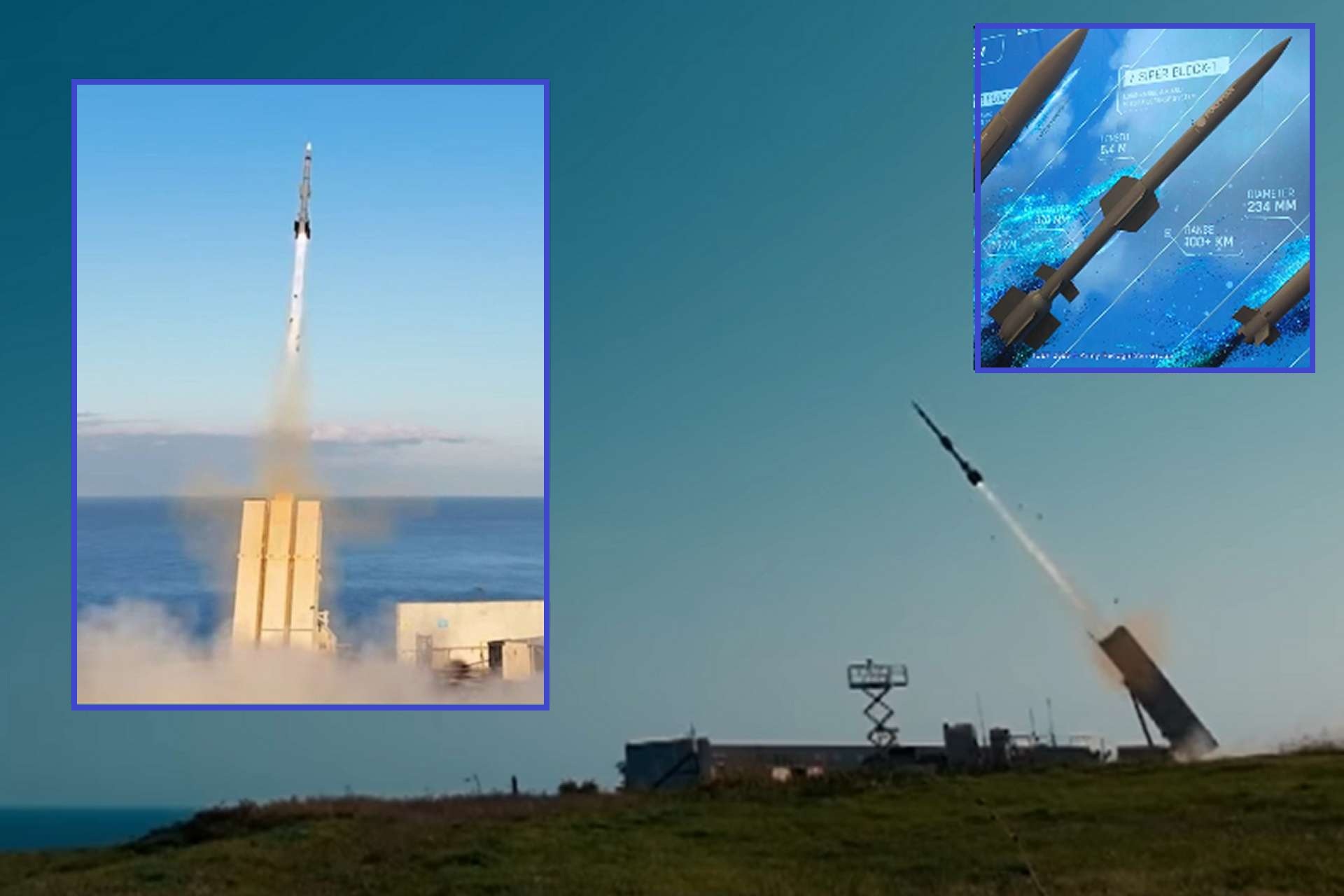
Türkiye has integrated the indigenous SİPER-1 long-range air defense system into its Steel Dome network, adding a high-altitude protection layer that strengthens national air defense sovereignty (Picture Source: Aselsan / Army Recognition Group)
The system, developed under the leadership of the Presidency of Defence Industries (SSB) in collaboration with ASELSAN, ROKETSAN, and TÜBİTAK SAGE, completed its battery-level acceptance test at the Sinop Test Center on the Black Sea. During the live-fire evaluation, SİPER-1 demonstrated its ability to detect, track, and intercept a high-speed maneuvering airborne target within a complex air environment. The presence of multiple friendly and adversary aircraft signatures during the trial simulated battlefield conditions and validated the system’s operational maturity.
SİPER-1 is engineered to provide long-range engagement against a variety of threats, including fixed-wing aircraft, cruise missiles, and potentially UAV swarms. While Türkiye has not officially disclosed its precise performance parameters, open-source reporting suggests that the initial production variant of SİPER is capable of intercepting targets at ranges approaching 100 kilometers, with altitude coverage suitable for high-altitude airspace protection. Longer-range and more capable variants are currently in development under the ongoing SİPER project roadmap.
The system includes a domestically developed interceptor missile believed to incorporate a two-stage solid-fuel propulsion system and an active radar homing seeker. Its integration into Türkiye’s broader command-and-control ecosystem is facilitated by advanced engagement control software and fire distribution systems engineered by ASELSAN, allowing multiple simultaneous engagements and full 360-degree coverage. Vertical launchers are mounted on mobile wheeled platforms, enabling rapid deployment and repositioning as operational demands evolve.
Although official technical specifications of the radar suite dedicated to SİPER-1 have not been made public, the system is interoperable with the Turkish Armed Forces’ existing sensor infrastructure under the Steel Dome concept. This includes phased array radars and data fusion centers capable of integrating air picture information from a wide variety of platforms, including early warning aircraft, drones, and coastal radar stations. The network is managed under the ADVENT combat management system, ensuring secure communications and interoperability with land, naval, and air force units.
SSB President Prof. Haluk Görgün announced that serial production of SİPER-1 is underway, with the first battery now officially delivered to the Turkish Armed Forces. He stated that this milestone represents “a new layer in Türkiye’s national air shield” and positions the country among the few NATO members capable of developing and fielding a domestically produced long-range air defense capability.
The strategic significance of the SİPER program extends beyond technical specifications. It emerges from Türkiye’s broader determination to eliminate dependency on foreign suppliers for critical defense technologies. After protracted delays in acquiring U.S. Patriot batteries and geopolitical fallout following the procurement of Russian S-400 systems, Ankara made the development of an indigenous long-range surface-to-air missile (SAM) system a top priority. SİPER-1 is the first operational result of that policy shift and signals Türkiye’s intent to control all layers of its national airspace with sovereign systems.
Statements from ASELSAN and ROKETSAN following the system’s acceptance highlighted the importance of the achievement. ASELSAN underlined that the fire control, communication, and radar systems were designed entirely in-house, emphasizing their resistance to electronic warfare and their upgradeability through software-defined enhancements. ROKETSAN, which led the missile development effort, confirmed that more advanced variants are in testing, aiming to expand engagement envelopes and target sets in future blocks.
While comparisons to other systems such as the U.S. PAC-3 or France’s Aster-30 are premature without verified benchmarking, it has to be noted that SİPER-1’s successful deployment puts Türkiye in a growing club of countries with the capacity to produce, operate, and export long-range SAM systems. Moreover, the modular design and emphasis on networked architecture suggest strong export potential for regional allies seeking alternatives to Western and Russian offerings.
The addition of SİPER-1 into the Turkish Armed Forces’ inventory marks a shift in Türkiye’s defense posture from a largely tactical, point-defense model to a strategically layered, long-range deterrent capability. At a time when the Eastern Mediterranean, Black Sea, and Middle Eastern airspaces are increasingly contested by drones, cruise missiles, and hypersonic threats, Türkiye’s investment in a fully indigenous solution signals both technological confidence and strategic intent.
With SİPER-1 entering operational service, Türkiye is consolidating a key layer of its future air defense doctrine through a system that has been designed, tested, and produced domestically. Beyond its technical role, the integration of SİPER-1 into the Steel Dome architecture reflects a broader strategic objective to ensure greater autonomy in air and missile defense, reduce dependence on foreign suppliers, and establish a scalable, nationally controlled defensive network capable of adapting to evolving aerial and missile threats.
{loadposition bannertop}
{loadposition sidebarpub}
Türkiye has formally inducted the indigenous SİPER-1 long-range air defense system into its Steel Dome layered air and missile defense architecture. The move significantly expands Ankara’s high-altitude and long-range interception capability while reinforcing its goal of defense sovereignty.
Türkiye has formally strengthened its national air and missile defense posture with the induction of SİPER-1, the country’s first fully indigenous long-range air defense system, into its expanding Steel Dome (Çelik Kubbe) layered network. This latest development marks a major milestone in Ankara’s drive for air defense sovereignty, adding a new high-altitude, deep-range capability to a system architecture that already includes the domestically produced Hisar-A+ and Hisar-O+ systems.
Türkiye has integrated the indigenous SİPER-1 long-range air defense system into its Steel Dome network, adding a high-altitude protection layer that strengthens national air defense sovereignty (Picture Source: Aselsan / Army Recognition Group)
The system, developed under the leadership of the Presidency of Defence Industries (SSB) in collaboration with ASELSAN, ROKETSAN, and TÜBİTAK SAGE, completed its battery-level acceptance test at the Sinop Test Center on the Black Sea. During the live-fire evaluation, SİPER-1 demonstrated its ability to detect, track, and intercept a high-speed maneuvering airborne target within a complex air environment. The presence of multiple friendly and adversary aircraft signatures during the trial simulated battlefield conditions and validated the system’s operational maturity.
SİPER-1 is engineered to provide long-range engagement against a variety of threats, including fixed-wing aircraft, cruise missiles, and potentially UAV swarms. While Türkiye has not officially disclosed its precise performance parameters, open-source reporting suggests that the initial production variant of SİPER is capable of intercepting targets at ranges approaching 100 kilometers, with altitude coverage suitable for high-altitude airspace protection. Longer-range and more capable variants are currently in development under the ongoing SİPER project roadmap.
The system includes a domestically developed interceptor missile believed to incorporate a two-stage solid-fuel propulsion system and an active radar homing seeker. Its integration into Türkiye’s broader command-and-control ecosystem is facilitated by advanced engagement control software and fire distribution systems engineered by ASELSAN, allowing multiple simultaneous engagements and full 360-degree coverage. Vertical launchers are mounted on mobile wheeled platforms, enabling rapid deployment and repositioning as operational demands evolve.
Although official technical specifications of the radar suite dedicated to SİPER-1 have not been made public, the system is interoperable with the Turkish Armed Forces’ existing sensor infrastructure under the Steel Dome concept. This includes phased array radars and data fusion centers capable of integrating air picture information from a wide variety of platforms, including early warning aircraft, drones, and coastal radar stations. The network is managed under the ADVENT combat management system, ensuring secure communications and interoperability with land, naval, and air force units.
SSB President Prof. Haluk Görgün announced that serial production of SİPER-1 is underway, with the first battery now officially delivered to the Turkish Armed Forces. He stated that this milestone represents “a new layer in Türkiye’s national air shield” and positions the country among the few NATO members capable of developing and fielding a domestically produced long-range air defense capability.
The strategic significance of the SİPER program extends beyond technical specifications. It emerges from Türkiye’s broader determination to eliminate dependency on foreign suppliers for critical defense technologies. After protracted delays in acquiring U.S. Patriot batteries and geopolitical fallout following the procurement of Russian S-400 systems, Ankara made the development of an indigenous long-range surface-to-air missile (SAM) system a top priority. SİPER-1 is the first operational result of that policy shift and signals Türkiye’s intent to control all layers of its national airspace with sovereign systems.
Statements from ASELSAN and ROKETSAN following the system’s acceptance highlighted the importance of the achievement. ASELSAN underlined that the fire control, communication, and radar systems were designed entirely in-house, emphasizing their resistance to electronic warfare and their upgradeability through software-defined enhancements. ROKETSAN, which led the missile development effort, confirmed that more advanced variants are in testing, aiming to expand engagement envelopes and target sets in future blocks.
While comparisons to other systems such as the U.S. PAC-3 or France’s Aster-30 are premature without verified benchmarking, it has to be noted that SİPER-1’s successful deployment puts Türkiye in a growing club of countries with the capacity to produce, operate, and export long-range SAM systems. Moreover, the modular design and emphasis on networked architecture suggest strong export potential for regional allies seeking alternatives to Western and Russian offerings.
The addition of SİPER-1 into the Turkish Armed Forces’ inventory marks a shift in Türkiye’s defense posture from a largely tactical, point-defense model to a strategically layered, long-range deterrent capability. At a time when the Eastern Mediterranean, Black Sea, and Middle Eastern airspaces are increasingly contested by drones, cruise missiles, and hypersonic threats, Türkiye’s investment in a fully indigenous solution signals both technological confidence and strategic intent.
With SİPER-1 entering operational service, Türkiye is consolidating a key layer of its future air defense doctrine through a system that has been designed, tested, and produced domestically. Beyond its technical role, the integration of SİPER-1 into the Steel Dome architecture reflects a broader strategic objective to ensure greater autonomy in air and missile defense, reduce dependence on foreign suppliers, and establish a scalable, nationally controlled defensive network capable of adapting to evolving aerial and missile threats.