Türkiye nears return to F-35 program as U.S. Envoy signals S-400 deal may open door within months
{loadposition bannertop}
{loadposition sidebarpub}
The U.S. ambassador to Türkiye, Tom Barrack, said in Abu Dhabi that the “Russia hurdle” created by Ankara’s purchase of Russian S-400 air defenses could be cleared within four to six months, potentially reopening the path to F-35 stealth fighters for the NATO ally.
On December 5, 2025, US Ambassador to Türkiye Tom Barrack indicated that Ankara may be only months away from resolving the dispute over its Russian S-400 air-defense system that has blocked its return to the F-35 fighter jet program, as reported by Bloomberg and Turkish outlets GDH and Türkiye Today. Speaking at a conference in Abu Dhabi, Barrack said the “Russia hurdle” hindering Türkiye’s F-35 ambitions could be cleared within four to six months if remaining issues around the S-400 are addressed to Washington’s satisfaction. Türkiye is overhauling its airpower with an £8 billion Eurofighter deal and the KAAN fighter rollout, while still tied to the undelivered F-35 program. Any return to the US-led stealth fighter alliance would carry major strategic implications.
Follow Army Recognition on Google News at this link
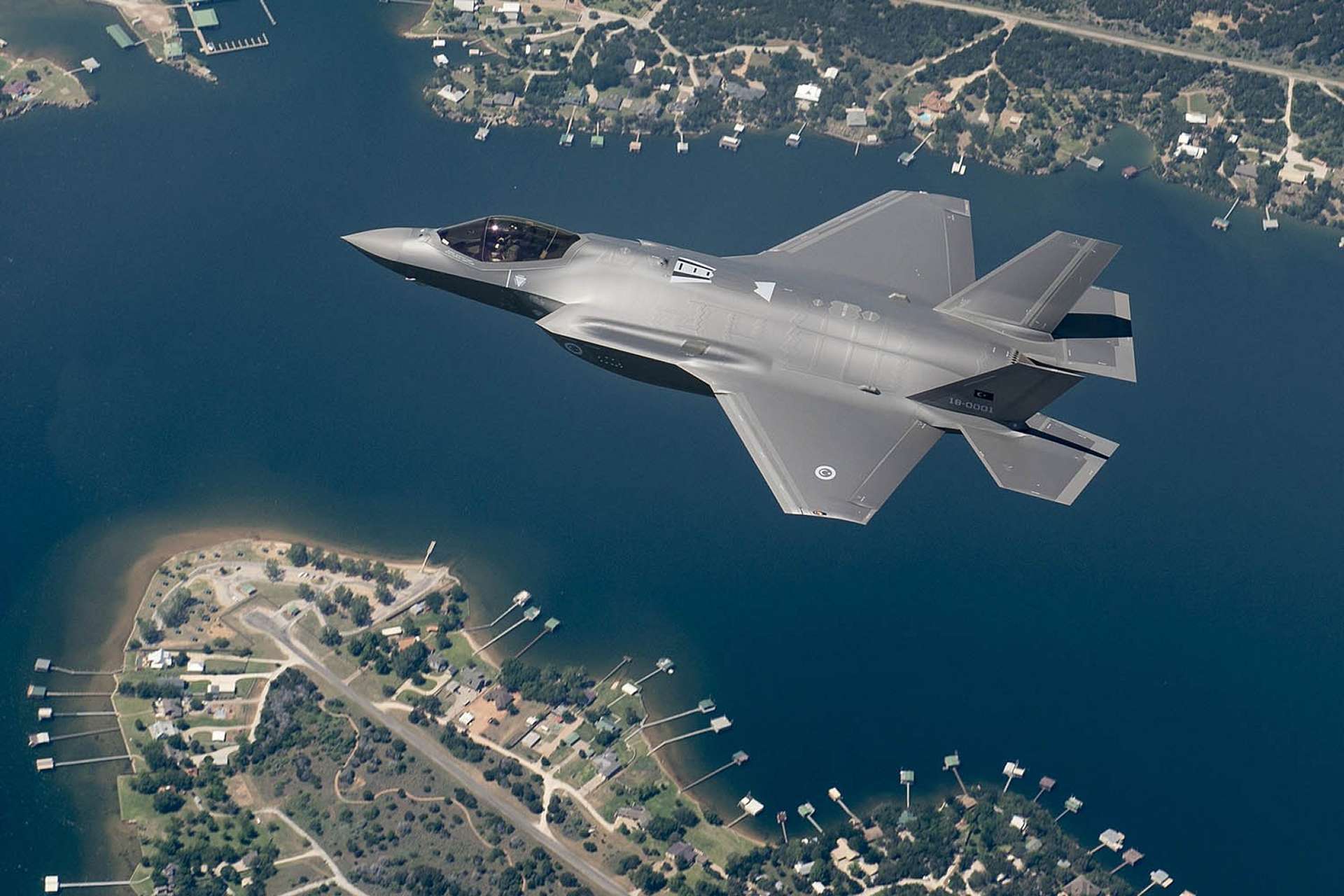
U.S. Ambassador to Türkiye Tom Barrack said Ankara could resolve remaining issues over its Russian S-400 air defense system within four to six months, potentially reopening the way for talks on its return to the F-35 fighter program (Picture Source: Lockheed Martin)
Barrack’s latest comments focus squarely on the S-400 as the main barrier. According to Turkish media, the ambassador told participants in Abu Dhabi that Türkiye has resolved the “operability” issue because the S-400 batteries are not being used, but stressed that simply retaining the system continues to create difficulty in Washington. He said he believed the outstanding questions could be settled within four to six months and, when asked whether Ankara was moving closer to giving up the Russian system, he answered in the affirmative.
The dispute dates back roughly ten years to Türkiye’s decision to procure the S-400, which prompted its suspension and then removal from the multinational F-35 Joint Strike Fighter program, as well as targeted sanctions against parts of the Turkish defence sector. Washington has argued that operating an advanced Russian air-defense system alongside the F-35 could expose sensitive data on the jet’s characteristics, while Ankara has maintained that the S-400 would not be integrated into NATO’s command-and-control architecture and that technical measures could manage the risk.
Behind this political dispute lies a concrete fleet and financial reality. Before its removal from the program, Türkiye planned to acquire 100 F-35A Lightning II aircraft and had made payments of roughly 1.4 billion dollars into the project. At least four Turkish-configured F-35As were produced and rolled out from Lockheed Martin’s Fort Worth facility, with the first aircraft flying in 2018; these jets were assigned to US bases for training and never transferred to Turkish territory, and the United States has since moved to absorb them into its own fleet. Some analyses indicate that up to six aircraft were fully or partially paid for by Ankara, illustrating the practical questions that would arise over existing airframes and sunk costs if a political agreement on Türkiye’s return is reached.
In parallel, Türkiye had been part of the F-35 industrial supply chain, producing components even after its formal ejection, and any re-entry would require a new understanding on workshare and future orders. Barrack’s four-to-six-month horizon is therefore widely understood as a window to define what happens to the S-400 batteries, how outstanding financial claims are treated, and whether a path can be opened for Türkiye to once again operate, or at minimum be compensated for, F-35 aircraft while preserving allied security concerns.
While the F-35 question remains unresolved, Türkiye has already taken steps to ensure that its fighter fleet does not face a capability gap later in the decade. On 27 October 2025, during a visit to Ankara, British Prime Minister Keir Starmer oversaw the signature of an agreement worth up to £8 billion for 20 new-build Eurofighter Typhoon aircraft, with first deliveries expected around 2030. The Typhoon, a twin-engine, multi-role “swing-role” fighter, offers later-standard configurations with Captor-E active electronically scanned array radar, expanded weapons integration and enhanced mission systems, enabling it to carry out air superiority and deep-strike tasks within the same sortie.
For the Turkish Air Force, the type provides a mature, high-readiness platform with strong electronic warfare capabilities and interoperability for NATO air policing, quick reaction alert and expeditionary deployments, helping to sustain deterrence and day-to-day air defence missions as older aircraft age. Turkish and international reporting further note that Ankara has explored acquiring additional second-hand Typhoons from other operators to accelerate pilot conversion and build up sufficient fleet mass and spares, although any follow-on packages beyond the initial 20 new-build aircraft remain a matter for future negotiations. In this architecture, the Eurofighter is explicitly conceived as a bridge solution, maintaining a high-end fourth-generation capability until the domestic KAAN stealth fighter becomes operational.
The KAAN program adds a further layer to Türkiye’s planning. The twin-engine, fifth-generation aircraft completed its maiden flight in early 2024, and Turkish Aerospace Industries and government officials have stated that an initial batch of around 20 Block 10 aircraft is targeted for delivery to the Turkish Air Force in the 2028–2029 timeframe, with larger-scale serial production and full operational capability anticipated in the early 2030s. KAAN is intended to replace the F-16 as the backbone of Türkiye’s fighter fleet and to provide an indigenous complement to any imported platforms.
Against this backdrop, a potential return to the F-35 program would not simply reinstate an earlier acquisition plan, but would require Ankara to decide how to balance three different capability pillars: a small but sophisticated Typhoon fleet, a larger domestic KAAN line and any future tranche of F-35s, all within budgetary constraints and alliance interoperability requirements. If Ankara and Washington can translate the current four-to-six-month window into concrete decisions on the status of the S-400 batteries and the handling of previously funded F-35 airframes, the result could be a reconfigured Turkish airpower posture anchored in NATO, combining domestic and allied platforms in a way that preserves strategic autonomy while reinforcing alliance air capabilities across the Black Sea and Eastern Mediterranean.
{loadposition bannertop}
{loadposition sidebarpub}
The U.S. ambassador to Türkiye, Tom Barrack, said in Abu Dhabi that the “Russia hurdle” created by Ankara’s purchase of Russian S-400 air defenses could be cleared within four to six months, potentially reopening the path to F-35 stealth fighters for the NATO ally.
On December 5, 2025, US Ambassador to Türkiye Tom Barrack indicated that Ankara may be only months away from resolving the dispute over its Russian S-400 air-defense system that has blocked its return to the F-35 fighter jet program, as reported by Bloomberg and Turkish outlets GDH and Türkiye Today. Speaking at a conference in Abu Dhabi, Barrack said the “Russia hurdle” hindering Türkiye’s F-35 ambitions could be cleared within four to six months if remaining issues around the S-400 are addressed to Washington’s satisfaction. Türkiye is overhauling its airpower with an £8 billion Eurofighter deal and the KAAN fighter rollout, while still tied to the undelivered F-35 program. Any return to the US-led stealth fighter alliance would carry major strategic implications.
U.S. Ambassador to Türkiye Tom Barrack said Ankara could resolve remaining issues over its Russian S-400 air defense system within four to six months, potentially reopening the way for talks on its return to the F-35 fighter program (Picture Source: Lockheed Martin)
Barrack’s latest comments focus squarely on the S-400 as the main barrier. According to Turkish media, the ambassador told participants in Abu Dhabi that Türkiye has resolved the “operability” issue because the S-400 batteries are not being used, but stressed that simply retaining the system continues to create difficulty in Washington. He said he believed the outstanding questions could be settled within four to six months and, when asked whether Ankara was moving closer to giving up the Russian system, he answered in the affirmative.
The dispute dates back roughly ten years to Türkiye’s decision to procure the S-400, which prompted its suspension and then removal from the multinational F-35 Joint Strike Fighter program, as well as targeted sanctions against parts of the Turkish defence sector. Washington has argued that operating an advanced Russian air-defense system alongside the F-35 could expose sensitive data on the jet’s characteristics, while Ankara has maintained that the S-400 would not be integrated into NATO’s command-and-control architecture and that technical measures could manage the risk.
Behind this political dispute lies a concrete fleet and financial reality. Before its removal from the program, Türkiye planned to acquire 100 F-35A Lightning II aircraft and had made payments of roughly 1.4 billion dollars into the project. At least four Turkish-configured F-35As were produced and rolled out from Lockheed Martin’s Fort Worth facility, with the first aircraft flying in 2018; these jets were assigned to US bases for training and never transferred to Turkish territory, and the United States has since moved to absorb them into its own fleet. Some analyses indicate that up to six aircraft were fully or partially paid for by Ankara, illustrating the practical questions that would arise over existing airframes and sunk costs if a political agreement on Türkiye’s return is reached.
In parallel, Türkiye had been part of the F-35 industrial supply chain, producing components even after its formal ejection, and any re-entry would require a new understanding on workshare and future orders. Barrack’s four-to-six-month horizon is therefore widely understood as a window to define what happens to the S-400 batteries, how outstanding financial claims are treated, and whether a path can be opened for Türkiye to once again operate, or at minimum be compensated for, F-35 aircraft while preserving allied security concerns.
While the F-35 question remains unresolved, Türkiye has already taken steps to ensure that its fighter fleet does not face a capability gap later in the decade. On 27 October 2025, during a visit to Ankara, British Prime Minister Keir Starmer oversaw the signature of an agreement worth up to £8 billion for 20 new-build Eurofighter Typhoon aircraft, with first deliveries expected around 2030. The Typhoon, a twin-engine, multi-role “swing-role” fighter, offers later-standard configurations with Captor-E active electronically scanned array radar, expanded weapons integration and enhanced mission systems, enabling it to carry out air superiority and deep-strike tasks within the same sortie.
For the Turkish Air Force, the type provides a mature, high-readiness platform with strong electronic warfare capabilities and interoperability for NATO air policing, quick reaction alert and expeditionary deployments, helping to sustain deterrence and day-to-day air defence missions as older aircraft age. Turkish and international reporting further note that Ankara has explored acquiring additional second-hand Typhoons from other operators to accelerate pilot conversion and build up sufficient fleet mass and spares, although any follow-on packages beyond the initial 20 new-build aircraft remain a matter for future negotiations. In this architecture, the Eurofighter is explicitly conceived as a bridge solution, maintaining a high-end fourth-generation capability until the domestic KAAN stealth fighter becomes operational.
The KAAN program adds a further layer to Türkiye’s planning. The twin-engine, fifth-generation aircraft completed its maiden flight in early 2024, and Turkish Aerospace Industries and government officials have stated that an initial batch of around 20 Block 10 aircraft is targeted for delivery to the Turkish Air Force in the 2028–2029 timeframe, with larger-scale serial production and full operational capability anticipated in the early 2030s. KAAN is intended to replace the F-16 as the backbone of Türkiye’s fighter fleet and to provide an indigenous complement to any imported platforms.
Against this backdrop, a potential return to the F-35 program would not simply reinstate an earlier acquisition plan, but would require Ankara to decide how to balance three different capability pillars: a small but sophisticated Typhoon fleet, a larger domestic KAAN line and any future tranche of F-35s, all within budgetary constraints and alliance interoperability requirements. If Ankara and Washington can translate the current four-to-six-month window into concrete decisions on the status of the S-400 batteries and the handling of previously funded F-35 airframes, the result could be a reconfigured Turkish airpower posture anchored in NATO, combining domestic and allied platforms in a way that preserves strategic autonomy while reinforcing alliance air capabilities across the Black Sea and Eastern Mediterranean.