U.S. Air Force Adds Boeing 747-8i VC-25B Bridge Aircraft to Reinforce Air Force One Fleet Missions
{loadposition bannertop}
{loadposition sidebarpub}
The United States has received a new interim presidential aircraft from L3Harris Technologies, giving the Air Force One mission a Boeing 747-8i-based platform as pressure grows on the aging VC-25A fleet. Announced on June 19, 2026, the delivery strengthens secure presidential mobility, airborne command-and-control, and continuity of government during crises.
The VC-25B Bridge aircraft now enters commissioning flights with the Presidential Airlift Group, where crews and specialists will validate its mission systems before operational use. Its arrival adds near-term capacity to the presidential airlift fleet while the United States works to preserve resilient command mobility for high-risk contingencies.
Related topic: U.S. Air Force Tests VC-25B Bridge 747-8 to Replace Aging Presidential Air Force One Fleet Gap.
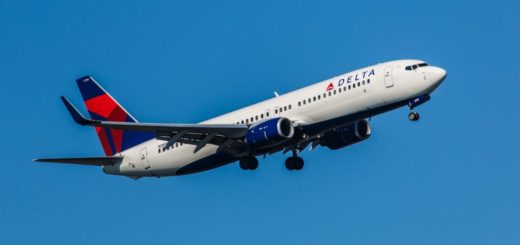
L3Harris has delivered a Boeing 747-8i-based VC-25B Bridge aircraft to the U.S. Air Force, providing an interim Air Force One aircraft with secure communications, self-defense systems, and long-range command-and-control capability while the older VC-25A fleet awaits replacement (Picture source: U.S. DoW).
The VC-25B Bridge aircraft should be understood as a national command aircraft adapted from a commercial long-range airliner. The basic airframe, a Boeing 747-8 Intercontinental, offers the dimensions and electrical-growth margin required for presidential airlift: the VC-25B is listed at 250.2 ft in length, 224.5 ft in wingspan, a maximum takeoff weight of 987,000 lb, four GEnx-2B turbofan engines rated at 66,500 lb of thrust each, a speed of about 660 mph, and an estimated range of 8,900 miles. Compared with the VC-25A, which uses the older 747-200B airframe, the larger 747-8 structure gives the Air Force more volume, payload capacity, and range for communications equipment, staff work areas, spares, security equipment, and mission support systems.
The aircraft has no conventional armament. It does not carry air-to-air missiles, guns, bombs, or standoff weapons, because its mission is not combat engagement. Its protective capability is built around defensive systems, secure communications, military avionics, redundancy, and operating procedures rather than offensive firepower. The public record is specific on categories but not on classified subsystems: modifications to the 747-8 aircraft include an electrical power upgrade, dual auxiliary power units usable in flight, a mission communications system, military avionics, a self-defense system, autonomous enplaning and deplaning, and autonomous baggage loading. It does not publicly identify the missile-warning sensors, countermeasure dispensers, electronic-protection methods, or communications encryption architecture, which is consistent with the sensitivity of presidential airlift survivability.
From a tactical perspective, the self-defense system is most relevant during approach, landing, departure, and movements through regions where man-portable air-defense systems, drones, electronic interference, or hostile surveillance could affect aircraft safety. A presidential aircraft cannot rely on maneuverability in the way a fighter or combat aircraft does; its survivability depends on threat avoidance, route planning, intelligence preparation, escort and security coordination, hardened communications, countermeasures, and the ability to operate from selected airfields with minimal external dependence. The dual auxiliary power units and electrical-power upgrades are therefore not minor engineering details. They support mission systems, communications loads, redundancy, and onboard independence if ground power is unavailable, unreliable, or deemed insecure. In this category of aircraft, resilience often depends on power, connectivity, and system redundancy more than on weapons carriage.
The communications suite is the decisive military capability. L3Harris said the VC-25B Bridge aircraft provides the Office of the President with an airborne command post and a new communications system designed for resilient, secure connectivity during global events. Boeing’s public description of the VC-25B mission fit refers to secure electronic and communications equipment, medical facilities, staff accommodations, galleys, and mission self-sufficiency at international airports. In practical terms, the aircraft must allow the president to receive intelligence, communicate with the National Security Council, remain linked to combatant commanders, and issue time-sensitive orders while airborne. For a nuclear-armed state, this is not a ceremonial requirement; it is part of national command authority continuity.
The delivery also has a program-management context that matters for Congress and the defense industrial base. The December 2022 Selected Acquisition Report stated that the long-term VC-25B program was intended to replace two VC-25A aircraft that were facing capability gaps, rising maintenance costs, and parts obsolescence after more than 30 years in service. It also stated that Boeing’s schedule had been rebaselined after delays linked to interior supplier transition, wiring design, fabrication, installation timelines, modification throughput limits, and execution rates; the same report said first and second aircraft deliveries had slipped by 28 and 26 months, respectively, and that the Air Force was funded to sustain VC-25A operations through calendar year 2028.
The Bridge aircraft appears to be a narrower and faster answer to that schedule problem. The Air Force said the previous head-of-state interior layout was left largely unchanged, while security, safety, and mission communications were protected as priorities. That distinction is important: the Bridge aircraft is not a full substitute for the two long-term Boeing-modified VC-25B aircraft designed to support presidential airlift for decades. It is an interim aircraft designed to give the Presidential Airlift Group usable capacity now, with selected mission trades accepted to compress time.
Training and logistics show how the Air Force reduced risk before delivery. The service said pilot and maintainer training began in October with a leased Atlas Air 747-8F, followed by the purchase of a Lufthansa 747-8i as a full-time training aircraft for the broader crew complement. A full three-dimensional interior mock-up delivered in January 2026 allowed White House personnel to begin familiarization before the first commissioning flight, while the logistics effort focused on initial spares and a supply chain for future 747-8 operations. Those measures suggest the Air Force treated the aircraft as a fleet-readiness problem, not only as a conversion project.
The operational effect is concrete: the United States gains another secure, long-range presidential aircraft at a time when the existing VC-25A fleet is old, the planned replacement schedule has been unstable, and senior-leader mobility is exposed to more complex air-defense, cyber, and electronic-warfare risks. The VC-25B Bridge aircraft does not change the balance of airpower, but it reduces a specific national-command vulnerability by adding capacity, communications resilience, and mission redundancy. The key point is that the aircraft’s value lies in continuity of decision-making under pressure, not in visible weaponry or exterior design.
Explore More Defense News
• Land Defense News• Naval Defense News• Defense Aerospace News
{loadposition bannertop}
{loadposition sidebarpub}
The United States has received a new interim presidential aircraft from L3Harris Technologies, giving the Air Force One mission a Boeing 747-8i-based platform as pressure grows on the aging VC-25A fleet. Announced on June 19, 2026, the delivery strengthens secure presidential mobility, airborne command-and-control, and continuity of government during crises.
The VC-25B Bridge aircraft now enters commissioning flights with the Presidential Airlift Group, where crews and specialists will validate its mission systems before operational use. Its arrival adds near-term capacity to the presidential airlift fleet while the United States works to preserve resilient command mobility for high-risk contingencies.
Related topic: U.S. Air Force Tests VC-25B Bridge 747-8 to Replace Aging Presidential Air Force One Fleet Gap.
L3Harris has delivered a Boeing 747-8i-based VC-25B Bridge aircraft to the U.S. Air Force, providing an interim Air Force One aircraft with secure communications, self-defense systems, and long-range command-and-control capability while the older VC-25A fleet awaits replacement (Picture source: U.S. DoW).
The VC-25B Bridge aircraft should be understood as a national command aircraft adapted from a commercial long-range airliner. The basic airframe, a Boeing 747-8 Intercontinental, offers the dimensions and electrical-growth margin required for presidential airlift: the VC-25B is listed at 250.2 ft in length, 224.5 ft in wingspan, a maximum takeoff weight of 987,000 lb, four GEnx-2B turbofan engines rated at 66,500 lb of thrust each, a speed of about 660 mph, and an estimated range of 8,900 miles. Compared with the VC-25A, which uses the older 747-200B airframe, the larger 747-8 structure gives the Air Force more volume, payload capacity, and range for communications equipment, staff work areas, spares, security equipment, and mission support systems.
The aircraft has no conventional armament. It does not carry air-to-air missiles, guns, bombs, or standoff weapons, because its mission is not combat engagement. Its protective capability is built around defensive systems, secure communications, military avionics, redundancy, and operating procedures rather than offensive firepower. The public record is specific on categories but not on classified subsystems: modifications to the 747-8 aircraft include an electrical power upgrade, dual auxiliary power units usable in flight, a mission communications system, military avionics, a self-defense system, autonomous enplaning and deplaning, and autonomous baggage loading. It does not publicly identify the missile-warning sensors, countermeasure dispensers, electronic-protection methods, or communications encryption architecture, which is consistent with the sensitivity of presidential airlift survivability.
From a tactical perspective, the self-defense system is most relevant during approach, landing, departure, and movements through regions where man-portable air-defense systems, drones, electronic interference, or hostile surveillance could affect aircraft safety. A presidential aircraft cannot rely on maneuverability in the way a fighter or combat aircraft does; its survivability depends on threat avoidance, route planning, intelligence preparation, escort and security coordination, hardened communications, countermeasures, and the ability to operate from selected airfields with minimal external dependence. The dual auxiliary power units and electrical-power upgrades are therefore not minor engineering details. They support mission systems, communications loads, redundancy, and onboard independence if ground power is unavailable, unreliable, or deemed insecure. In this category of aircraft, resilience often depends on power, connectivity, and system redundancy more than on weapons carriage.
The communications suite is the decisive military capability. L3Harris said the VC-25B Bridge aircraft provides the Office of the President with an airborne command post and a new communications system designed for resilient, secure connectivity during global events. Boeing’s public description of the VC-25B mission fit refers to secure electronic and communications equipment, medical facilities, staff accommodations, galleys, and mission self-sufficiency at international airports. In practical terms, the aircraft must allow the president to receive intelligence, communicate with the National Security Council, remain linked to combatant commanders, and issue time-sensitive orders while airborne. For a nuclear-armed state, this is not a ceremonial requirement; it is part of national command authority continuity.
The delivery also has a program-management context that matters for Congress and the defense industrial base. The December 2022 Selected Acquisition Report stated that the long-term VC-25B program was intended to replace two VC-25A aircraft that were facing capability gaps, rising maintenance costs, and parts obsolescence after more than 30 years in service. It also stated that Boeing’s schedule had been rebaselined after delays linked to interior supplier transition, wiring design, fabrication, installation timelines, modification throughput limits, and execution rates; the same report said first and second aircraft deliveries had slipped by 28 and 26 months, respectively, and that the Air Force was funded to sustain VC-25A operations through calendar year 2028.
The Bridge aircraft appears to be a narrower and faster answer to that schedule problem. The Air Force said the previous head-of-state interior layout was left largely unchanged, while security, safety, and mission communications were protected as priorities. That distinction is important: the Bridge aircraft is not a full substitute for the two long-term Boeing-modified VC-25B aircraft designed to support presidential airlift for decades. It is an interim aircraft designed to give the Presidential Airlift Group usable capacity now, with selected mission trades accepted to compress time.
Training and logistics show how the Air Force reduced risk before delivery. The service said pilot and maintainer training began in October with a leased Atlas Air 747-8F, followed by the purchase of a Lufthansa 747-8i as a full-time training aircraft for the broader crew complement. A full three-dimensional interior mock-up delivered in January 2026 allowed White House personnel to begin familiarization before the first commissioning flight, while the logistics effort focused on initial spares and a supply chain for future 747-8 operations. Those measures suggest the Air Force treated the aircraft as a fleet-readiness problem, not only as a conversion project.
The operational effect is concrete: the United States gains another secure, long-range presidential aircraft at a time when the existing VC-25A fleet is old, the planned replacement schedule has been unstable, and senior-leader mobility is exposed to more complex air-defense, cyber, and electronic-warfare risks. The VC-25B Bridge aircraft does not change the balance of airpower, but it reduces a specific national-command vulnerability by adding capacity, communications resilience, and mission redundancy. The key point is that the aircraft’s value lies in continuity of decision-making under pressure, not in visible weaponry or exterior design.
Explore More Defense News
• Land Defense News
• Naval Defense News
• Defense Aerospace News