U.S. Air Force deploys EC-130H Compass Call aircraft to jam Iranian military communications
{loadposition bannertop}
{loadposition sidebarpub}
The U.S. Central Command confirmed the operational use of EC-130H Compass Call electronic warfare aircraft during Operation Epic Fury to target Iranian military command networks.
The U.S. Central Command confirmed the operational use of EC-130H Compass Call electronic warfare aircraft during Operation Epic Fury against Iranian military command networks. Based on the C-130H Hercules transport aircraft, the EC-130H disrupts the key communication channels used by Iran’s air defense units, missile forces, and command structures to coordinate responses to U.S. strikes.Follow Army Recognition on Google News at this link
The EC-130H Compass Call is capable of jamming radio communications, data links, and other electronic signals used by hostile forces to coordinate operations, reducing the ability of opposing forces to organize defensive responses or direct units across the battlefield. (Picture source: US Air Force)
On March 12, 2026, the U.S. Central Command confirmed the operational use of the EC-130H Compass Call electronic warfare aircraft during Operation Epic Fury, a large-scale U.S. military campaign launched against Iranian military infrastructure beginning on February 28, 2026. The operation targets elements of Iran’s security and military command structure and includes strikes against command and control centers, IRGC headquarters buildings, intelligence facilities, ballistic missile sites, air defense systems, anti-ship missile sites, and weapons production locations. By March 12, the campaign had struck about 6,000 targets across Iranian territory. Naval operations damaged or destroyed more than 90 Iranian vessels, including more than 60 ships and over 30 minelayers.
The operation integrates strategic bombers, tactical aircraft, reconnaissance aircraft, missile defense systems, and electronic warfare aircraft. Within this structure, the EC-130H Compass Call provides airborne electronic attack capabilities intended to degrade communication networks used by Iranian military forces. Operation Epic Fury involves a layered set of U.S. military assets operating simultaneously across several operational domains. Long-range strikes are conducted by B-1, B-2, and B-52 bombers, while F-15, F-16, F-18, F-22, F-35, and A-10 aircraft carry out tactical precision attacks against military installations. Electronic warfare operations include EA-18G electronic attack aircraft and EC-130H Compass Call aircraft targeting communication systems.
Intelligence and reconnaissance support is provided by U-2 Dragon Lady aircraft, RC-135 reconnaissance aircraft, and P-8 maritime patrol aircraft. MQ-9 Reaper drones and LUCAS unmanned aircraft support surveillance and strike missions. Ground and missile defense systems deployed during the campaign include Patriot interceptor missile systems, THAAD anti-ballistic missile systems, counter-drone systems, and Counter Rocket Artillery and Mortar (C-RAM) defenses. Naval forces include nuclear-powered aircraft carriers and guided-missile destroyers supported by aerial refueling tankers, C-17 Globemaster transport aircraft, and C-130 cargo aircraft sustaining operational logistics across the theater.
With a range without aerial refueling exceeding 3,800 kilometers, the EC-130H Compass Call is designed to conduct stand-off electronic attack operations targeting communication networks used by military command structures. Its mission focuses on disrupting command and control links, battlefield communications, and data networks used to coordinate military units. The aircraft transmits high-power electromagnetic interference designed to block or degrade communications across selected frequency ranges. These transmissions interfere with radio systems used by air defense operators, missile units, and military command posts. The aircraft can also disrupt satellite communications and digital data links used for coordination between operational units.
By degrading communication networks, the aircraft can reduce the ability of air defense systems and missile forces to coordinate responses to incoming strikes, as seen in Venezuela. The aircraft operates in conjunction with strike aircraft, reconnaissance platforms, and intelligence systems to ensure jamming operations are directed at communication nodes supporting active military defenses. Development of the Compass Call capability began during the Cold War as part of U.S. efforts to counter integrated communication networks used by adversary military forces. The system was developed by converting C-130 Hercules transport aircraft into electronic warfare aircraft capable of carrying large electronic attack suites and power generation systems.
Early Compass Call aircraft entered operational service with the United States Air Force in 1983. The aircraft was used during the 1991 Gulf War to interfere with Iraqi military communications and command networks. Subsequent deployments occurred in operations over the Balkans during the 1990s and later in Iraq and Afghanistan. Modernization programs expanded the electronic warfare suite to address digital communication systems and networked command structures. Several upgrades introduced improved digital receivers, signal processing systems, and higher power transmitters designed to target modern communication networks, although the EC-130H started to be replaced by the EA-37B.
The EC-130H carries multiple antenna arrays, blade antennas, and radomes distributed along the fuselage and wings to detect and transmit signals across wide frequency ranges. These antennas support signal interception and high-power transmission functions used in electronic attack operations. Inside the aircraft, a large mission compartment houses operator consoles that monitor communication activity across the electromagnetic spectrum. Electronic warfare operators analyze intercepted signals and assign jamming resources to specific frequencies and communication systems. The aircraft’s power generation system has been modified to supply large electrical loads required by high-power electronic transmitters.
These transmitters broadcast interference signals designed to saturate communication channels used by adversary command networks. The Compass Call mission system integrates several major subsystems designed for signal detection, analysis, and electronic attack. The system includes wideband AN/ALR-63 receivers to geolocate communication emitters before jamming. Signal processing systems classify detected transmissions and determine which communication channels belong to military command networks. The electronic attack suite includes high-power AN/ALQ-173 “Blink” and AN/ALQ-174 VHF communications jammers capable of interfering with voice communications, digital data transmissions, and command links.
These systems can operate simultaneously across multiple frequencies, allowing the aircraft to disrupt several communication networks at once. The aircraft’s mission crew manages these systems through multiple operator consoles that control jamming allocation and monitor signal effects. Integration with intelligence databases allows the aircraft to identify specific communication systems used by opposing forces. The EC-130H Compass Call, based on the C-130H Hercules airframe, includes a large crew complement and significant onboard electrical generation capacity to support electronic warfare equipment. The Compass Call typically operates with a crew of 13 personnel composed of two pilots, a navigator, a flight engineer, and nine electronic warfare officers and mission specialists responsible for signal analysis and jamming control.
Powered by four Allison T56-A-15 turboprop engines, each producing about 4,591 shaft horsepower and driving four-blade propellers, the EC-130H could reach a maximum cruise speed of about 540 km/h, while typical operational speeds during jamming missions remain lower to maximize time on station. The aircraft’s operational ceiling is about 25,000 feet, with most electronic attack missions conducted between 20,000 and 25,000 feet to optimize radio frequency propagation. Combat endurance generally ranges between 8 and 12 hours, and although not part of the offensive electronic attack mission suite, the EC-130H also typically carries defensive systems such as the AN/AAR-47 missile approach warning system, chaff/flare countermeasure dispensers, and radar warning receivers.
The EC-130H measures about 29.8 meters in length with a wingspan of 40.4 meters and a height of about 11.9 meters. Maximum takeoff weight reaches roughly 70,300 kg, as the internal fuel capacity exceeds 26,000 liters for persistent electronic attack missions, but the EC-130H can still operate from runways shorter than 1,200 meters due to the short takeoff and landing characteristics inherited from the Hercules airframe. Electrical power generation is augmented by additional generators connected to the turboprop engines to support the electronic warfare suite. The aircraft’s fuselage contains multiple mission equipment racks housing signal receivers, transmitters, digital processors, and mission control consoles. External antennas and radomes distributed along the fuselage and wings provide wide angular coverage for signal interception and jamming transmission, while the integration with reconnaissance aircraft and intelligence networks allows coordinated electronic warfare operations across complex operational environments.
Written by Jérôme Brahy
Jérôme Brahy is a defense analyst and documentalist at Army Recognition. He specializes in naval modernization, aviation, drones, armored vehicles, and artillery, with a focus on strategic developments in the United States, China, Ukraine, Russia, Türkiye, and Belgium. His analyses go beyond the facts, providing context, identifying key actors, and explaining why defense news matters on a global scale.
{loadposition bannertop}
{loadposition sidebarpub}
The U.S. Central Command confirmed the operational use of EC-130H Compass Call electronic warfare aircraft during Operation Epic Fury to target Iranian military command networks.
The U.S. Central Command confirmed the operational use of EC-130H Compass Call electronic warfare aircraft during Operation Epic Fury against Iranian military command networks. Based on the C-130H Hercules transport aircraft, the EC-130H disrupts the key communication channels used by Iran’s air defense units, missile forces, and command structures to coordinate responses to U.S. strikes.
Follow Army Recognition on Google News at this link
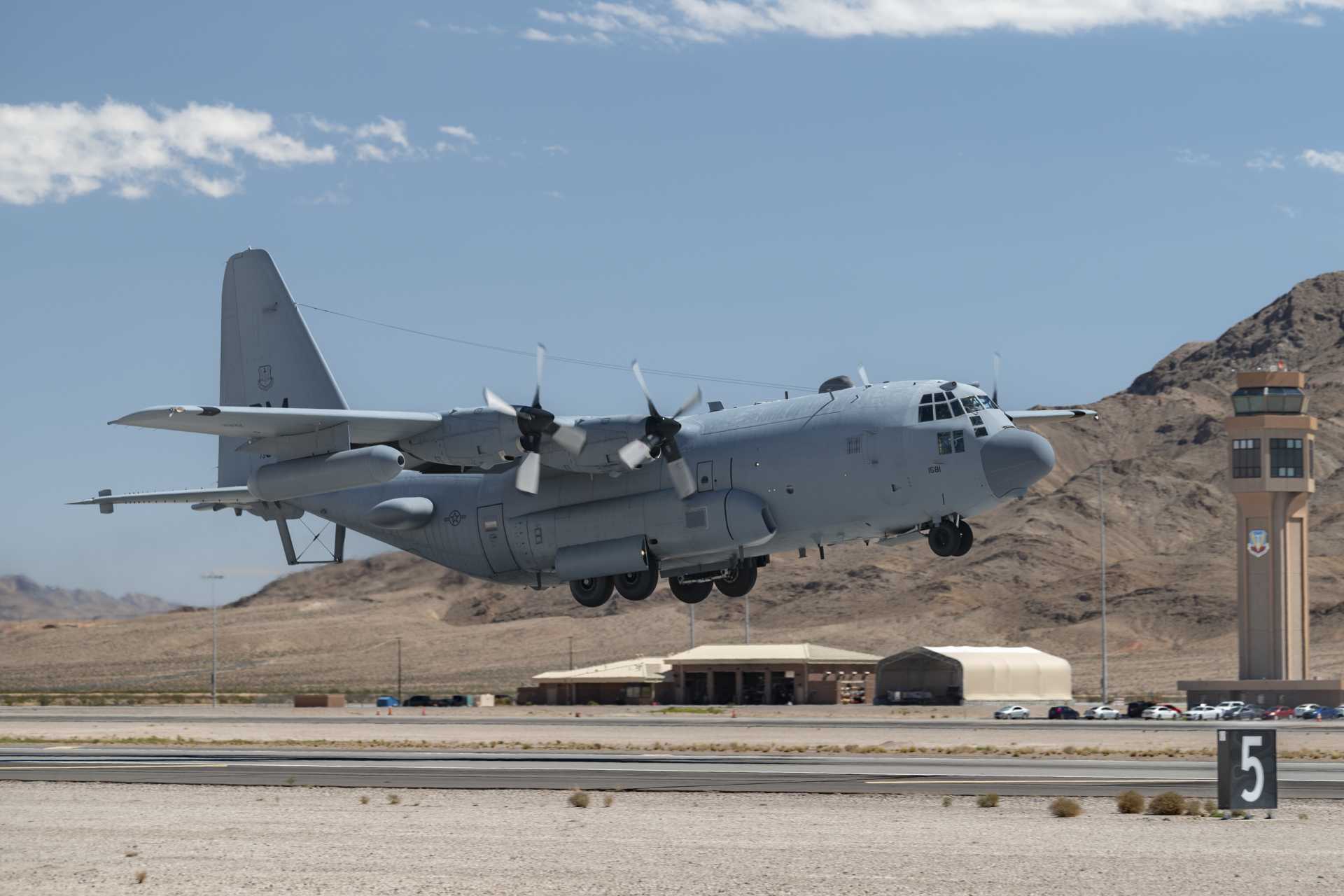
The EC-130H Compass Call is capable of jamming radio communications, data links, and other electronic signals used by hostile forces to coordinate operations, reducing the ability of opposing forces to organize defensive responses or direct units across the battlefield. (Picture source: US Air Force)
On March 12, 2026, the U.S. Central Command confirmed the operational use of the EC-130H Compass Call electronic warfare aircraft during Operation Epic Fury, a large-scale U.S. military campaign launched against Iranian military infrastructure beginning on February 28, 2026. The operation targets elements of Iran’s security and military command structure and includes strikes against command and control centers, IRGC headquarters buildings, intelligence facilities, ballistic missile sites, air defense systems, anti-ship missile sites, and weapons production locations. By March 12, the campaign had struck about 6,000 targets across Iranian territory. Naval operations damaged or destroyed more than 90 Iranian vessels, including more than 60 ships and over 30 minelayers.
The operation integrates strategic bombers, tactical aircraft, reconnaissance aircraft, missile defense systems, and electronic warfare aircraft. Within this structure, the EC-130H Compass Call provides airborne electronic attack capabilities intended to degrade communication networks used by Iranian military forces. Operation Epic Fury involves a layered set of U.S. military assets operating simultaneously across several operational domains. Long-range strikes are conducted by B-1, B-2, and B-52 bombers, while F-15, F-16, F-18, F-22, F-35, and A-10 aircraft carry out tactical precision attacks against military installations. Electronic warfare operations include EA-18G electronic attack aircraft and EC-130H Compass Call aircraft targeting communication systems.
Intelligence and reconnaissance support is provided by U-2 Dragon Lady aircraft, RC-135 reconnaissance aircraft, and P-8 maritime patrol aircraft. MQ-9 Reaper drones and LUCAS unmanned aircraft support surveillance and strike missions. Ground and missile defense systems deployed during the campaign include Patriot interceptor missile systems, THAAD anti-ballistic missile systems, counter-drone systems, and Counter Rocket Artillery and Mortar (C-RAM) defenses. Naval forces include nuclear-powered aircraft carriers and guided-missile destroyers supported by aerial refueling tankers, C-17 Globemaster transport aircraft, and C-130 cargo aircraft sustaining operational logistics across the theater.
With a range without aerial refueling exceeding 3,800 kilometers, the EC-130H Compass Call is designed to conduct stand-off electronic attack operations targeting communication networks used by military command structures. Its mission focuses on disrupting command and control links, battlefield communications, and data networks used to coordinate military units. The aircraft transmits high-power electromagnetic interference designed to block or degrade communications across selected frequency ranges. These transmissions interfere with radio systems used by air defense operators, missile units, and military command posts. The aircraft can also disrupt satellite communications and digital data links used for coordination between operational units.
By degrading communication networks, the aircraft can reduce the ability of air defense systems and missile forces to coordinate responses to incoming strikes, as seen in Venezuela. The aircraft operates in conjunction with strike aircraft, reconnaissance platforms, and intelligence systems to ensure jamming operations are directed at communication nodes supporting active military defenses. Development of the Compass Call capability began during the Cold War as part of U.S. efforts to counter integrated communication networks used by adversary military forces. The system was developed by converting C-130 Hercules transport aircraft into electronic warfare aircraft capable of carrying large electronic attack suites and power generation systems.
Early Compass Call aircraft entered operational service with the United States Air Force in 1983. The aircraft was used during the 1991 Gulf War to interfere with Iraqi military communications and command networks. Subsequent deployments occurred in operations over the Balkans during the 1990s and later in Iraq and Afghanistan. Modernization programs expanded the electronic warfare suite to address digital communication systems and networked command structures. Several upgrades introduced improved digital receivers, signal processing systems, and higher power transmitters designed to target modern communication networks, although the EC-130H started to be replaced by the EA-37B.
The EC-130H carries multiple antenna arrays, blade antennas, and radomes distributed along the fuselage and wings to detect and transmit signals across wide frequency ranges. These antennas support signal interception and high-power transmission functions used in electronic attack operations. Inside the aircraft, a large mission compartment houses operator consoles that monitor communication activity across the electromagnetic spectrum. Electronic warfare operators analyze intercepted signals and assign jamming resources to specific frequencies and communication systems. The aircraft’s power generation system has been modified to supply large electrical loads required by high-power electronic transmitters.
These transmitters broadcast interference signals designed to saturate communication channels used by adversary command networks. The Compass Call mission system integrates several major subsystems designed for signal detection, analysis, and electronic attack. The system includes wideband AN/ALR-63 receivers to geolocate communication emitters before jamming. Signal processing systems classify detected transmissions and determine which communication channels belong to military command networks. The electronic attack suite includes high-power AN/ALQ-173 “Blink” and AN/ALQ-174 VHF communications jammers capable of interfering with voice communications, digital data transmissions, and command links.
These systems can operate simultaneously across multiple frequencies, allowing the aircraft to disrupt several communication networks at once. The aircraft’s mission crew manages these systems through multiple operator consoles that control jamming allocation and monitor signal effects. Integration with intelligence databases allows the aircraft to identify specific communication systems used by opposing forces. The EC-130H Compass Call, based on the C-130H Hercules airframe, includes a large crew complement and significant onboard electrical generation capacity to support electronic warfare equipment. The Compass Call typically operates with a crew of 13 personnel composed of two pilots, a navigator, a flight engineer, and nine electronic warfare officers and mission specialists responsible for signal analysis and jamming control.
Powered by four Allison T56-A-15 turboprop engines, each producing about 4,591 shaft horsepower and driving four-blade propellers, the EC-130H could reach a maximum cruise speed of about 540 km/h, while typical operational speeds during jamming missions remain lower to maximize time on station. The aircraft’s operational ceiling is about 25,000 feet, with most electronic attack missions conducted between 20,000 and 25,000 feet to optimize radio frequency propagation. Combat endurance generally ranges between 8 and 12 hours, and although not part of the offensive electronic attack mission suite, the EC-130H also typically carries defensive systems such as the AN/AAR-47 missile approach warning system, chaff/flare countermeasure dispensers, and radar warning receivers.
The EC-130H measures about 29.8 meters in length with a wingspan of 40.4 meters and a height of about 11.9 meters. Maximum takeoff weight reaches roughly 70,300 kg, as the internal fuel capacity exceeds 26,000 liters for persistent electronic attack missions, but the EC-130H can still operate from runways shorter than 1,200 meters due to the short takeoff and landing characteristics inherited from the Hercules airframe. Electrical power generation is augmented by additional generators connected to the turboprop engines to support the electronic warfare suite. The aircraft’s fuselage contains multiple mission equipment racks housing signal receivers, transmitters, digital processors, and mission control consoles. External antennas and radomes distributed along the fuselage and wings provide wide angular coverage for signal interception and jamming transmission, while the integration with reconnaissance aircraft and intelligence networks allows coordinated electronic warfare operations across complex operational environments.
Written by Jérôme Brahy
Jérôme Brahy is a defense analyst and documentalist at Army Recognition. He specializes in naval modernization, aviation, drones, armored vehicles, and artillery, with a focus on strategic developments in the United States, China, Ukraine, Russia, Türkiye, and Belgium. His analyses go beyond the facts, providing context, identifying key actors, and explaining why defense news matters on a global scale.