U.S. Air Force Tests New A-10C Attack Aircraft Refueling Probe to Expand Combat Range
{loadposition bannertop}
{loadposition sidebarpub}
The U.S. Air Force has tested an A-10C Thunderbolt II fitted with a new air refueling probe, expanding the aircraft’s operational reach and survivability even as the fleet moves toward gradual retirement. During the May 19, 2026, test at Moody Air Force Base in Georgia, an A-10C from the 74th Fighter Squadron successfully refueled from an HC-130J Combat King II of the 71st Rescue Squadron, demonstrating a capability that could extend loiter time and improve flexibility in contested environments.
The modification allows the A-10 to conduct probe-and-drogue refueling with rescue and special operations aircraft, reducing dependence on traditional tanker support and enabling operations from more dispersed locations. The test also reflects a broader U.S. Air Force focus on sustaining combat effectiveness through adaptable and distributed airpower concepts as legacy aircraft continue supporting high-demand missions.
Related News: U.S. extends A-10 Warthog attack aircraft service to 2030 after combat use in Iran
An A-10C Thunderbolt II assigned to the 74th Fighter Squadron successfully tested a newly installed refueling probe during a familiarization flight with an HC-130J Combat King II at Moody Air Force Base on May 19, 2026. (Picture source: US DoD)
Images released by the U.S. Air Force showed the A-10 fitted with an external probe mounted on the forward fuselage, allowing the aircraft to receive fuel through a hose-and-drogue system rather than relying exclusively on the traditional flying boom method used by U.S. Air Force strategic tankers such as the KC-135 Stratotanker and KC-46A Pegasus. According to the official caption accompanying the photographs, the sortie represented the aircraft’s “first familiarization flight” with the newly installed system and demonstrated its effectiveness during an actual refueling operation.
New details published on May 26, 2026, indicate that the modification was developed in response to an urgent operational requirement and is intended to enhance the A-10’s ability to support both Combat Search and Rescue (CSAR) and Close Air Support (CAS) missions. According to information released by Moody Air Force Base, the probe enables A-10 aircraft to receive fuel from HC-130J tankers below 10,000 feet, allowing the aircraft to remain within the operational altitude envelope of rescue missions instead of climbing to higher altitudes to rendezvous with conventional tankers.
The development is noteworthy because the A-10 Thunderbolt II, commonly known as the Warthog, was originally designed around conventional U.S. Air Force boom refueling procedures. The aircraft’s General Electric TF34-GE-100 turbofan engines each generate approximately 9,065 pounds of thrust, enabling strong low-speed handling characteristics and extended endurance over combat areas. The A-10 can reach a maximum speed of around 706 km/h and has a range of approximately 4,150 km, while its large straight wing design allows operations from austere forward airfields close to frontline units.
The ability to conduct low-altitude refueling may prove particularly valuable during rescue escort operations or dispersed expeditionary deployments. Tech. Sgt. Wesley Zell, an A-10 refueling probe installer from Davis-Monthan Air Force Base, explained that the new capability allows the aircraft to “go low level, below 10,000 feet, refuel with the HC-130 and stay in the CSAR mission.”
Another operational advantage stems from the hose-and-drogue configuration itself. Unlike boom refueling systems, which typically service one aircraft at a time, the HC-130J can support simultaneous refueling of two A-10 aircraft. This could reduce the time required for a two-ship formation supporting rescue or close air support missions to refuel and return to the operational area. Such flexibility becomes increasingly relevant in contested environments where tanker vulnerability and exposure times are growing concerns.
The A-10C remains heavily armed for anti-armor and battlefield interdiction missions. Its primary weapon, the GAU-8/A Avenger 30 mm rotary cannon, fires armor-piercing rounds at rates reaching 4,200 rounds per minute and was specifically optimized to destroy armored vehicles at short range. The aircraft also carries AGM-65 Maverick air-to-surface missiles, laser-guided bombs, Hydra rocket pods, and AIM-9 Sidewinder air-to-air missiles for self-defense. Eleven external pylons provide a payload capacity exceeding 7,200 kg, enabling the aircraft to adapt to multiple mission profiles.
The aircraft was specifically designed around battlefield survivability and persistence. Its cockpit and portions of the flight-control system are protected by a titanium armored “bathtub” capable of resisting 23 mm cannon fire and some 57 mm projectile impacts. The aircraft can also continue flying with significant structural damage or with one engine inoperative. These characteristics continue to make the A-10 relevant for low-altitude support operations where resilience against ground fire remains essential.
The new probe-and-drogue capability also aligns with broader U.S. Air Force efforts to adapt aircraft operations to contested environments where large tanker aircraft may become vulnerable to long-range air defense systems or anti-access/area denial (A2/AD) networks. Under the Agile Combat Employment (ACE) concept, the Air Force seeks to distribute aircraft and support assets across multiple austere or temporary operating locations rather than relying exclusively on centralized air bases. Tactical refueling using HC-130J, MC-130J Commando II, or KC-130J Super Hercules aircraft could therefore improve operational resilience during distributed combat operations.
The timing of the modification is also notable because the U.S. Air Force recently decided to maintain portions of the A-10 fleet in service until at least 2030. Previous plans had envisioned a faster retirement timeline, including proposals to fully withdraw the aircraft by fiscal year 2029. Congress, however, repeatedly opposed rapid retirement efforts, citing the aircraft’s effectiveness in close air support operations and its continued operational relevance.
Installation of the probe itself appears relatively simple from a technical standpoint. Moody Air Force Base maintainers reportedly completed installation on the first aircraft only days after receiving the kits, while Davis-Monthan Air Force Base specialists provided temporary deployment support and modular pack-out kits intended to reduce dependence on traditional logistics chains. According to maintainers involved in the work, the installation process generally takes around four hours once mounting hardware is prepared.
For an aircraft approaching the later stages of its operational life, the addition of a deployable low-altitude refueling capability demonstrates that the A-10C Thunderbolt II continues to receive targeted upgrades tailored to evolving mission requirements. Rather than representing a simple workaround for tanker compatibility, the modification suggests the U.S. Air Force still considers the Warthog a useful asset for specific operational scenarios involving close air support, personnel recovery, and dispersed expeditionary warfare.
Written By Erwan Halna du Fretay – Defense Analyst, Army Recognition GroupErwan Halna du Fretay holds a Master’s degree in International Relations and has experience studying conflicts and global arms transfers. His research interests lie in security and strategic studies, particularly the dynamics of the defense industry, the evolution of military technologies, and the strategic transformation of armed forces.
{loadposition bannertop}
{loadposition sidebarpub}
The U.S. Air Force has tested an A-10C Thunderbolt II fitted with a new air refueling probe, expanding the aircraft’s operational reach and survivability even as the fleet moves toward gradual retirement. During the May 19, 2026, test at Moody Air Force Base in Georgia, an A-10C from the 74th Fighter Squadron successfully refueled from an HC-130J Combat King II of the 71st Rescue Squadron, demonstrating a capability that could extend loiter time and improve flexibility in contested environments.
The modification allows the A-10 to conduct probe-and-drogue refueling with rescue and special operations aircraft, reducing dependence on traditional tanker support and enabling operations from more dispersed locations. The test also reflects a broader U.S. Air Force focus on sustaining combat effectiveness through adaptable and distributed airpower concepts as legacy aircraft continue supporting high-demand missions.
Related News: U.S. extends A-10 Warthog attack aircraft service to 2030 after combat use in Iran
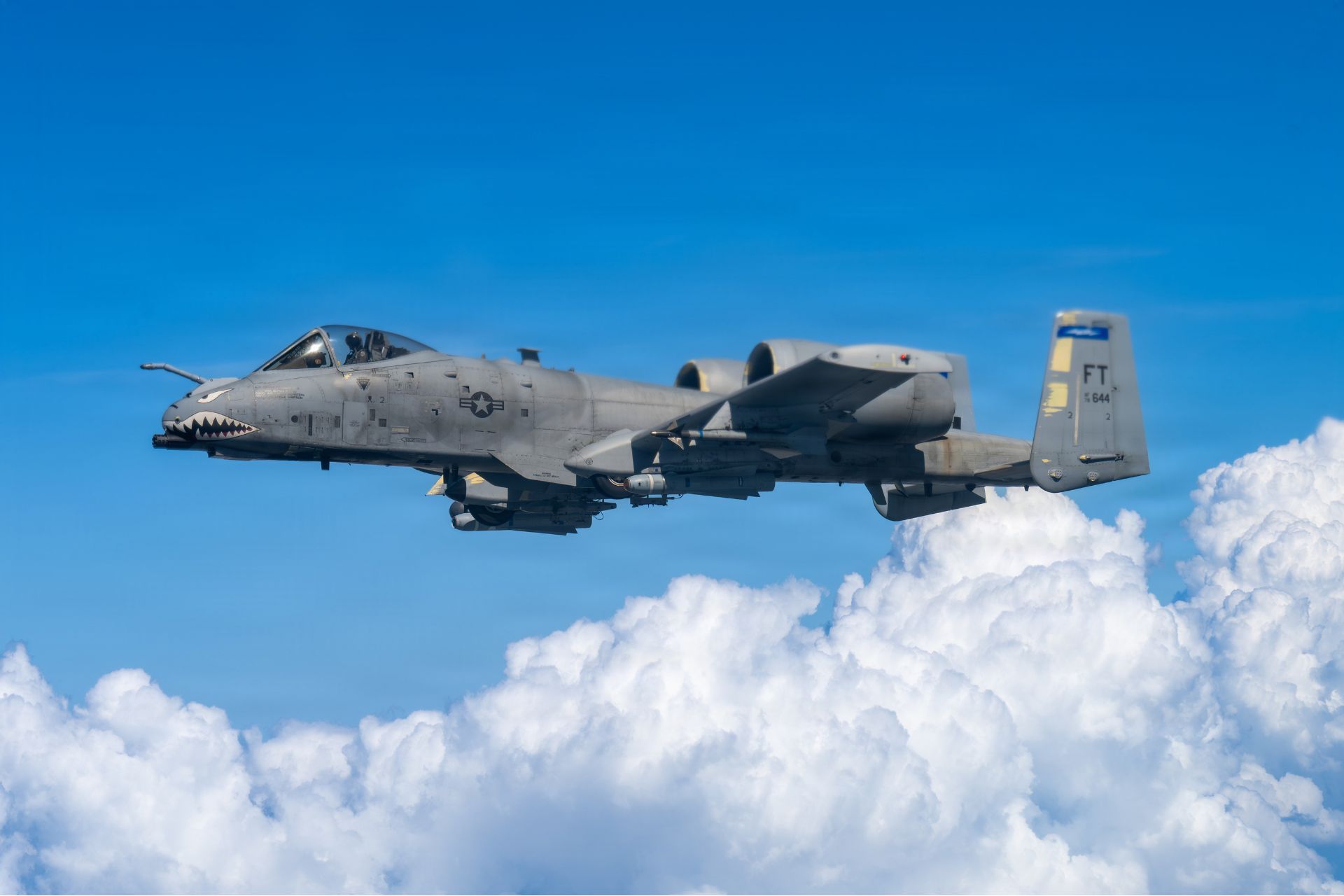
An A-10C Thunderbolt II assigned to the 74th Fighter Squadron successfully tested a newly installed refueling probe during a familiarization flight with an HC-130J Combat King II at Moody Air Force Base on May 19, 2026. (Picture source: US DoD)
Images released by the U.S. Air Force showed the A-10 fitted with an external probe mounted on the forward fuselage, allowing the aircraft to receive fuel through a hose-and-drogue system rather than relying exclusively on the traditional flying boom method used by U.S. Air Force strategic tankers such as the KC-135 Stratotanker and KC-46A Pegasus. According to the official caption accompanying the photographs, the sortie represented the aircraft’s “first familiarization flight” with the newly installed system and demonstrated its effectiveness during an actual refueling operation.
New details published on May 26, 2026, indicate that the modification was developed in response to an urgent operational requirement and is intended to enhance the A-10’s ability to support both Combat Search and Rescue (CSAR) and Close Air Support (CAS) missions. According to information released by Moody Air Force Base, the probe enables A-10 aircraft to receive fuel from HC-130J tankers below 10,000 feet, allowing the aircraft to remain within the operational altitude envelope of rescue missions instead of climbing to higher altitudes to rendezvous with conventional tankers.
The development is noteworthy because the A-10 Thunderbolt II, commonly known as the Warthog, was originally designed around conventional U.S. Air Force boom refueling procedures. The aircraft’s General Electric TF34-GE-100 turbofan engines each generate approximately 9,065 pounds of thrust, enabling strong low-speed handling characteristics and extended endurance over combat areas. The A-10 can reach a maximum speed of around 706 km/h and has a range of approximately 4,150 km, while its large straight wing design allows operations from austere forward airfields close to frontline units.
The ability to conduct low-altitude refueling may prove particularly valuable during rescue escort operations or dispersed expeditionary deployments. Tech. Sgt. Wesley Zell, an A-10 refueling probe installer from Davis-Monthan Air Force Base, explained that the new capability allows the aircraft to “go low level, below 10,000 feet, refuel with the HC-130 and stay in the CSAR mission.”
Another operational advantage stems from the hose-and-drogue configuration itself. Unlike boom refueling systems, which typically service one aircraft at a time, the HC-130J can support simultaneous refueling of two A-10 aircraft. This could reduce the time required for a two-ship formation supporting rescue or close air support missions to refuel and return to the operational area. Such flexibility becomes increasingly relevant in contested environments where tanker vulnerability and exposure times are growing concerns.
The A-10C remains heavily armed for anti-armor and battlefield interdiction missions. Its primary weapon, the GAU-8/A Avenger 30 mm rotary cannon, fires armor-piercing rounds at rates reaching 4,200 rounds per minute and was specifically optimized to destroy armored vehicles at short range. The aircraft also carries AGM-65 Maverick air-to-surface missiles, laser-guided bombs, Hydra rocket pods, and AIM-9 Sidewinder air-to-air missiles for self-defense. Eleven external pylons provide a payload capacity exceeding 7,200 kg, enabling the aircraft to adapt to multiple mission profiles.
The aircraft was specifically designed around battlefield survivability and persistence. Its cockpit and portions of the flight-control system are protected by a titanium armored “bathtub” capable of resisting 23 mm cannon fire and some 57 mm projectile impacts. The aircraft can also continue flying with significant structural damage or with one engine inoperative. These characteristics continue to make the A-10 relevant for low-altitude support operations where resilience against ground fire remains essential.
The new probe-and-drogue capability also aligns with broader U.S. Air Force efforts to adapt aircraft operations to contested environments where large tanker aircraft may become vulnerable to long-range air defense systems or anti-access/area denial (A2/AD) networks. Under the Agile Combat Employment (ACE) concept, the Air Force seeks to distribute aircraft and support assets across multiple austere or temporary operating locations rather than relying exclusively on centralized air bases. Tactical refueling using HC-130J, MC-130J Commando II, or KC-130J Super Hercules aircraft could therefore improve operational resilience during distributed combat operations.
The timing of the modification is also notable because the U.S. Air Force recently decided to maintain portions of the A-10 fleet in service until at least 2030. Previous plans had envisioned a faster retirement timeline, including proposals to fully withdraw the aircraft by fiscal year 2029. Congress, however, repeatedly opposed rapid retirement efforts, citing the aircraft’s effectiveness in close air support operations and its continued operational relevance.
Installation of the probe itself appears relatively simple from a technical standpoint. Moody Air Force Base maintainers reportedly completed installation on the first aircraft only days after receiving the kits, while Davis-Monthan Air Force Base specialists provided temporary deployment support and modular pack-out kits intended to reduce dependence on traditional logistics chains. According to maintainers involved in the work, the installation process generally takes around four hours once mounting hardware is prepared.
For an aircraft approaching the later stages of its operational life, the addition of a deployable low-altitude refueling capability demonstrates that the A-10C Thunderbolt II continues to receive targeted upgrades tailored to evolving mission requirements. Rather than representing a simple workaround for tanker compatibility, the modification suggests the U.S. Air Force still considers the Warthog a useful asset for specific operational scenarios involving close air support, personnel recovery, and dispersed expeditionary warfare.
Written By Erwan Halna du Fretay – Defense Analyst, Army Recognition Group
Erwan Halna du Fretay holds a Master’s degree in International Relations and has experience studying conflicts and global arms transfers. His research interests lie in security and strategic studies, particularly the dynamics of the defense industry, the evolution of military technologies, and the strategic transformation of armed forces.