U.S. Pushes 70-Year-Old B-52 Bomber Into 2050s With F130 Engines – AESA Radar and Strike Upgrades
{loadposition bannertop}
{loadposition sidebarpub}
The U.S. Air Force is pushing ahead with one of the most extensive upgrades in the B-52 Stratofortress’s history, converting the 70-year-old bomber into the future B-52J with new Rolls-Royce F130 engines, an APQ-188 AESA radar, increased electrical capacity, and updated mission systems. The modernization is designed to keep the aircraft combat-relevant into the 2050s by improving endurance, sensor performance, and the ability to support long-range nuclear and conventional strike missions.
The B-52J will remain a high-capacity standoff weapons carrier able to launch long-range munitions without penetrating the most heavily defended airspace. This role will complement the stealthier B-21 Raider, giving the U.S. Air Force a mix of survivable penetration and large-payload standoff strike capabilities for future conflicts.
Realted Topic:
A U.S. Air Force B-52H Stratofortress lands at Joint Base Elmendorf-Richardson, Alaska, on August 5, 2026, ahead of the Arctic Thunder Open House. The long-range strategic bomber is undergoing major modernization toward the future B-52J configuration, including Rolls-Royce F130 engines and a new AESA radar intended to keep the aircraft operational into the 2050s and beyond. (Picture source: U.S. Department of War/Defense)
The transformation advanced significantly in 2026 after the U.S. Air Force granted Milestone B approval to the Commercial Engine Replacement Program on June 1 and Milestone C approval to the Radar Modernization Program on August 21. These decisions move the Rolls-Royce F130 engine upgrade into Engineering and Manufacturing Development and authorize Low-Rate Initial Production of the new AESA radar, reinforcing a long-term strategy centered on preserving the B-52’s range, payload, and mission flexibility rather than replacing the aircraft solely because of its age.
The Boeing B-52 Stratofortress remains valuable because its basic design still offers characteristics that are difficult to replace economically: an unrefueled range of more than 8,800 miles, a weapons capacity of about 70,000 pounds, and the ability to remain airborne for extended periods with aerial refueling. Those attributes allow the bomber to carry conventional precision-guided weapons, cruise missiles, anti-ship missiles and nuclear weapons over intercontinental distances, while increasingly sophisticated standoff munitions reduce the need for the aircraft itself to penetrate the most heavily defended airspace.
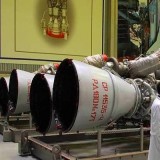
The B-52J transformation centers on replacing eight Pratt & Whitney TF33 turbofan engines with eight Rolls-Royce F130 engines. The new propulsion system is intended to improve reliability, fuel efficiency, and maintainability while supporting new generators, hydraulic pumps, cockpit displays, and flight systems. The U.S. Air Force has set the total acquisition cost for the Commercial Engine Replacement Program at $20.2 billion, but the investment matters beyond engine replacement because it provides the electrical and propulsion foundation needed for additional sensors, communications systems, and mission equipment over the coming decades.
The increased electrical-generation capacity is especially important to the B-52’s long-term military value. Modern radar, communications equipment, defensive systems, and future electronic subsystems require far more power than the original B-52H architecture was designed to provide. By increasing available power and replacing aging supporting systems, the U.S. Air Force is creating additional growth margin that could allow the bomber to absorb future sensors, weapons, and electronic upgrades without requiring another fundamental redesign.
The second major element of B-52 modernization is replacing the 1980s-era APQ-166 analog radar with the APQ-188 AESA radar. The new sensor will provide faster electronic beam steering, improved reliability, better situational awareness, and a more modern foundation for navigation, targeting, maritime surveillance, and long-range weapon employment. For a bomber increasingly used as a standoff strike aircraft, the radar upgrade directly supports the ability to detect, track, and engage targets while remaining farther from advanced enemy air defenses.
Two dedicated B-52 aircraft are scheduled to undergo the engine and radar modifications concurrently at Boeing’s San Antonio facility. This approach will allow the U.S. Air Force to test how the F130 engines, electrical generation, avionics, cockpit equipment, and AESA radar interact in a configuration representative of the future B-52J. The objective is therefore not simply to extend service life mechanically, but to rebuild the bomber around modern propulsion, sensors, and mission systems that can support operations well beyond 2050.
The operational logic behind the B-52J is increasingly tied to long-range weapons. The U.S. Air Force continues work involving newer variants of the Long-Range Anti-Ship Missile and Joint Air-to-Surface Standoff Missile, while the B-52 has also been used extensively for hypersonic weapons testing. This combination allows the bomber to generate large volumes of precision fire from standoff range, making payload capacity and endurance increasingly important in future high-intensity operations.
The B-52 has also demonstrated continued operational relevance in recent conflicts and crisis deployments. During Operation Inherent Resolve, B-52Hs flew approximately 1,800 combat sorties against Islamic State forces in Iraq and Syria, while later deployments supported missions in Iraq, Syria, and Afghanistan. More recently, B-52Hs returned to the U.S. Central Command area in late 2024 and flew missions over the Arabian Peninsula and Red Sea in 2025, illustrating the U.S. Air Force’s ability to move heavy bomber capacity rapidly into a theater for deterrence, presence, and operational support.
This combination of payload, range, and standoff weapons is particularly significant in the Indo-Pacific, where long distances increase the value of aircraft that can carry large numbers of weapons between widely separated operating areas. A B-52J carrying long-range land-attack or anti-ship missiles could deliver substantial strike volume without approaching the engagement zones of the most capable surface-to-air missile systems, giving the U.S. Air Force an additional way to reinforce maritime and land-based strike operations across the region.
The modernization also preserves the B-52’s role as a U.S. nuclear bomber. Work continues on survivable nuclear command-and-control communications, including Extremely High Frequency terminals, as well as conventional beyond-line-of-sight connectivity such as Hybrid SATCOM. These upgrades are intended to keep the aircraft integrated into modern command networks and ensure that the bomber can continue contributing to both conventional and nuclear missions despite the age of its basic airframe.
This modernization remains viable because of the aircraft’s structural condition. U.S. Air Force assessments conducted as part of the Commercial Engine Replacement Program concluded that the B-52 fleet retains sufficient fatigue life to support operations well into the 2050s and beyond. That structural reserve allows the service to replace engines, radar, communications equipment, cockpit systems, and weapons while retaining an airframe that still provides the range, payload, and internal volume required for long-range strike.
The B-52J will also occupy a distinct role alongside the B-21 Raider rather than duplicating it. The B-21 is being developed to penetrate highly contested airspace using low-observable characteristics and advanced mission systems, while the B-52J is better suited to carrying large numbers of standoff weapons from outside the most dangerous air-defense zones. This creates a complementary force in which the B-21 provides penetration and survivability while the B-52J provides payload mass, endurance, and long-range missile capacity.
The broader value of the B-52 modernization therefore lies in what the aircraft can continue to offer after repeated upgrades. Its age matters less than its ability to accept new engines, sensors, communications systems, and weapons without losing the range and payload advantages that made it useful in the first place. The transition from B-52H to B-52J is essentially a strategy to preserve the bomber’s most valuable parts while replacing the systems that determine combat effectiveness.
The 2026 engine and radar milestones therefore mark more than another life-extension effort. They are part of a deliberate U.S. Air Force strategy to keep the B-52 relevant as a long-range strike aircraft, U.S. nuclear bomber and high-capacity weapons carrier well into the 2050s, while the B-21 Raider takes on the most demanding penetration missions. If modernization proceeds as planned, the B-52J will remain valuable not because the U.S. Air Force is preserving an old bomber, but because it will continue to rebuild it around the requirements of future warfare.
Explore More Defense News
• Land Defense News• Naval Defense News• Defense Aerospace NewsWritten by Alain Servaes – Chief Editor, Army Recognition GroupAlain Servaes is a former infantry non-commissioned officer and the founder of Army Recognition. With over 20 years in defense journalism, he provides expert analysis on military equipment, NATO operations, and the global defense industry.
{loadposition bannertop}
{loadposition sidebarpub}
The U.S. Air Force is pushing ahead with one of the most extensive upgrades in the B-52 Stratofortress’s history, converting the 70-year-old bomber into the future B-52J with new Rolls-Royce F130 engines, an APQ-188 AESA radar, increased electrical capacity, and updated mission systems. The modernization is designed to keep the aircraft combat-relevant into the 2050s by improving endurance, sensor performance, and the ability to support long-range nuclear and conventional strike missions.
The B-52J will remain a high-capacity standoff weapons carrier able to launch long-range munitions without penetrating the most heavily defended airspace. This role will complement the stealthier B-21 Raider, giving the U.S. Air Force a mix of survivable penetration and large-payload standoff strike capabilities for future conflicts.
Realted Topic:
A U.S. Air Force B-52H Stratofortress lands at Joint Base Elmendorf-Richardson, Alaska, on August 5, 2026, ahead of the Arctic Thunder Open House. The long-range strategic bomber is undergoing major modernization toward the future B-52J configuration, including Rolls-Royce F130 engines and a new AESA radar intended to keep the aircraft operational into the 2050s and beyond. (Picture source: U.S. Department of War/Defense)
The transformation advanced significantly in 2026 after the U.S. Air Force granted Milestone B approval to the Commercial Engine Replacement Program on June 1 and Milestone C approval to the Radar Modernization Program on August 21. These decisions move the Rolls-Royce F130 engine upgrade into Engineering and Manufacturing Development and authorize Low-Rate Initial Production of the new AESA radar, reinforcing a long-term strategy centered on preserving the B-52’s range, payload, and mission flexibility rather than replacing the aircraft solely because of its age.
The Boeing B-52 Stratofortress remains valuable because its basic design still offers characteristics that are difficult to replace economically: an unrefueled range of more than 8,800 miles, a weapons capacity of about 70,000 pounds, and the ability to remain airborne for extended periods with aerial refueling. Those attributes allow the bomber to carry conventional precision-guided weapons, cruise missiles, anti-ship missiles and nuclear weapons over intercontinental distances, while increasingly sophisticated standoff munitions reduce the need for the aircraft itself to penetrate the most heavily defended airspace.
The B-52J transformation centers on replacing eight Pratt & Whitney TF33 turbofan engines with eight Rolls-Royce F130 engines. The new propulsion system is intended to improve reliability, fuel efficiency, and maintainability while supporting new generators, hydraulic pumps, cockpit displays, and flight systems. The U.S. Air Force has set the total acquisition cost for the Commercial Engine Replacement Program at $20.2 billion, but the investment matters beyond engine replacement because it provides the electrical and propulsion foundation needed for additional sensors, communications systems, and mission equipment over the coming decades.
The increased electrical-generation capacity is especially important to the B-52’s long-term military value. Modern radar, communications equipment, defensive systems, and future electronic subsystems require far more power than the original B-52H architecture was designed to provide. By increasing available power and replacing aging supporting systems, the U.S. Air Force is creating additional growth margin that could allow the bomber to absorb future sensors, weapons, and electronic upgrades without requiring another fundamental redesign.
The second major element of B-52 modernization is replacing the 1980s-era APQ-166 analog radar with the APQ-188 AESA radar. The new sensor will provide faster electronic beam steering, improved reliability, better situational awareness, and a more modern foundation for navigation, targeting, maritime surveillance, and long-range weapon employment. For a bomber increasingly used as a standoff strike aircraft, the radar upgrade directly supports the ability to detect, track, and engage targets while remaining farther from advanced enemy air defenses.
Two dedicated B-52 aircraft are scheduled to undergo the engine and radar modifications concurrently at Boeing’s San Antonio facility. This approach will allow the U.S. Air Force to test how the F130 engines, electrical generation, avionics, cockpit equipment, and AESA radar interact in a configuration representative of the future B-52J. The objective is therefore not simply to extend service life mechanically, but to rebuild the bomber around modern propulsion, sensors, and mission systems that can support operations well beyond 2050.
The operational logic behind the B-52J is increasingly tied to long-range weapons. The U.S. Air Force continues work involving newer variants of the Long-Range Anti-Ship Missile and Joint Air-to-Surface Standoff Missile, while the B-52 has also been used extensively for hypersonic weapons testing. This combination allows the bomber to generate large volumes of precision fire from standoff range, making payload capacity and endurance increasingly important in future high-intensity operations.
The B-52 has also demonstrated continued operational relevance in recent conflicts and crisis deployments. During Operation Inherent Resolve, B-52Hs flew approximately 1,800 combat sorties against Islamic State forces in Iraq and Syria, while later deployments supported missions in Iraq, Syria, and Afghanistan. More recently, B-52Hs returned to the U.S. Central Command area in late 2024 and flew missions over the Arabian Peninsula and Red Sea in 2025, illustrating the U.S. Air Force’s ability to move heavy bomber capacity rapidly into a theater for deterrence, presence, and operational support.
This combination of payload, range, and standoff weapons is particularly significant in the Indo-Pacific, where long distances increase the value of aircraft that can carry large numbers of weapons between widely separated operating areas. A B-52J carrying long-range land-attack or anti-ship missiles could deliver substantial strike volume without approaching the engagement zones of the most capable surface-to-air missile systems, giving the U.S. Air Force an additional way to reinforce maritime and land-based strike operations across the region.
The modernization also preserves the B-52’s role as a U.S. nuclear bomber. Work continues on survivable nuclear command-and-control communications, including Extremely High Frequency terminals, as well as conventional beyond-line-of-sight connectivity such as Hybrid SATCOM. These upgrades are intended to keep the aircraft integrated into modern command networks and ensure that the bomber can continue contributing to both conventional and nuclear missions despite the age of its basic airframe.
This modernization remains viable because of the aircraft’s structural condition. U.S. Air Force assessments conducted as part of the Commercial Engine Replacement Program concluded that the B-52 fleet retains sufficient fatigue life to support operations well into the 2050s and beyond. That structural reserve allows the service to replace engines, radar, communications equipment, cockpit systems, and weapons while retaining an airframe that still provides the range, payload, and internal volume required for long-range strike.
The B-52J will also occupy a distinct role alongside the B-21 Raider rather than duplicating it. The B-21 is being developed to penetrate highly contested airspace using low-observable characteristics and advanced mission systems, while the B-52J is better suited to carrying large numbers of standoff weapons from outside the most dangerous air-defense zones. This creates a complementary force in which the B-21 provides penetration and survivability while the B-52J provides payload mass, endurance, and long-range missile capacity.
The broader value of the B-52 modernization therefore lies in what the aircraft can continue to offer after repeated upgrades. Its age matters less than its ability to accept new engines, sensors, communications systems, and weapons without losing the range and payload advantages that made it useful in the first place. The transition from B-52H to B-52J is essentially a strategy to preserve the bomber’s most valuable parts while replacing the systems that determine combat effectiveness.
The 2026 engine and radar milestones therefore mark more than another life-extension effort. They are part of a deliberate U.S. Air Force strategy to keep the B-52 relevant as a long-range strike aircraft, U.S. nuclear bomber and high-capacity weapons carrier well into the 2050s, while the B-21 Raider takes on the most demanding penetration missions. If modernization proceeds as planned, the B-52J will remain valuable not because the U.S. Air Force is preserving an old bomber, but because it will continue to rebuild it around the requirements of future warfare.
Explore More Defense News
• Land Defense News
• Naval Defense News
• Defense Aerospace News
Written by Alain Servaes – Chief Editor, Army Recognition Group
Alain Servaes is a former infantry non-commissioned officer and the founder of Army Recognition. With over 20 years in defense journalism, he provides expert analysis on military equipment, NATO operations, and the global defense industry.