Turkish AKINCI Drone Achieves First Air-to-Air Kill Using EREN Loitering Munition Against Shahed-Type UAV
{loadposition bannertop}
{loadposition sidebarpub}
Baykar Technologies confirmed that its Bayraktar AKINCI successfully destroyed a target drone over the Black Sea near Sinop using the EREN high-speed multi-purpose loitering munition. The demonstration highlights Türkiye’s push to convert long-endurance strike drones into cost-effective airborne interceptors amid rising kamikaze UAV and cruise missile threats across NATO’s eastern flank.
On 21 February 2026, footage and statements released by Baykar Technologies on its official X account confirmed that the Bayraktar AKINCI Unmanned Combat Aerial Vehicle had carried out its first successful air-to-air engagement using the EREN High-Speed Multi-Purpose Loitering Munition, destroying a target drone over the Black Sea off Sinop. The test comes at a moment when Türkiye has consolidated its position as the world’s leading exporter of armed UAVs and when allied airspace is increasingly challenged by massed kamikaze drones and cruise-missile-like threats on the eastern flank. By transforming a long-endurance strike UCAV into a cost-effective “drone killer” equipped with a turbojet-powered interceptor, Ankara has taken a visible step in rewriting the economics and tactics of air defence. For NATO planners, the demonstration points to a future in which persistent unmanned patrols complement manned fighters and ground-based air defence systems in a layered, networked shield over Alliance territory.
Follow Army Recognition on Google News at this link
Baykar Technologies announced that its Bayraktar AKINCI successfully shot down a target drone over the Black Sea using the EREN high-speed loitering munition, marking the platform’s first confirmed air-to-air intercept (Picture Source: Army Recognition Group / Baykar Technologies)
The air-to-air firing campaign saw Bayraktar AKINCI depart from its Flight Training and Test Center at Çorlu, proceed to a test range over the Black Sea, and engage a purpose-built target UAV that had climbed from a ground launcher on the coast near Sinop. According to the official test description, the UCAV released a single EREN loitering munition, which accelerated under its own turbojet, acquired the airborne target using its seeker and then executed a direct hit, destroying the drone in mid-air before AKINCI returned to base along its planned route. This sequence is significant for two reasons: it validates an unmanned-to-unmanned intercept profile entirely within the UCAV’s own kill chain, and it demonstrates that EREN’s guidance, previously proven against static maritime targets, can now handle a dynamic air target in a realistic engagement geometry.
At the heart of this achievement is AKINCI itself, a multirole High-Altitude Long-Endurance (HALE) UCAV with a 6-ton maximum take-off weight, more than 1,500 kg of payload capacity and an endurance exceeding 24 hours, powered by twin turboprop engines and equipped with eight external hardpoints. The platform already integrates a comprehensive mission suite including SATCOM, electronic support and electronic counter-measures, synthetic-aperture radar and an indigenous MURAD active electronically scanned array (AESA) radar. Recent testing of the MURAD 100-A variant on AKINCI has showcased multi-mode performance, with simultaneous tracking of air and surface targets, SAR and GMTI modes, and weather mapping, with user-interface footage indicating detection ranges on the order of 160 km. In practical terms, this means that AKINCI can act simultaneously as an ISR node and as an air-defence picket, detecting low-RCS threats, classifying them via radar and electro-optical sensors, and then prosecuting them with stand-off weapons such as EREN without relying on a manned fighter or ground-based radar to close the kill chain.
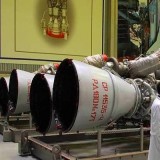
The second pillar of this new concept of operations is EREN itself, developed by Roketsan as a high-speed, multi-platform loitering munition that in many respects, behaves more like a small cruise missile than a conventional kamikaze drone. EREN weighs approximately 35 kg, is around 2 metres in length and is powered by a turbojet engine, giving it a range in excess of 100 km and an endurance of more than 15 minutes in the target area. Its guidance architecture combines GNSS/INS mid-course navigation with an imaging infrared (IIR) seeker and automatic target recognition, allowing the operator to search, positively identify, abort, and re-attack if the tactical situation changes. Earlier this year, an AKINCI-launched EREN scored a direct hit on a small static sea target, validating its seeker and control laws in a maritime environment. Designed from the outset as a multi-role effector, EREN can be fired from UAVs, helicopters, armoured vehicles, containerised truck launchers and naval platforms, engaging low-speed aerial threats, armoured and unarmoured ground targets and personnel, effectively bridging the gap between traditional surface-to-air interceptors and loitering strike munitions.
The air-to-air EREN shot also marks a new stage in AKINCI’s own operational evolution. Since its first firing tests in 2021, the UCAV has progressively integrated a broad arsenal of precision weapons, from the MAM series of lightweight guided munitions to TEBER and HGK guided bombs, SOM and Çakır cruise missiles, and supersonic UAV-122 and UAV-230 aero-ballistic missiles. In August 2025, AKINCI successfully launched both EREN and the propeller-driven ALPAGUT loitering munition in a single sortie against maritime targets, underscoring its dual air-to-surface and anti-drone potential. It had already demonstrated an initial air-to-air capability using the Kemankeş-1 AI-enabled mini cruise missile, but those shots remained closer to “extended-range air-to-surface” engagements. By contrast, the latest trial with EREN, designed from the outset to prosecute “low-speed flying air elements”, pushes AKINCI firmly into the realm of dedicated aerial combat against unmanned threats, while preserving its original air-to-ground strike flexibility.
From a tactical standpoint, combining a HALE UCAV like AKINCI with a high-speed loitering effector such as EREN creates a mobile, persistent “counter-UAS bubble” that can be projected hundreds of kilometres from friendly airspace. Operating at around 30,000 ft with endurance measured in tens of hours, AKINCI can maintain combat air patrols over critical corridors or maritime choke points while its MURAD radar and EO/IR suite detect slow-moving UAVs, helicopters or cruise missiles. Once a track is confirmed, EREN can be released from outside the engagement envelope of most medium-range surface-to-air systems, fly a stand-off intercept profile, loiter in the vicinity of the threat, and then dive at high speed for a terminal hit. Because the effector itself is relatively compact and can be carried in numbers under a UCAV with eight hardpoints, a single AKINCI orbit could, in principle, defend a broad area while still retaining air-to-ground weapons for follow-on strikes against launch sites or command posts. This type of “shooter-sensor on the same unmanned airframe” sharply reduces reaction times and shrinks the sensor-to-shooter loop compared with relying on distant manned fighters or ground-based launchers.
Cost-effectiveness is central to the appeal of this architecture for both Türkiye and its allies. In recent conflicts, from Ukraine to the Middle East, defending forces have often been forced to expend surface-to-air missiles costing hundreds of thousands or even millions of dollars per round against relatively inexpensive Shahed-type or Geran-2 kamikaze drones, creating an unsustainable cost-exchange ratio over prolonged campaigns. A UCAV-launched loitering munition reverses that equation: the launch platform can remain at altitude and outside threat envelopes, while relatively low-cost, reusable mission kits on AKINCI are combined with munitions whose unit price is far below that of a medium- or long-range SAM. When multiplied across multiple aircraft and launch cells on land and sea, EREN offers the prospect of saturating the airspace with agile interceptors that can discriminate targets, avoid collateral damage through mission abort and re-attack functions, and be dynamically retasked as the battle evolves.
This development strengthens Türkiye’s position as a key contributor to NATO’s Integrated Air and Missile Defence (IAMD) posture on the Black Sea and along the Alliance’s eastern flank. Baykar is already the world’s leading exporter of armed UAVs by volume and revenue, and its systems, notably TB2 and AKINCI, have entered the inventories of numerous allied and partner air forces. With EREN now entering the picture as a multi-domain effector, Türkiye can offer NATO not just ISR and strike drones, but a scalable counter-drone layer that can be plugged into existing command-and-control networks. Instead of deploying high-end fighters such as Eurofighter Typhoon detachments to perform air policing against slow, small UAVs over countries like Romania, alliance air chiefs could in the future opt to station AKINCI detachments equipped with EREN to provide round-the-clock counter-UAS coverage, while manned fighters focus on higher-end threats like crewed aircraft and ballistic or cruise-missile platforms. In a crisis on NATO’s eastern or southeastern front, this would free scarce fourth- and fifth-generation fighter hours, ease pressure on expensive ground-based interceptors, and add resilience through the dispersible, road-deployable nature of UCAV operations.
The regional implications are clear in a threat environment increasingly defined by Iranian-designed Shahed-series drones supplied to Russia, as well as by the proliferation of similar loitering munitions among non-state actors. A system like AKINCI armed with EREN can be stationed over the Black Sea, the eastern Mediterranean or along land borders to form a moving barrier capable of intercepting such kamikaze drones before they reach critical infrastructure, cities or deployed forces. Because EREN is also optimised for armoured and soft-skinned ground targets, the same platform can contribute to deep strike or interdiction missions, seamlessly switching from counter-UAS to offensive roles as the tactical situation demands. In effect, Türkiye has demonstrated a sovereign ability to design both the unmanned platform and the smart effector, integrate them with an indigenous AESA radar and export-proven command-and-control, and then employ them in a role, UCAV-launched air-to-air interception using a turbojet loitering munition, that no other country has yet publicly showcased in this combination.
The AKINCI–EREN test over the Black Sea underlines how quickly Türkiye has moved from being an adopter of foreign UAV concepts to becoming one of the principal innovators in unmanned and counter-drone warfare within the NATO ecosystem. A HALE UCAV equipped with a domestic AESA radar and armed with a high-speed loitering munition now offers the Alliance a realistic way to defend its airspace against saturating drone threats without being locked into an unsustainable cycle of firing million-dollar missiles at low-cost targets. If fully integrated into NATO’s planning, doctrine and air tasking orders, formations of AKINCIs carrying EREN could in the future sit alongside Patriot, SAMP/T, NASAMS and manned quick-reaction alert fighters as a complementary layer in a truly multi-domain air-defence architecture. In that sense, Türkiye has not only turned its flagship UCAV into a capable drone hunter; it has also signalled the arrival of a new generation of allied air-defence concepts in which unmanned platforms protect the skies as much as they patrol them.
Written by Teoman S. Nicanci – Defense Analyst, Army Recognition Group
Teoman S. Nicanci holds degrees in Political Science, Comparative and International Politics, and International Relations and Diplomacy from leading Belgian universities, with research focused on Russian strategic behavior, defense technology, and modern warfare. He is a defense analyst at Army Recognition, specializing in the global defense industry, military armament, and emerging defense technologies.

{loadposition bannertop}
{loadposition sidebarpub}
Baykar Technologies confirmed that its Bayraktar AKINCI successfully destroyed a target drone over the Black Sea near Sinop using the EREN high-speed multi-purpose loitering munition. The demonstration highlights Türkiye’s push to convert long-endurance strike drones into cost-effective airborne interceptors amid rising kamikaze UAV and cruise missile threats across NATO’s eastern flank.
On 21 February 2026, footage and statements released by Baykar Technologies on its official X account confirmed that the Bayraktar AKINCI Unmanned Combat Aerial Vehicle had carried out its first successful air-to-air engagement using the EREN High-Speed Multi-Purpose Loitering Munition, destroying a target drone over the Black Sea off Sinop. The test comes at a moment when Türkiye has consolidated its position as the world’s leading exporter of armed UAVs and when allied airspace is increasingly challenged by massed kamikaze drones and cruise-missile-like threats on the eastern flank. By transforming a long-endurance strike UCAV into a cost-effective “drone killer” equipped with a turbojet-powered interceptor, Ankara has taken a visible step in rewriting the economics and tactics of air defence. For NATO planners, the demonstration points to a future in which persistent unmanned patrols complement manned fighters and ground-based air defence systems in a layered, networked shield over Alliance territory.
Baykar Technologies announced that its Bayraktar AKINCI successfully shot down a target drone over the Black Sea using the EREN high-speed loitering munition, marking the platform’s first confirmed air-to-air intercept (Picture Source: Army Recognition Group / Baykar Technologies)
The air-to-air firing campaign saw Bayraktar AKINCI depart from its Flight Training and Test Center at Çorlu, proceed to a test range over the Black Sea, and engage a purpose-built target UAV that had climbed from a ground launcher on the coast near Sinop. According to the official test description, the UCAV released a single EREN loitering munition, which accelerated under its own turbojet, acquired the airborne target using its seeker and then executed a direct hit, destroying the drone in mid-air before AKINCI returned to base along its planned route. This sequence is significant for two reasons: it validates an unmanned-to-unmanned intercept profile entirely within the UCAV’s own kill chain, and it demonstrates that EREN’s guidance, previously proven against static maritime targets, can now handle a dynamic air target in a realistic engagement geometry.
At the heart of this achievement is AKINCI itself, a multirole High-Altitude Long-Endurance (HALE) UCAV with a 6-ton maximum take-off weight, more than 1,500 kg of payload capacity and an endurance exceeding 24 hours, powered by twin turboprop engines and equipped with eight external hardpoints. The platform already integrates a comprehensive mission suite including SATCOM, electronic support and electronic counter-measures, synthetic-aperture radar and an indigenous MURAD active electronically scanned array (AESA) radar. Recent testing of the MURAD 100-A variant on AKINCI has showcased multi-mode performance, with simultaneous tracking of air and surface targets, SAR and GMTI modes, and weather mapping, with user-interface footage indicating detection ranges on the order of 160 km. In practical terms, this means that AKINCI can act simultaneously as an ISR node and as an air-defence picket, detecting low-RCS threats, classifying them via radar and electro-optical sensors, and then prosecuting them with stand-off weapons such as EREN without relying on a manned fighter or ground-based radar to close the kill chain.
The second pillar of this new concept of operations is EREN itself, developed by Roketsan as a high-speed, multi-platform loitering munition that in many respects, behaves more like a small cruise missile than a conventional kamikaze drone. EREN weighs approximately 35 kg, is around 2 metres in length and is powered by a turbojet engine, giving it a range in excess of 100 km and an endurance of more than 15 minutes in the target area. Its guidance architecture combines GNSS/INS mid-course navigation with an imaging infrared (IIR) seeker and automatic target recognition, allowing the operator to search, positively identify, abort, and re-attack if the tactical situation changes. Earlier this year, an AKINCI-launched EREN scored a direct hit on a small static sea target, validating its seeker and control laws in a maritime environment. Designed from the outset as a multi-role effector, EREN can be fired from UAVs, helicopters, armoured vehicles, containerised truck launchers and naval platforms, engaging low-speed aerial threats, armoured and unarmoured ground targets and personnel, effectively bridging the gap between traditional surface-to-air interceptors and loitering strike munitions.
The air-to-air EREN shot also marks a new stage in AKINCI’s own operational evolution. Since its first firing tests in 2021, the UCAV has progressively integrated a broad arsenal of precision weapons, from the MAM series of lightweight guided munitions to TEBER and HGK guided bombs, SOM and Çakır cruise missiles, and supersonic UAV-122 and UAV-230 aero-ballistic missiles. In August 2025, AKINCI successfully launched both EREN and the propeller-driven ALPAGUT loitering munition in a single sortie against maritime targets, underscoring its dual air-to-surface and anti-drone potential. It had already demonstrated an initial air-to-air capability using the Kemankeş-1 AI-enabled mini cruise missile, but those shots remained closer to “extended-range air-to-surface” engagements. By contrast, the latest trial with EREN, designed from the outset to prosecute “low-speed flying air elements”, pushes AKINCI firmly into the realm of dedicated aerial combat against unmanned threats, while preserving its original air-to-ground strike flexibility.
From a tactical standpoint, combining a HALE UCAV like AKINCI with a high-speed loitering effector such as EREN creates a mobile, persistent “counter-UAS bubble” that can be projected hundreds of kilometres from friendly airspace. Operating at around 30,000 ft with endurance measured in tens of hours, AKINCI can maintain combat air patrols over critical corridors or maritime choke points while its MURAD radar and EO/IR suite detect slow-moving UAVs, helicopters or cruise missiles. Once a track is confirmed, EREN can be released from outside the engagement envelope of most medium-range surface-to-air systems, fly a stand-off intercept profile, loiter in the vicinity of the threat, and then dive at high speed for a terminal hit. Because the effector itself is relatively compact and can be carried in numbers under a UCAV with eight hardpoints, a single AKINCI orbit could, in principle, defend a broad area while still retaining air-to-ground weapons for follow-on strikes against launch sites or command posts. This type of “shooter-sensor on the same unmanned airframe” sharply reduces reaction times and shrinks the sensor-to-shooter loop compared with relying on distant manned fighters or ground-based launchers.
Cost-effectiveness is central to the appeal of this architecture for both Türkiye and its allies. In recent conflicts, from Ukraine to the Middle East, defending forces have often been forced to expend surface-to-air missiles costing hundreds of thousands or even millions of dollars per round against relatively inexpensive Shahed-type or Geran-2 kamikaze drones, creating an unsustainable cost-exchange ratio over prolonged campaigns. A UCAV-launched loitering munition reverses that equation: the launch platform can remain at altitude and outside threat envelopes, while relatively low-cost, reusable mission kits on AKINCI are combined with munitions whose unit price is far below that of a medium- or long-range SAM. When multiplied across multiple aircraft and launch cells on land and sea, EREN offers the prospect of saturating the airspace with agile interceptors that can discriminate targets, avoid collateral damage through mission abort and re-attack functions, and be dynamically retasked as the battle evolves.
This development strengthens Türkiye’s position as a key contributor to NATO’s Integrated Air and Missile Defence (IAMD) posture on the Black Sea and along the Alliance’s eastern flank. Baykar is already the world’s leading exporter of armed UAVs by volume and revenue, and its systems, notably TB2 and AKINCI, have entered the inventories of numerous allied and partner air forces. With EREN now entering the picture as a multi-domain effector, Türkiye can offer NATO not just ISR and strike drones, but a scalable counter-drone layer that can be plugged into existing command-and-control networks. Instead of deploying high-end fighters such as Eurofighter Typhoon detachments to perform air policing against slow, small UAVs over countries like Romania, alliance air chiefs could in the future opt to station AKINCI detachments equipped with EREN to provide round-the-clock counter-UAS coverage, while manned fighters focus on higher-end threats like crewed aircraft and ballistic or cruise-missile platforms. In a crisis on NATO’s eastern or southeastern front, this would free scarce fourth- and fifth-generation fighter hours, ease pressure on expensive ground-based interceptors, and add resilience through the dispersible, road-deployable nature of UCAV operations.
The regional implications are clear in a threat environment increasingly defined by Iranian-designed Shahed-series drones supplied to Russia, as well as by the proliferation of similar loitering munitions among non-state actors. A system like AKINCI armed with EREN can be stationed over the Black Sea, the eastern Mediterranean or along land borders to form a moving barrier capable of intercepting such kamikaze drones before they reach critical infrastructure, cities or deployed forces. Because EREN is also optimised for armoured and soft-skinned ground targets, the same platform can contribute to deep strike or interdiction missions, seamlessly switching from counter-UAS to offensive roles as the tactical situation demands. In effect, Türkiye has demonstrated a sovereign ability to design both the unmanned platform and the smart effector, integrate them with an indigenous AESA radar and export-proven command-and-control, and then employ them in a role, UCAV-launched air-to-air interception using a turbojet loitering munition, that no other country has yet publicly showcased in this combination.
The AKINCI–EREN test over the Black Sea underlines how quickly Türkiye has moved from being an adopter of foreign UAV concepts to becoming one of the principal innovators in unmanned and counter-drone warfare within the NATO ecosystem. A HALE UCAV equipped with a domestic AESA radar and armed with a high-speed loitering munition now offers the Alliance a realistic way to defend its airspace against saturating drone threats without being locked into an unsustainable cycle of firing million-dollar missiles at low-cost targets. If fully integrated into NATO’s planning, doctrine and air tasking orders, formations of AKINCIs carrying EREN could in the future sit alongside Patriot, SAMP/T, NASAMS and manned quick-reaction alert fighters as a complementary layer in a truly multi-domain air-defence architecture. In that sense, Türkiye has not only turned its flagship UCAV into a capable drone hunter; it has also signalled the arrival of a new generation of allied air-defence concepts in which unmanned platforms protect the skies as much as they patrol them.
Written by Teoman S. Nicanci – Defense Analyst, Army Recognition Group
Teoman S. Nicanci holds degrees in Political Science, Comparative and International Politics, and International Relations and Diplomacy from leading Belgian universities, with research focused on Russian strategic behavior, defense technology, and modern warfare. He is a defense analyst at Army Recognition, specializing in the global defense industry, military armament, and emerging defense technologies.