U.S. Strikes Iranian Air Defenses on Qeshm Island After MQ-1 Predator Drone Shootdown
{loadposition bannertop}
{loadposition sidebarpub}
The United States launched precision airstrikes against Iranian radar and drone-control facilities on Qeshm Island and near Goruk after Iran shot down a U.S. MQ-1 Predator operating over international waters, a move that directly challenged U.S. surveillance operations and security in the Gulf. The strikes were designed to degrade Iran’s ability to track, target, and threaten military and commercial traffic moving through the Strait of Hormuz.
The operation targeted air-defense assets, a drone ground-control station, and one-way attack drones used to support Iranian maritime threat networks. By reducing the effectiveness of these systems, the strikes sought to restore freedom of navigation and reinforce deterrence in one of the world’s most strategically important maritime chokepoints.
Related News: US forces launch new military strikes against Iranian drone sites near Strait of Hormuz
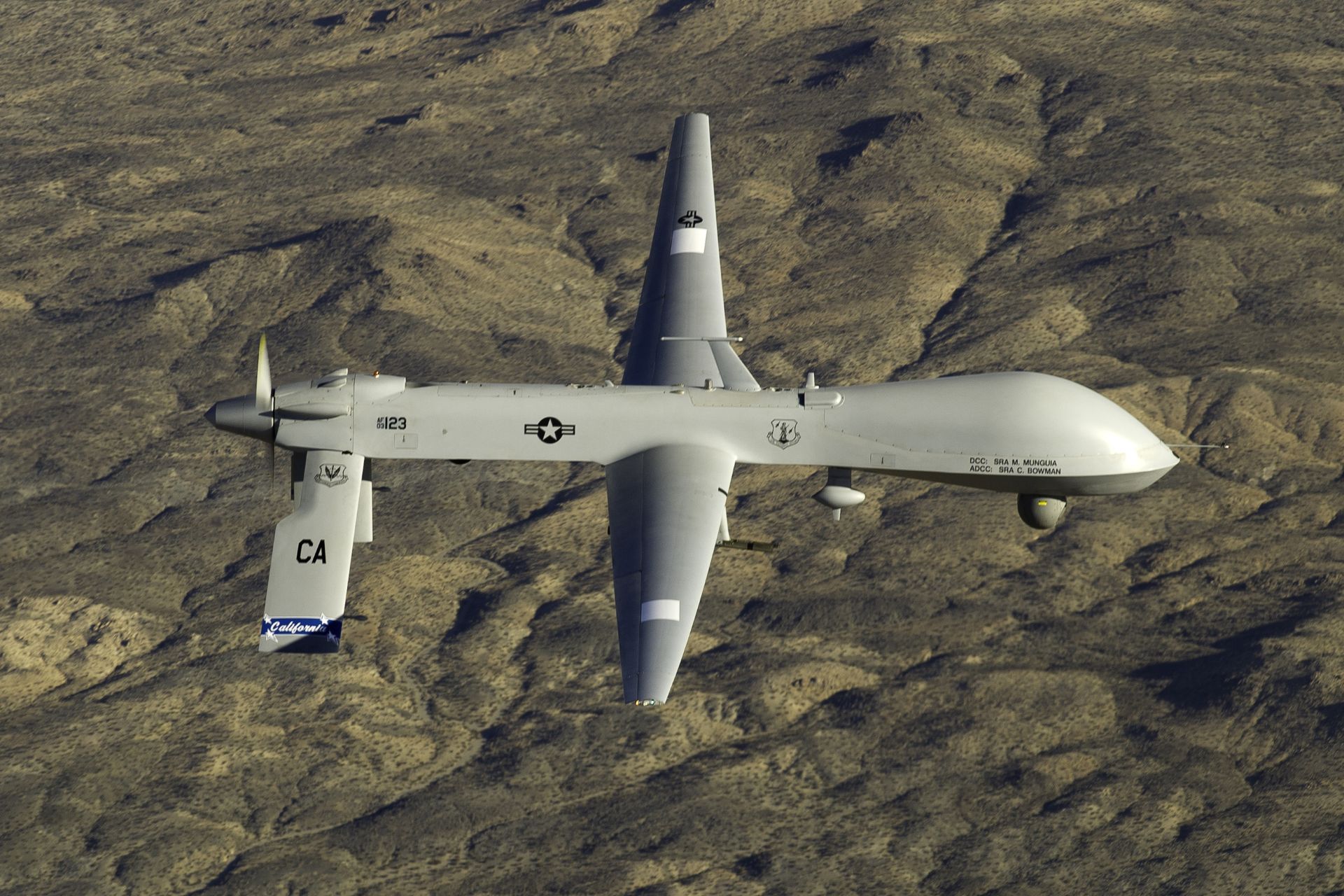
The MQ-1B Predator provides long-endurance intelligence, surveillance, and reconnaissance capabilities. Its reported shootdown near the Strait of Hormuz highlighted the growing contest between U.S. ISR operations and Iran’s coastal air-defense network. (Picture source: US DoD)
The operation marks one of the most significant direct U.S. strikes on Iranian military infrastructure since the beginning of the fragile ceasefire negotiations. The targeted sites were reportedly linked to Iran’s coastal surveillance network and unmanned aerial vehicle operations, both of which play a critical role in monitoring and controlling access to the Strait of Hormuz.
The MQ-1 Predator was likely engaged by Iranian ground-based air-defense systems positioned around Qeshm Island, one of the most heavily militarized sectors of the Strait of Hormuz. Iranian media previously reported the deployment of new air-defense assets on the island and claimed that Iranian forces had intercepted hostile drones operating near its airspace. While Tehran has not officially identified the weapon system used, the interception was likely conducted using short- to medium-range surface-to-air missile systems integrated into the Islamic Revolutionary Guard Corps (IRGC) coastal defense network.
Qeshm Island occupies a strategic position overlooking the main shipping lanes entering and leaving the Persian Gulf. The island hosts IRGC naval facilities, surveillance infrastructure, anti-ship missile positions, drone operating areas, and underground military installations reportedly used to store naval mines, fast-attack craft, unmanned systems, and coastal defense weapons. These assets form part of Iran’s anti-access/area-denial architecture designed to threaten military and commercial vessels operating in the region.
The MQ-1 Predator remains an important intelligence, surveillance, and reconnaissance asset despite being largely replaced by the MQ-9 Reaper in U.S. Air Force service. Equipped with the Multi-Spectral Targeting System, the aircraft combines infrared sensors, electro-optical cameras, laser designators, and full-motion video transmission systems capable of monitoring maritime activity across large areas. The aircraft can operate at altitudes up to 25,000 feet, remain airborne for extended periods, and employ AGM-114 Hellfire precision-guided missiles against ground or maritime targets.
Based on information released by U.S. Central Command, the American response likely focused on several categories of Iranian military equipment. The first targets were radar systems responsible for air-surveillance and target tracking around Qeshm Island and the Goruk coastal sector. These could include mobile coastal-surveillance radars connected to Iran’s integrated air-defense network and used to detect aircraft, drones, and naval movements across the Strait of Hormuz.
The second category involved drone command-and-control facilities. Such sites typically include communication antennas, satellite-link terminals, mission-control shelters, data-processing equipment, and operators responsible for controlling reconnaissance and attack unmanned aerial vehicles. Iranian drone units operating from southern Iran regularly support maritime surveillance missions and can direct one-way attack drones against shipping or military targets throughout the Gulf region.
The third category likely included localized air-defense assets directly involved in the engagement of the MQ-1 Predator. CENTCOM specifically stated that U.S. aircraft eliminated Iranian air defenses during the retaliation mission. Although no specific system was identified, potential targets may have included radar-guided surface-to-air missile launchers, fire-control radars, mobile engagement radars, and command vehicles associated with Iran’s layered coastal air-defense network.
Iran acknowledged launching a retaliatory strike after the U.S. attacks. Kuwaiti air defenses reportedly intercepted incoming drones and missiles, while the Islamic Revolutionary Guard Corps stated that it had targeted facilities allegedly used to support the American operation. Kuwait hosts major U.S. military infrastructure, including U.S. Army Central headquarters, logistics hubs, prepositioned equipment sites, and command centers supporting operations across the Middle East.
While Washington and Tehran continue negotiations to extend the truce and restore freedom of navigation through the Strait of Hormuz, both sides are simultaneously employing calibrated military actions to strengthen their negotiating positions. The shootdown of a U.S. MQ-1 Predator was not only a tactical engagement against an intelligence-gathering asset; it was also a strategic message from Tehran that it remains capable of contesting American surveillance operations around the Strait despite months of U.S. and Israeli military pressure. By targeting a reconnaissance aircraft rather than a manned aircraft or a naval vessel, Iran demonstrated resolve while attempting to avoid an escalation that could immediately collapse the diplomatic track.
The American response appears equally calculated. Rather than striking major strategic facilities or high-value command centers deeper inside Iran, U.S. forces focused on radar systems, air-defense assets, drone-control infrastructure, and one-way attack drones directly linked to the engagement. Such targets can be presented as proportional military responses while simultaneously degrading capabilities that underpin Iran’s pressure campaign in the Strait of Hormuz. This suggests that Washington is seeking to preserve deterrence and operational freedom without crossing thresholds that would make continued negotiations politically impossible.
More importantly, the exchange highlights a fundamental weakness in the ceasefire itself. The current arrangement has reduced the intensity of direct hostilities. Still, it has failed to establish mutually accepted rules governing surveillance flights, maritime security operations, and military activities around the Strait of Hormuz. As long as Iran continues to challenge U.S. reconnaissance missions and the United States continues to operate ISR assets near Iranian defensive zones, the risk of further incidents remains high. Each tactical engagement creates new political pressure on both governments, making diplomatic compromise increasingly difficult.
The strikes against Qeshm Island and the Goruk area are particularly significant because they target elements of Iran’s anti-access and area-denial architecture rather than its strategic nuclear or conventional military infrastructure. These coastal surveillance networks, drone-control stations, and air-defense systems are among Tehran’s most important tools for monitoring and influencing maritime traffic through Hormuz. Their degradation temporarily reduces Iran’s ability to track U.S. and allied military movements, but it also weakens one of the key sources of leverage Tehran brings to the negotiating table. As a result, the military exchange is not separate from the diplomatic process; it is becoming part of it, with both sides attempting to shape the terms of any future agreement through controlled demonstrations of force.
The broader risk is that repeated tactical clashes could gradually transform a fragile ceasefire into a cycle of retaliation. Neither Washington nor Tehran currently appears to seek a return to full-scale conflict, yet both continue to employ military pressure to improve their bargaining positions. This creates a dangerous dynamic in which every intercepted drone, damaged vessel, or limited strike carries the potential to trigger a larger confrontation that neither side originally intended. The latest exchange, therefore, illustrates that the greatest threat to the ceasefire may not be a deliberate decision to resume war, but the accumulation of localized military incidents that steadily erode the political space required for a negotiated settlement.
Written By Erwan Halna du Fretay – Defense Analyst, Army Recognition GroupErwan Halna du Fretay holds a Master’s degree in International Relations and has experience studying conflicts and global arms transfers. His research interests lie in security and strategic studies, particularly the dynamics of the defense industry, the evolution of military technologies, and the strategic transformation of armed forces.
{loadposition bannertop}
{loadposition sidebarpub}
The United States launched precision airstrikes against Iranian radar and drone-control facilities on Qeshm Island and near Goruk after Iran shot down a U.S. MQ-1 Predator operating over international waters, a move that directly challenged U.S. surveillance operations and security in the Gulf. The strikes were designed to degrade Iran’s ability to track, target, and threaten military and commercial traffic moving through the Strait of Hormuz.
The operation targeted air-defense assets, a drone ground-control station, and one-way attack drones used to support Iranian maritime threat networks. By reducing the effectiveness of these systems, the strikes sought to restore freedom of navigation and reinforce deterrence in one of the world’s most strategically important maritime chokepoints.
Related News: US forces launch new military strikes against Iranian drone sites near Strait of Hormuz
The MQ-1B Predator provides long-endurance intelligence, surveillance, and reconnaissance capabilities. Its reported shootdown near the Strait of Hormuz highlighted the growing contest between U.S. ISR operations and Iran’s coastal air-defense network. (Picture source: US DoD)
The operation marks one of the most significant direct U.S. strikes on Iranian military infrastructure since the beginning of the fragile ceasefire negotiations. The targeted sites were reportedly linked to Iran’s coastal surveillance network and unmanned aerial vehicle operations, both of which play a critical role in monitoring and controlling access to the Strait of Hormuz.
The MQ-1 Predator was likely engaged by Iranian ground-based air-defense systems positioned around Qeshm Island, one of the most heavily militarized sectors of the Strait of Hormuz. Iranian media previously reported the deployment of new air-defense assets on the island and claimed that Iranian forces had intercepted hostile drones operating near its airspace. While Tehran has not officially identified the weapon system used, the interception was likely conducted using short- to medium-range surface-to-air missile systems integrated into the Islamic Revolutionary Guard Corps (IRGC) coastal defense network.
Qeshm Island occupies a strategic position overlooking the main shipping lanes entering and leaving the Persian Gulf. The island hosts IRGC naval facilities, surveillance infrastructure, anti-ship missile positions, drone operating areas, and underground military installations reportedly used to store naval mines, fast-attack craft, unmanned systems, and coastal defense weapons. These assets form part of Iran’s anti-access/area-denial architecture designed to threaten military and commercial vessels operating in the region.
The MQ-1 Predator remains an important intelligence, surveillance, and reconnaissance asset despite being largely replaced by the MQ-9 Reaper in U.S. Air Force service. Equipped with the Multi-Spectral Targeting System, the aircraft combines infrared sensors, electro-optical cameras, laser designators, and full-motion video transmission systems capable of monitoring maritime activity across large areas. The aircraft can operate at altitudes up to 25,000 feet, remain airborne for extended periods, and employ AGM-114 Hellfire precision-guided missiles against ground or maritime targets.
Based on information released by U.S. Central Command, the American response likely focused on several categories of Iranian military equipment. The first targets were radar systems responsible for air-surveillance and target tracking around Qeshm Island and the Goruk coastal sector. These could include mobile coastal-surveillance radars connected to Iran’s integrated air-defense network and used to detect aircraft, drones, and naval movements across the Strait of Hormuz.
The second category involved drone command-and-control facilities. Such sites typically include communication antennas, satellite-link terminals, mission-control shelters, data-processing equipment, and operators responsible for controlling reconnaissance and attack unmanned aerial vehicles. Iranian drone units operating from southern Iran regularly support maritime surveillance missions and can direct one-way attack drones against shipping or military targets throughout the Gulf region.
The third category likely included localized air-defense assets directly involved in the engagement of the MQ-1 Predator. CENTCOM specifically stated that U.S. aircraft eliminated Iranian air defenses during the retaliation mission. Although no specific system was identified, potential targets may have included radar-guided surface-to-air missile launchers, fire-control radars, mobile engagement radars, and command vehicles associated with Iran’s layered coastal air-defense network.
Iran acknowledged launching a retaliatory strike after the U.S. attacks. Kuwaiti air defenses reportedly intercepted incoming drones and missiles, while the Islamic Revolutionary Guard Corps stated that it had targeted facilities allegedly used to support the American operation. Kuwait hosts major U.S. military infrastructure, including U.S. Army Central headquarters, logistics hubs, prepositioned equipment sites, and command centers supporting operations across the Middle East.
While Washington and Tehran continue negotiations to extend the truce and restore freedom of navigation through the Strait of Hormuz, both sides are simultaneously employing calibrated military actions to strengthen their negotiating positions. The shootdown of a U.S. MQ-1 Predator was not only a tactical engagement against an intelligence-gathering asset; it was also a strategic message from Tehran that it remains capable of contesting American surveillance operations around the Strait despite months of U.S. and Israeli military pressure. By targeting a reconnaissance aircraft rather than a manned aircraft or a naval vessel, Iran demonstrated resolve while attempting to avoid an escalation that could immediately collapse the diplomatic track.
The American response appears equally calculated. Rather than striking major strategic facilities or high-value command centers deeper inside Iran, U.S. forces focused on radar systems, air-defense assets, drone-control infrastructure, and one-way attack drones directly linked to the engagement. Such targets can be presented as proportional military responses while simultaneously degrading capabilities that underpin Iran’s pressure campaign in the Strait of Hormuz. This suggests that Washington is seeking to preserve deterrence and operational freedom without crossing thresholds that would make continued negotiations politically impossible.
More importantly, the exchange highlights a fundamental weakness in the ceasefire itself. The current arrangement has reduced the intensity of direct hostilities. Still, it has failed to establish mutually accepted rules governing surveillance flights, maritime security operations, and military activities around the Strait of Hormuz. As long as Iran continues to challenge U.S. reconnaissance missions and the United States continues to operate ISR assets near Iranian defensive zones, the risk of further incidents remains high. Each tactical engagement creates new political pressure on both governments, making diplomatic compromise increasingly difficult.
The strikes against Qeshm Island and the Goruk area are particularly significant because they target elements of Iran’s anti-access and area-denial architecture rather than its strategic nuclear or conventional military infrastructure. These coastal surveillance networks, drone-control stations, and air-defense systems are among Tehran’s most important tools for monitoring and influencing maritime traffic through Hormuz. Their degradation temporarily reduces Iran’s ability to track U.S. and allied military movements, but it also weakens one of the key sources of leverage Tehran brings to the negotiating table. As a result, the military exchange is not separate from the diplomatic process; it is becoming part of it, with both sides attempting to shape the terms of any future agreement through controlled demonstrations of force.
The broader risk is that repeated tactical clashes could gradually transform a fragile ceasefire into a cycle of retaliation. Neither Washington nor Tehran currently appears to seek a return to full-scale conflict, yet both continue to employ military pressure to improve their bargaining positions. This creates a dangerous dynamic in which every intercepted drone, damaged vessel, or limited strike carries the potential to trigger a larger confrontation that neither side originally intended. The latest exchange, therefore, illustrates that the greatest threat to the ceasefire may not be a deliberate decision to resume war, but the accumulation of localized military incidents that steadily erode the political space required for a negotiated settlement.
Written By Erwan Halna du Fretay – Defense Analyst, Army Recognition Group
Erwan Halna du Fretay holds a Master’s degree in International Relations and has experience studying conflicts and global arms transfers. His research interests lie in security and strategic studies, particularly the dynamics of the defense industry, the evolution of military technologies, and the strategic transformation of armed forces.