U.S. Space Force Selects Northrop Grumman to Demonstrate Orbital Interceptors for Golden Dome Missile Defense
{loadposition bannertop}
{loadposition sidebarpub}
Northrop Grumman has been selected by the U.S. Space Force to demonstrate space-based interceptor capabilities, the company announced on June 1, 2026, advancing a future orbital layer for the Golden Dome missile defense architecture. The move places Northrop Grumman at the forefront of one of the Pentagon’s most ambitious missile defense initiatives, aiming to give the United States the ability to engage ballistic and hypersonic threats from orbit before they can threaten the homeland.
The company says it remains on track to deliver an on-orbit capability by 2027 after completing ground tests this year, with Apex supporting the industrial effort. If proven, the system could add persistent space-based coverage to existing sensors, radars, command networks, and ground or sea-based interceptors, strengthening deterrence through a more distributed and resilient missile defense posture.
Related Topic: SpaceX’s $4.16B Contract Paves the Way for New U.S. Military Satellite Network Tracking Airborne Threats Worldwide
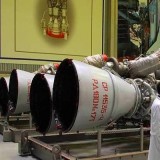
Northrop Grumman has been selected by the U.S. Space Force to demonstrate space-based interceptor technology for the Golden Dome missile defense initiative, advancing plans to deploy orbital systems capable of detecting, tracking, and potentially defeating ballistic and hypersonic missile threats from space by 2027 (Picture Source: Northrop Grumman)
On June 1, 2026, Northrop Grumman announced that the US Space Force selected the company to demonstrate space-based interceptor capabilities, with Apex named as a key industrial collaborator for the effort. The announcement places Northrop Grumman at the center of a major US initiative to reinforce homeland missile defense through a future orbital layer able to detect, track, and defeat missile threats from space. Following successful ground tests completed this year, the company stated that it remains on track to deliver an on-orbit capability by 2027, marking a significant step toward making scalable space-based interceptors part of the future Golden Dome missile defense architecture.
A space-based interceptor, or SBI, is an orbital missile defense system designed to engage hostile missiles during flight from assets positioned in space. In practical terms, an SBI is not simply a satellite used for detection or surveillance, but an interceptor-carrying platform intended to contribute directly to the destruction of incoming threats. A scalable SBI architecture seeks to move beyond a small number of experimental spacecraft by creating a larger constellation of orbital interceptors able to provide persistent coverage, rapid engagement options, and resilience through distributed deployment. Such a system would operate in coordination with space-based sensors, ground radars, command-and-control networks, artificial intelligence-enabled processing, and existing terrestrial or sea-based interceptors.
The main operational objective is to strengthen U.S. homeland missile defense against a new generation of threats, including ballistic missiles, hypersonic glide vehicles, and complex missile raid scenarios. Current missile defense architectures remain largely dependent on ground-based interceptors, radar networks, naval systems, and terrestrial command structures. A space-based interceptor layer would add an orbital dimension by placing defensive assets above the atmosphere, potentially increasing the number of possible engagement windows and reducing dependence on geographically fixed launch sites. This would be especially important against threats designed to maneuver, fly at high speed, or compress the decision time available to US commanders.
Northrop Grumman’s role builds on decades of missile defense experience and a $1 billion company-led investment in missile defense technologies. The company said it is bringing together advanced interceptor know-how, manufacturing capacity, artificial intelligence, and commercial partnerships to demonstrate scalable SBI capabilities for the US government’s prize competition. Ryan Tintner, vice president and general manager of Northrop Grumman’s space superiority systems division, said the company is combining advanced missile defense technologies and commercial partnerships to demonstrate next-generation space-based interceptor capabilities in support of national Golden Dome priorities. He also stated that completed ground tests and cooperation with Apex position the team to accelerate and scale affordable production for homeland defense.
Apex’s participation gives the program a stronger constellation-scale profile. The future of space-based missile defense will depend not only on interceptor performance, but also on the ability to manufacture, launch, operate, and replenish large numbers of spacecraft. Apex was founded to support proliferated constellations such as Golden Dome, where satellites are expected to create a persistent defensive architecture rather than a limited experimental presence in orbit. Ian Cinnamon, chief executive officer and co-founder of Apex, said the partnership would enable operational, constellation-scale space-based missile defense and help respond rapidly to an urgent national requirement.
The exclusive dimension of this announcement lies in the convergence of three trends: Northrop Grumman’s established missile defense expertise, the US Space Force’s push for an orbital defensive layer, and Apex’s commercial-style spacecraft production model. Golden Dome will require more than individual technology demonstrators. It will need a distributed architecture capable of linking sensors, interceptors, communications, data processing, and battle management systems across multiple domains. In that context, the Northrop Grumman-Apex team points to a possible industrial model in which traditional defense primes and commercial satellite manufacturers combine resources to reduce timelines and support deployment at constellation scale.
The U.S. Space Force’s broader SBI effort is designed to demonstrate space-based missile defense and later field a network of interceptors to protect the homeland. A proliferated Low Earth Orbit constellation would allow defensive assets to be distributed across multiple orbital planes, increasing coverage and limiting the vulnerability associated with a small number of high-value systems. For Golden Dome, this approach could support a layered architecture in which space-based interceptors operate alongside existing missile defense systems, adding new engagement options during boost, midcourse, or glide phases of flight. The use of artificial intelligence would also be central to processing sensor data, identifying threat trajectories, and supporting rapid decisions in engagements where seconds can shape the outcome.
The planned on-orbit demonstration in 2027 will be a key milestone for assessing whether space-based interceptors can move from strategic concept to operational pathway. Successful ground tests completed in 2026 provide an initial technical basis, but orbital validation will be essential to prove how SBI-related systems perform in the space environment, how they integrate with command networks, and how future constellations could be scaled for national defense. For Northrop Grumman, the effort also reinforces its position in one of the most complex areas of missile defense, where interceptor technology, space operations, industrial capacity, and AI-enabled battle management must converge.
The Northrop Grumman and Apex partnership marks a significant step in the US effort to build a future space-based missile defense layer under Golden Dome. By combining missile defense expertise with high-rate spacecraft production, the program aims to show that SBIs can become more than isolated demonstrators and evolve into a deployable orbital network for homeland protection. If the 2027 on-orbit objective is achieved, the demonstration could help define how the United States produces, deploys, and sustains a new generation of space-based interceptors able to reinforce layered missile defense by the end of the decade.
Written by Teoman S. Nicanci – Defense Analyst, Army Recognition Group
Teoman S. Nicanci holds degrees in Political Science, Comparative and International Politics, and International Relations and Diplomacy from leading Belgian universities, with research focused on Russian strategic behavior, defense technology, and modern warfare. He is a defense analyst at Army Recognition, specializing in the global defense industry, military armament, and emerging defense technologies.

{loadposition bannertop}
{loadposition sidebarpub}
Northrop Grumman has been selected by the U.S. Space Force to demonstrate space-based interceptor capabilities, the company announced on June 1, 2026, advancing a future orbital layer for the Golden Dome missile defense architecture. The move places Northrop Grumman at the forefront of one of the Pentagon’s most ambitious missile defense initiatives, aiming to give the United States the ability to engage ballistic and hypersonic threats from orbit before they can threaten the homeland.
The company says it remains on track to deliver an on-orbit capability by 2027 after completing ground tests this year, with Apex supporting the industrial effort. If proven, the system could add persistent space-based coverage to existing sensors, radars, command networks, and ground or sea-based interceptors, strengthening deterrence through a more distributed and resilient missile defense posture.
Related Topic: SpaceX’s $4.16B Contract Paves the Way for New U.S. Military Satellite Network Tracking Airborne Threats Worldwide
Northrop Grumman has been selected by the U.S. Space Force to demonstrate space-based interceptor technology for the Golden Dome missile defense initiative, advancing plans to deploy orbital systems capable of detecting, tracking, and potentially defeating ballistic and hypersonic missile threats from space by 2027 (Picture Source: Northrop Grumman)
On June 1, 2026, Northrop Grumman announced that the US Space Force selected the company to demonstrate space-based interceptor capabilities, with Apex named as a key industrial collaborator for the effort. The announcement places Northrop Grumman at the center of a major US initiative to reinforce homeland missile defense through a future orbital layer able to detect, track, and defeat missile threats from space. Following successful ground tests completed this year, the company stated that it remains on track to deliver an on-orbit capability by 2027, marking a significant step toward making scalable space-based interceptors part of the future Golden Dome missile defense architecture.
A space-based interceptor, or SBI, is an orbital missile defense system designed to engage hostile missiles during flight from assets positioned in space. In practical terms, an SBI is not simply a satellite used for detection or surveillance, but an interceptor-carrying platform intended to contribute directly to the destruction of incoming threats. A scalable SBI architecture seeks to move beyond a small number of experimental spacecraft by creating a larger constellation of orbital interceptors able to provide persistent coverage, rapid engagement options, and resilience through distributed deployment. Such a system would operate in coordination with space-based sensors, ground radars, command-and-control networks, artificial intelligence-enabled processing, and existing terrestrial or sea-based interceptors.
The main operational objective is to strengthen U.S. homeland missile defense against a new generation of threats, including ballistic missiles, hypersonic glide vehicles, and complex missile raid scenarios. Current missile defense architectures remain largely dependent on ground-based interceptors, radar networks, naval systems, and terrestrial command structures. A space-based interceptor layer would add an orbital dimension by placing defensive assets above the atmosphere, potentially increasing the number of possible engagement windows and reducing dependence on geographically fixed launch sites. This would be especially important against threats designed to maneuver, fly at high speed, or compress the decision time available to US commanders.
Northrop Grumman’s role builds on decades of missile defense experience and a $1 billion company-led investment in missile defense technologies. The company said it is bringing together advanced interceptor know-how, manufacturing capacity, artificial intelligence, and commercial partnerships to demonstrate scalable SBI capabilities for the US government’s prize competition. Ryan Tintner, vice president and general manager of Northrop Grumman’s space superiority systems division, said the company is combining advanced missile defense technologies and commercial partnerships to demonstrate next-generation space-based interceptor capabilities in support of national Golden Dome priorities. He also stated that completed ground tests and cooperation with Apex position the team to accelerate and scale affordable production for homeland defense.
Apex’s participation gives the program a stronger constellation-scale profile. The future of space-based missile defense will depend not only on interceptor performance, but also on the ability to manufacture, launch, operate, and replenish large numbers of spacecraft. Apex was founded to support proliferated constellations such as Golden Dome, where satellites are expected to create a persistent defensive architecture rather than a limited experimental presence in orbit. Ian Cinnamon, chief executive officer and co-founder of Apex, said the partnership would enable operational, constellation-scale space-based missile defense and help respond rapidly to an urgent national requirement.
The exclusive dimension of this announcement lies in the convergence of three trends: Northrop Grumman’s established missile defense expertise, the US Space Force’s push for an orbital defensive layer, and Apex’s commercial-style spacecraft production model. Golden Dome will require more than individual technology demonstrators. It will need a distributed architecture capable of linking sensors, interceptors, communications, data processing, and battle management systems across multiple domains. In that context, the Northrop Grumman-Apex team points to a possible industrial model in which traditional defense primes and commercial satellite manufacturers combine resources to reduce timelines and support deployment at constellation scale.
The U.S. Space Force’s broader SBI effort is designed to demonstrate space-based missile defense and later field a network of interceptors to protect the homeland. A proliferated Low Earth Orbit constellation would allow defensive assets to be distributed across multiple orbital planes, increasing coverage and limiting the vulnerability associated with a small number of high-value systems. For Golden Dome, this approach could support a layered architecture in which space-based interceptors operate alongside existing missile defense systems, adding new engagement options during boost, midcourse, or glide phases of flight. The use of artificial intelligence would also be central to processing sensor data, identifying threat trajectories, and supporting rapid decisions in engagements where seconds can shape the outcome.
The planned on-orbit demonstration in 2027 will be a key milestone for assessing whether space-based interceptors can move from strategic concept to operational pathway. Successful ground tests completed in 2026 provide an initial technical basis, but orbital validation will be essential to prove how SBI-related systems perform in the space environment, how they integrate with command networks, and how future constellations could be scaled for national defense. For Northrop Grumman, the effort also reinforces its position in one of the most complex areas of missile defense, where interceptor technology, space operations, industrial capacity, and AI-enabled battle management must converge.
The Northrop Grumman and Apex partnership marks a significant step in the US effort to build a future space-based missile defense layer under Golden Dome. By combining missile defense expertise with high-rate spacecraft production, the program aims to show that SBIs can become more than isolated demonstrators and evolve into a deployable orbital network for homeland protection. If the 2027 on-orbit objective is achieved, the demonstration could help define how the United States produces, deploys, and sustains a new generation of space-based interceptors able to reinforce layered missile defense by the end of the decade.
Written by Teoman S. Nicanci – Defense Analyst, Army Recognition Group
Teoman S. Nicanci holds degrees in Political Science, Comparative and International Politics, and International Relations and Diplomacy from leading Belgian universities, with research focused on Russian strategic behavior, defense technology, and modern warfare. He is a defense analyst at Army Recognition, specializing in the global defense industry, military armament, and emerging defense technologies.