US considers deploying NATO nuclear weapons closer to Russia for first time since Cold War

{loadposition bannertop}
{loadposition sidebarpub}
The United States is considering expanding NATO’s nuclear-sharing network eastward, potentially allowing part of the Alliance’s nuclear deterrent infrastructure to move closer to Russia for the first time since the Cold War. The possibility, reported by the Financial Times on May 2, 2026, comes as Washington reviews its conventional force posture in Europe and seeks to preserve credible deterrence against a more assertive Russia following the war in Ukraine.
Poland has emerged as the most likely candidate because it combines political support, expanding military infrastructure, and a growing fleet of F-35A fighters that could eventually support NATO’s nuclear mission. An eastward shift would not increase the number of U.S. nuclear weapons in Europe, but it could improve operational flexibility, complicate Russian military planning, and further anchor NATO’s deterrence architecture along its eastern flank.
Related topic: French nuclear-armed Rafale fighters could operate from Belgium under new deterrence plan
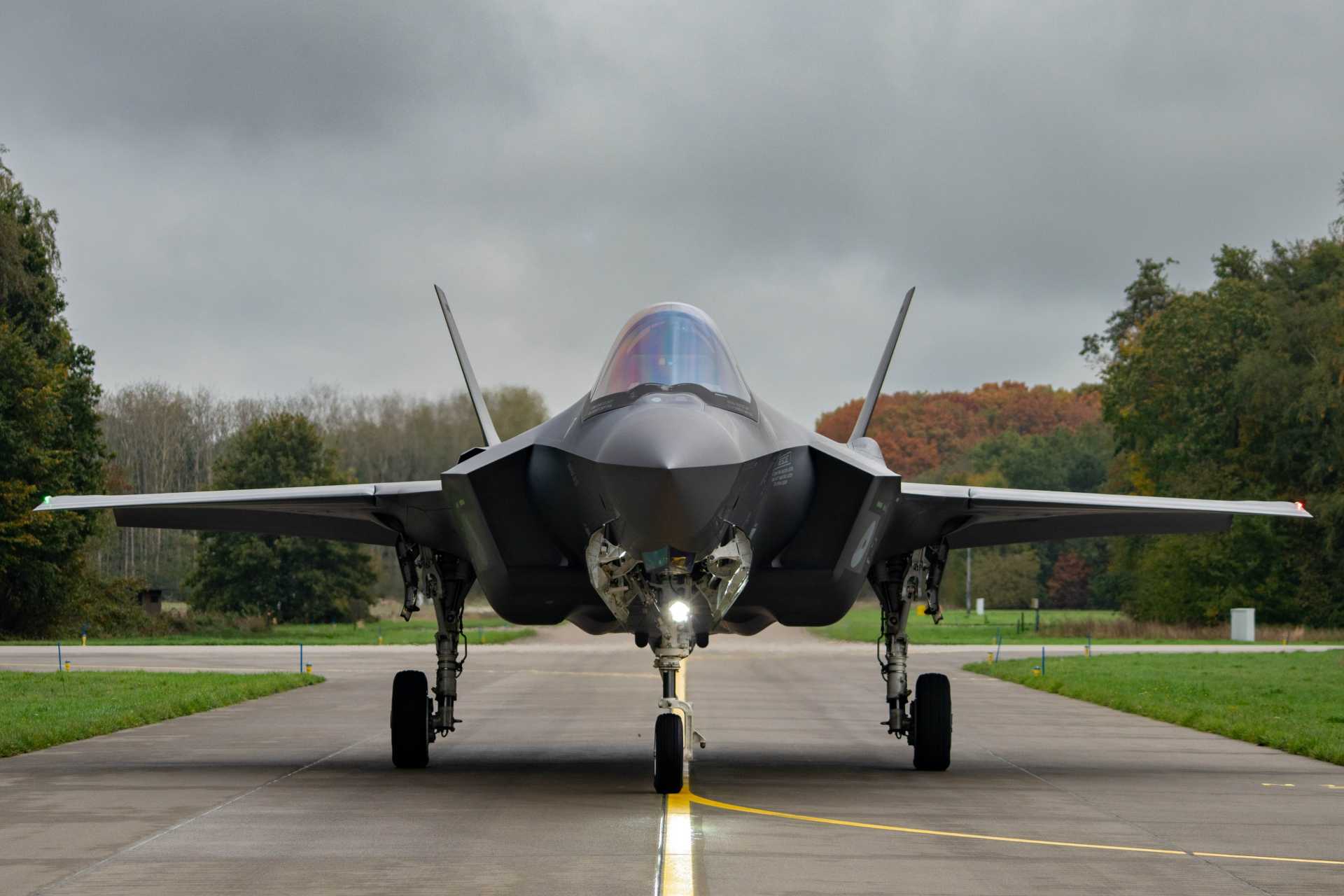
NATO’s nuclear sharing program is tested annually during Steadfast Noon, a training exercise where allied air forces train to safely handle and deploy U.S. tactical nuclear weapons using mock devices. (Picture source: NATO)
On May 2, 2026, the Financial Times revealed that the United States was willing to consider expanding NATO’s nuclear sharing arrangements beyond the current six host countries, opening the possibility that part of the Alliance’s nuclear deterrence infrastructure could move closer to Russia’s borders for the first time since the Cold War. The issue emerged as Washington reviews reductions in its conventional military presence in Europe, including the withdrawal of roughly 5,000 personnel from Germany, while seeking to preserve the credibility of NATO’s deterrence posture.
The current nuclear sharing architecture remains concentrated at Kleine Brogel in Belgium, Büchel in Germany, Aviano and Ghedi in Italy, Volkel in the Netherlands, and Incirlik in Türkiye. These installations are believed to collectively store roughly 100 B61-series gravity bombs under U.S. custody. While the number of nuclear warheads under consideration does not appear to be changing, the geographic distribution of dual-capable aircraft, storage facilities, and supporting infrastructure is increasingly being examined as NATO adapts to a security environment fundamentally altered by Russia’s February 2022 invasion of Ukraine.
Poland and the Baltic states (Estonia, Latvia, and Lithuania) have become the Alliance’s principal eastern-frontline members since 2022, making them the most frequently mentioned countries regarding a future eastward extension of NATO’s nuclear mission. Such a move would represent the largest expansion of NATO nuclear sharing infrastructure since the collapse of the Soviet Union. NATO’s current nuclear sharing system was largely built during the Cold War and continues to rely on U.S.-owned B61 nuclear gravity bombs stored in Weapons Storage and Security System (WS3) vaults installed beneath hardened aircraft shelters.
These underground WS3 facilities permit nuclear warheads to remain physically separated from fighters while allowing rapid access if required. The United States maintains custody, security, maintenance responsibility, and release authority for all forward-deployed warheads, meaning that NATO allies do not own the weapons and cannot independently employ them. The military component of the arrangement depends on Dual-Capable Aircraft (DCA), which are fighter jets certified to carry both conventional weapons and nuclear bombs. Depending on the participating country, these currently include the F-35A Lightning II, F-16 MLU, and Panavia Tornado IDS.
The political and military coordination of the nuclear sharing is conducted through NATO’s Nuclear Planning Group, established in 1966 and still functioning as the Alliance’s principal body for consultation on nuclear policy, force posture, planning, and exercises. Readiness is routinely maintained through Exercise Steadfast Noon, NATO’s annual nuclear exercise, which typically involves 60 to 70 aircraft, including dual-capable fighters, tankers, surveillance aircraft, and command-and-control assets, as well as roughly 2,000 personnel. The exercise rehearses procedures associated with nuclear deterrence missions without using live nuclear weapons and serves as the primary mechanism for maintaining operational proficiency among participating nations.
Poland has emerged as the leading candidate because it is the only eastern-flank country combining strategic location, substantial military infrastructure, political support for nuclear hosting, and a rapidly expanding inventory of advanced combat systems. Defence spending increased from approximately 2.4% of GDP in 2022 to more than 4% of GDP, the highest level among NATO members. Warsaw has also ordered 32 F-35A fighters, 250 M1A2 Abrams tanks, 96 AH-64E Apache helicopters, Patriot air defence batteries, and hundreds of HIMARS launchers from the United States.
Former President Andrzej Duda publicly called for the deployment of U.S. nuclear weapons on Polish territory, arguing that NATO’s deterrence posture should reflect the eastward movement of the Alliance’s security frontier after 2022. Poland also joined discussions with France concerning possible European nuclear deterrence cooperation mechanisms, reflecting growing interest among eastern allies in strengthening deterrence beyond conventional capabilities. The country also hosts the forward headquarters of U.S. Army V Corps, a formation responsible for coordinating U.S. Army activities on NATO’s eastern flank, and serves as the principal logistical gateway for military assistance flowing into Ukraine.
No Baltic state currently possesses a comparable combination of infrastructure, force density, transportation networks, and U.S. military presence, which explains why Poland is generally viewed as the most plausible candidate if expansion eventually occurs. The infrastructure requirements associated with nuclear sharing are substantially more demanding than those required for conventional air operations. Participation requires certified storage facilities, hardened aircraft shelters equipped with WS3 vault systems, dedicated security formations, secure communications networks, specialized maintenance facilities, and extensive integration into U.S. nuclear command-and-control procedures.
Physical security standards exceed those applied to conventional ammunition depots and require multiple layers of protection, continuous surveillance, and dedicated response forces. Air bases participating in the mission must maintain trained security personnel, emergency response units, certified maintenance teams, and aircrews qualified for nuclear operations. Certification is not permanent and requires recurring inspections, readiness evaluations, and operational assessments. The construction or modernization of nuclear-certified facilities typically requires years rather than months because every component of the installation, from communications infrastructure to aircraft shelter design, must comply with stringent operational and security standards.
Even for countries already operating modern fighter jets, achieving full nuclear certification can require investments reaching several hundred million dollars per location before any operational capability is achieved. The aircraft dimension of the mission is undergoing its most significant transformation since the end of the Cold War. For decades, the nuclear role depended largely on F-16 variants and Panavia Tornado jets. Both fleets are approaching retirement, forcing NATO members to identify successors capable of carrying the B61-12 nuclear bomb. Germany selected the F-35A specifically to replace the Tornado IDS fighter assigned to the nuclear mission.
Belgium, the Netherlands, and Italy are also transitioning toward the F-35, while Poland, Norway, Denmark, and Finland are introducing the same aircraft into service. The B61-12 combines the existing B61 warhead with a guided tail-kit assembly, improving delivery accuracy compared with earlier B61 variants. Integration with the F-35A creates a significantly different operational capability than previous generations of dual-capable aircraft, as internal weapons carriage allows the F-35 to retain low-observable characteristics throughout the mission, reducing radar detection compared with externally carried weapons.
By the early 2030s, European NATO members could collectively operate more than 600 F-35s, creating the largest concentration of fifth-generation combat aviation anywhere outside the United States. Future nuclear sharing participants are therefore more likely to emerge from the expanding community of F-35 operators than from countries operating legacy F-16 fighter fleets. The military implications of positioning nuclear-certified F-35 units in Poland or the Baltic region extend beyond the mere relocation of infrastructure. Current host bases are located in Western and Central Europe, requiring longer flight paths toward potential operational areas near Russia’s western borders.
Nuclear fighter jets operating from Poland would be substantially closer to Kaliningrad, Belarus, and Russia’s Western Military District. Kaliningrad hosts important Russian military assets, including air defence systems, missile forces, and naval facilities, while Belarus has hosted Russian nuclear-related deployments since 2023. Shorter flight distances improve sortie generation rates, reduce tanker requirements, and increase operational flexibility. Additional operating locations also complicate Russian targeting calculations because a larger number of bases would need to be monitored and potentially neutralized during a crisis.
From NATO’s perspective, this greater geographic dispersion may improve survivability by reducing dependence on a small number of established bases. From Russia’s perspective, the appearance of nuclear-certified infrastructure closer to its borders would likely trigger force posture adjustments. Reinforcement of Iskander-M missile units in Kaliningrad, expansion of S-400 and S-500 air defence coverage, and additional deployments in Belarus would be among the most probable responses. Even without increasing the number of warheads in Europe, a nuclear sharing expansion would therefore alter operational planning on both sides.
Any expansion would remain constrained by the existing command-and-control structure governing NATO nuclear operations. Nuclear sharing does not transfer ownership of nuclear weapons, and no participating country receives independent authority over their employment. Release authority remains exclusively with the President of the United States. NATO’s Nuclear Planning Group provides the consultation framework through which allies discuss policy, force posture, and planning, but operational control remains firmly integrated within U.S. command structures. Host nation pilots can only be assigned nuclear delivery missions following U.S. authorization, and secure communications systems connect national forces to NATO and American command networks.
These procedures are regularly rehearsed during Steadfast Noon exercises, which simulate nuclear mission planning, force integration, and command coordination without involving live weapons. The accession of additional host countries beyond the original six would therefore require more than infrastructure construction. National command systems, communications architecture, security organizations, and operational procedures would all need to be integrated into an existing framework developed over decades of NATO nuclear cooperation. The debate also reflects a broader transformation of NATO’s military geography since February 2022.
During the Cold War and for much of the post-Cold War period, the Alliance’s primary deterrence infrastructure was concentrated in Western Europe. The war in Ukraine accelerated the movement of military capabilities toward the eastern flank, and Poland has become NATO’s principal logistics hub, reinforcement corridor, and force-generation center in Europe. Multinational battlegroups, Patriot air defence systems, long-range precision-fire capabilities, and expanding F-35 fleets are increasingly concentrated between the Baltic Sea and the Black Sea.
Nuclear infrastructure expansion would represent another stage in this shift, institutionalizing a greater share of NATO’s deterrence architecture east of Germany. The central issue is not whether Europe stores 100 B61 nuclear bombs or a slightly different number. The decisive variable is the location of certified delivery aircraft, nuclear storage infrastructure, trained personnel, and operational air bases capable of sustaining the Alliance’s nuclear mission. Decisions taken likely between 2026 and 2030 will shape NATO’s nuclear force posture into the 2040s because the bases, aircraft fleets, and command structures involved are measured in decades rather than years.
Written by Jérôme Brahy
Jérôme Brahy is a defense analyst and documentalist at Army Recognition. He specializes in naval modernization, aviation, drones, armored vehicles, and artillery, with a focus on strategic developments in the United States, China, Ukraine, Russia, Türkiye, and Belgium. His analyses go beyond the facts, providing context, identifying key actors, and explaining why defense news matters on a global scale.
Explore More Defense News
• Land Defense News• Naval Defense News• Defense Aerospace News
{loadposition bannertop}
{loadposition sidebarpub}
The United States is considering expanding NATO’s nuclear-sharing network eastward, potentially allowing part of the Alliance’s nuclear deterrent infrastructure to move closer to Russia for the first time since the Cold War. The possibility, reported by the Financial Times on May 2, 2026, comes as Washington reviews its conventional force posture in Europe and seeks to preserve credible deterrence against a more assertive Russia following the war in Ukraine.
Poland has emerged as the most likely candidate because it combines political support, expanding military infrastructure, and a growing fleet of F-35A fighters that could eventually support NATO’s nuclear mission. An eastward shift would not increase the number of U.S. nuclear weapons in Europe, but it could improve operational flexibility, complicate Russian military planning, and further anchor NATO’s deterrence architecture along its eastern flank.
Related topic: French nuclear-armed Rafale fighters could operate from Belgium under new deterrence plan
NATO’s nuclear sharing program is tested annually during Steadfast Noon, a training exercise where allied air forces train to safely handle and deploy U.S. tactical nuclear weapons using mock devices. (Picture source: NATO)
On May 2, 2026, the Financial Times revealed that the United States was willing to consider expanding NATO’s nuclear sharing arrangements beyond the current six host countries, opening the possibility that part of the Alliance’s nuclear deterrence infrastructure could move closer to Russia’s borders for the first time since the Cold War. The issue emerged as Washington reviews reductions in its conventional military presence in Europe, including the withdrawal of roughly 5,000 personnel from Germany, while seeking to preserve the credibility of NATO’s deterrence posture.
The current nuclear sharing architecture remains concentrated at Kleine Brogel in Belgium, Büchel in Germany, Aviano and Ghedi in Italy, Volkel in the Netherlands, and Incirlik in Türkiye. These installations are believed to collectively store roughly 100 B61-series gravity bombs under U.S. custody. While the number of nuclear warheads under consideration does not appear to be changing, the geographic distribution of dual-capable aircraft, storage facilities, and supporting infrastructure is increasingly being examined as NATO adapts to a security environment fundamentally altered by Russia’s February 2022 invasion of Ukraine.
Poland and the Baltic states (Estonia, Latvia, and Lithuania) have become the Alliance’s principal eastern-frontline members since 2022, making them the most frequently mentioned countries regarding a future eastward extension of NATO’s nuclear mission. Such a move would represent the largest expansion of NATO nuclear sharing infrastructure since the collapse of the Soviet Union. NATO’s current nuclear sharing system was largely built during the Cold War and continues to rely on U.S.-owned B61 nuclear gravity bombs stored in Weapons Storage and Security System (WS3) vaults installed beneath hardened aircraft shelters.
These underground WS3 facilities permit nuclear warheads to remain physically separated from fighters while allowing rapid access if required. The United States maintains custody, security, maintenance responsibility, and release authority for all forward-deployed warheads, meaning that NATO allies do not own the weapons and cannot independently employ them. The military component of the arrangement depends on Dual-Capable Aircraft (DCA), which are fighter jets certified to carry both conventional weapons and nuclear bombs. Depending on the participating country, these currently include the F-35A Lightning II, F-16 MLU, and Panavia Tornado IDS.
The political and military coordination of the nuclear sharing is conducted through NATO’s Nuclear Planning Group, established in 1966 and still functioning as the Alliance’s principal body for consultation on nuclear policy, force posture, planning, and exercises. Readiness is routinely maintained through Exercise Steadfast Noon, NATO’s annual nuclear exercise, which typically involves 60 to 70 aircraft, including dual-capable fighters, tankers, surveillance aircraft, and command-and-control assets, as well as roughly 2,000 personnel. The exercise rehearses procedures associated with nuclear deterrence missions without using live nuclear weapons and serves as the primary mechanism for maintaining operational proficiency among participating nations.
Poland has emerged as the leading candidate because it is the only eastern-flank country combining strategic location, substantial military infrastructure, political support for nuclear hosting, and a rapidly expanding inventory of advanced combat systems. Defence spending increased from approximately 2.4% of GDP in 2022 to more than 4% of GDP, the highest level among NATO members. Warsaw has also ordered 32 F-35A fighters, 250 M1A2 Abrams tanks, 96 AH-64E Apache helicopters, Patriot air defence batteries, and hundreds of HIMARS launchers from the United States.
Former President Andrzej Duda publicly called for the deployment of U.S. nuclear weapons on Polish territory, arguing that NATO’s deterrence posture should reflect the eastward movement of the Alliance’s security frontier after 2022. Poland also joined discussions with France concerning possible European nuclear deterrence cooperation mechanisms, reflecting growing interest among eastern allies in strengthening deterrence beyond conventional capabilities. The country also hosts the forward headquarters of U.S. Army V Corps, a formation responsible for coordinating U.S. Army activities on NATO’s eastern flank, and serves as the principal logistical gateway for military assistance flowing into Ukraine.
No Baltic state currently possesses a comparable combination of infrastructure, force density, transportation networks, and U.S. military presence, which explains why Poland is generally viewed as the most plausible candidate if expansion eventually occurs. The infrastructure requirements associated with nuclear sharing are substantially more demanding than those required for conventional air operations. Participation requires certified storage facilities, hardened aircraft shelters equipped with WS3 vault systems, dedicated security formations, secure communications networks, specialized maintenance facilities, and extensive integration into U.S. nuclear command-and-control procedures.
Physical security standards exceed those applied to conventional ammunition depots and require multiple layers of protection, continuous surveillance, and dedicated response forces. Air bases participating in the mission must maintain trained security personnel, emergency response units, certified maintenance teams, and aircrews qualified for nuclear operations. Certification is not permanent and requires recurring inspections, readiness evaluations, and operational assessments. The construction or modernization of nuclear-certified facilities typically requires years rather than months because every component of the installation, from communications infrastructure to aircraft shelter design, must comply with stringent operational and security standards.
Even for countries already operating modern fighter jets, achieving full nuclear certification can require investments reaching several hundred million dollars per location before any operational capability is achieved. The aircraft dimension of the mission is undergoing its most significant transformation since the end of the Cold War. For decades, the nuclear role depended largely on F-16 variants and Panavia Tornado jets. Both fleets are approaching retirement, forcing NATO members to identify successors capable of carrying the B61-12 nuclear bomb. Germany selected the F-35A specifically to replace the Tornado IDS fighter assigned to the nuclear mission.
Belgium, the Netherlands, and Italy are also transitioning toward the F-35, while Poland, Norway, Denmark, and Finland are introducing the same aircraft into service. The B61-12 combines the existing B61 warhead with a guided tail-kit assembly, improving delivery accuracy compared with earlier B61 variants. Integration with the F-35A creates a significantly different operational capability than previous generations of dual-capable aircraft, as internal weapons carriage allows the F-35 to retain low-observable characteristics throughout the mission, reducing radar detection compared with externally carried weapons.
By the early 2030s, European NATO members could collectively operate more than 600 F-35s, creating the largest concentration of fifth-generation combat aviation anywhere outside the United States. Future nuclear sharing participants are therefore more likely to emerge from the expanding community of F-35 operators than from countries operating legacy F-16 fighter fleets. The military implications of positioning nuclear-certified F-35 units in Poland or the Baltic region extend beyond the mere relocation of infrastructure. Current host bases are located in Western and Central Europe, requiring longer flight paths toward potential operational areas near Russia’s western borders.
Nuclear fighter jets operating from Poland would be substantially closer to Kaliningrad, Belarus, and Russia’s Western Military District. Kaliningrad hosts important Russian military assets, including air defence systems, missile forces, and naval facilities, while Belarus has hosted Russian nuclear-related deployments since 2023. Shorter flight distances improve sortie generation rates, reduce tanker requirements, and increase operational flexibility. Additional operating locations also complicate Russian targeting calculations because a larger number of bases would need to be monitored and potentially neutralized during a crisis.
From NATO’s perspective, this greater geographic dispersion may improve survivability by reducing dependence on a small number of established bases. From Russia’s perspective, the appearance of nuclear-certified infrastructure closer to its borders would likely trigger force posture adjustments. Reinforcement of Iskander-M missile units in Kaliningrad, expansion of S-400 and S-500 air defence coverage, and additional deployments in Belarus would be among the most probable responses. Even without increasing the number of warheads in Europe, a nuclear sharing expansion would therefore alter operational planning on both sides.
Any expansion would remain constrained by the existing command-and-control structure governing NATO nuclear operations. Nuclear sharing does not transfer ownership of nuclear weapons, and no participating country receives independent authority over their employment. Release authority remains exclusively with the President of the United States. NATO’s Nuclear Planning Group provides the consultation framework through which allies discuss policy, force posture, and planning, but operational control remains firmly integrated within U.S. command structures. Host nation pilots can only be assigned nuclear delivery missions following U.S. authorization, and secure communications systems connect national forces to NATO and American command networks.
These procedures are regularly rehearsed during Steadfast Noon exercises, which simulate nuclear mission planning, force integration, and command coordination without involving live weapons. The accession of additional host countries beyond the original six would therefore require more than infrastructure construction. National command systems, communications architecture, security organizations, and operational procedures would all need to be integrated into an existing framework developed over decades of NATO nuclear cooperation. The debate also reflects a broader transformation of NATO’s military geography since February 2022.
During the Cold War and for much of the post-Cold War period, the Alliance’s primary deterrence infrastructure was concentrated in Western Europe. The war in Ukraine accelerated the movement of military capabilities toward the eastern flank, and Poland has become NATO’s principal logistics hub, reinforcement corridor, and force-generation center in Europe. Multinational battlegroups, Patriot air defence systems, long-range precision-fire capabilities, and expanding F-35 fleets are increasingly concentrated between the Baltic Sea and the Black Sea.
Nuclear infrastructure expansion would represent another stage in this shift, institutionalizing a greater share of NATO’s deterrence architecture east of Germany. The central issue is not whether Europe stores 100 B61 nuclear bombs or a slightly different number. The decisive variable is the location of certified delivery aircraft, nuclear storage infrastructure, trained personnel, and operational air bases capable of sustaining the Alliance’s nuclear mission. Decisions taken likely between 2026 and 2030 will shape NATO’s nuclear force posture into the 2040s because the bases, aircraft fleets, and command structures involved are measured in decades rather than years.
Written by Jérôme Brahy
Jérôme Brahy is a defense analyst and documentalist at Army Recognition. He specializes in naval modernization, aviation, drones, armored vehicles, and artillery, with a focus on strategic developments in the United States, China, Ukraine, Russia, Türkiye, and Belgium. His analyses go beyond the facts, providing context, identifying key actors, and explaining why defense news matters on a global scale.
Explore More Defense News
• Land Defense News
• Naval Defense News
• Defense Aerospace News