Bosnia and Herzegovina Moves to Modernize Rotary-Wing Capabilities with Six New Leonardo AW119Kx Helicopters
{loadposition bannertop}
{loadposition sidebarpub}
On 15 April 2026, according to the Ministry of Defense and Armed Forces of Bosnia and Herzegovina, Bosnia and Herzegovina took a visible step in modernizing its rotary-wing fleet as Defence Minister Zukan Helez visited Leonardo’s helicopter facilities in Philadelphia and test-flew one of the six AW119Kx helicopters being acquired for the Armed Forces of Bosnia and Herzegovina.
The ministry presented the purchase as the country’s first acquisition of brand-new helicopters and, in official statements, as the largest investment made in the armed forces to date. More than a fleet renewal, the program is significant because it combines aircraft acquisition with training, rescue capability and long-term support, making it a broader force-development effort rather than a simple equipment buy.
Related Topic: Czech Republic Deploys UH-1Y Venom Helicopters to Poland for NATO Counter-Drone Defense Operations
Bosnia and Herzegovina has launched a structured rotary-wing modernization effort by acquiring six Leonardo AW119Kx helicopters with integrated training, rescue capability, and long-term sustainment support (Picture Source: Parallelozero)
This April 2026 development also gives practical shape to an earlier milestone reached on 20 May 2025, when the U.S. State Department approved a possible Foreign Military Sale of AW-119Kx helicopters and associated equipment to Bosnia and Herzegovina, with an estimated ceiling value of $100 million. At the time, the Defense Security Cooperation Agency said the package would include training, technical assistance, ground support equipment, initial spares, maintenance support and logistics services. The significance of the latest visit to Philadelphia is therefore that the program has moved from authorization and planning into a more concrete implementation phase.
According to the ministry’s official communication, the six helicopters will be delivered with full mission equipment and advanced rescue systems, while the contract also includes pilot training in the United States for 12 Bosnian pilots and the additional preparation of three instructor pilots. The package further includes simulators, spare parts, regular maintenance and supporting equipment intended to sustain the fleet over time. That detail matters because smaller armed forces often face greater difficulty in generating long-term availability than in signing the initial procurement itself; in this case, Bosnia and Herzegovina appears to be buying not only helicopters, but also the training and sustainment structure needed to keep them operational.
From a capability perspective, the AW119Kx is a light single-engine helicopter designed for multi-role use. Leonardo states that it is powered by a Pratt & Whitney Canada PT6B-37A engine, carries one or two crew and up to six passengers, reaches a maximum cruise speed of 241 km/h, and can achieve a maximum range of up to 945 km with auxiliary fuel tanks. The manufacturer also highlights its large cabin, external load capability and adaptability for specialized roles such as rescue, cargo transport and firefighting, making it a platform better suited to flexible utility aviation than to narrowly defined military use alone.
Those characteristics align closely with Bosnia and Herzegovina’s likely operational needs. In its 2025 notification to Congress, the DSCA said the helicopters would help the Armed Forces of Bosnia and Herzegovina operate in the country’s mountainous and hard-to-access terrain, support regional and NATO cooperation exercises, and improve disaster relief, search-and-rescue and humanitarian missions, while also serving for pilot training. That mission profile is particularly relevant for a country where rotary-wing aircraft are expected not only to support military mobility, but also to assist civil authorities during floods, fires, evacuations and medical emergencies in areas where road access can be limited.
The AW119Kx also benefits from broader institutional credibility beyond this specific sale. The AW119 family underpins the U.S. Navy’s TH-73A training helicopter, which NAVAIR says is replacing the TH-57 as the undergraduate rotary- and tiltrotor-training platform for the Navy, Marine Corps and Coast Guard. That does not make Bosnia and Herzegovina’s future helicopters military trainers in the same sense, but it does show that the aircraft design has already been adapted for a demanding official training environment, which reinforces its value for a country simultaneously building new pilot capacity and fleet familiarity.
Tactically, six light helicopters will not transform the regional balance of power, and the DSCA explicitly assessed that the proposed sale would not alter the basic military balance in the region. Their importance lies elsewhere: in improving availability for day-to-day transport, liaison, emergency response, pilot development and support to civil institutions. For Bosnia and Herzegovina, the more meaningful shift is from aging or limited rotary-wing capacity toward a more standardized, modern and supportable helicopter fleet that can be used frequently and predictably rather than exceptionally.
The purchase points to a more structured model of defense modernization. Because the package joins aircraft, training, simulators, logistics and maintenance, it suggests that Sarajevo is placing greater emphasis on readiness and sustainability rather than on acquiring a platform for prestige alone. It also reflects deeper defense-industrial and security cooperation with the United States and Leonardo’s Philadelphia production base, indicating that Bosnia and Herzegovina is seeking to anchor modernization in long-term partnerships and institutional support rather than in one-off deliveries. That is likely to matter more over time than the number of aircraft itself.
What makes this AW119Kx program important is not simply that Bosnia and Herzegovina is adding six helicopters, but that it is doing so through a package designed to create enduring capability. With new-build aircraft, rescue-oriented equipment, pilot and instructor training, simulators, spare parts and maintenance support all tied together, the country is taking a more disciplined approach to rotary-wing modernization. The result is a procurement that carries both practical and symbolic weight: practical because it should improve real operational responsiveness, and symbolic because it marks a rare case in which Bosnia and Herzegovina is building future force capacity through a complete, supportable system rather than an isolated platform purchase.
Written by Teoman S. Nicanci – Defense Analyst, Army Recognition Group
Teoman S. Nicanci holds degrees in Political Science, Comparative and International Politics, and International Relations and Diplomacy from leading Belgian universities, with research focused on Russian strategic behavior, defense technology, and modern warfare. He is a defense analyst at Army Recognition, specializing in the global defense industry, military armament, and emerging defense technologies.
{loadposition bannertop}
{loadposition sidebarpub}
On 15 April 2026, according to the Ministry of Defense and Armed Forces of Bosnia and Herzegovina, Bosnia and Herzegovina took a visible step in modernizing its rotary-wing fleet as Defence Minister Zukan Helez visited Leonardo’s helicopter facilities in Philadelphia and test-flew one of the six AW119Kx helicopters being acquired for the Armed Forces of Bosnia and Herzegovina.
The ministry presented the purchase as the country’s first acquisition of brand-new helicopters and, in official statements, as the largest investment made in the armed forces to date. More than a fleet renewal, the program is significant because it combines aircraft acquisition with training, rescue capability and long-term support, making it a broader force-development effort rather than a simple equipment buy.
Related Topic: Czech Republic Deploys UH-1Y Venom Helicopters to Poland for NATO Counter-Drone Defense Operations
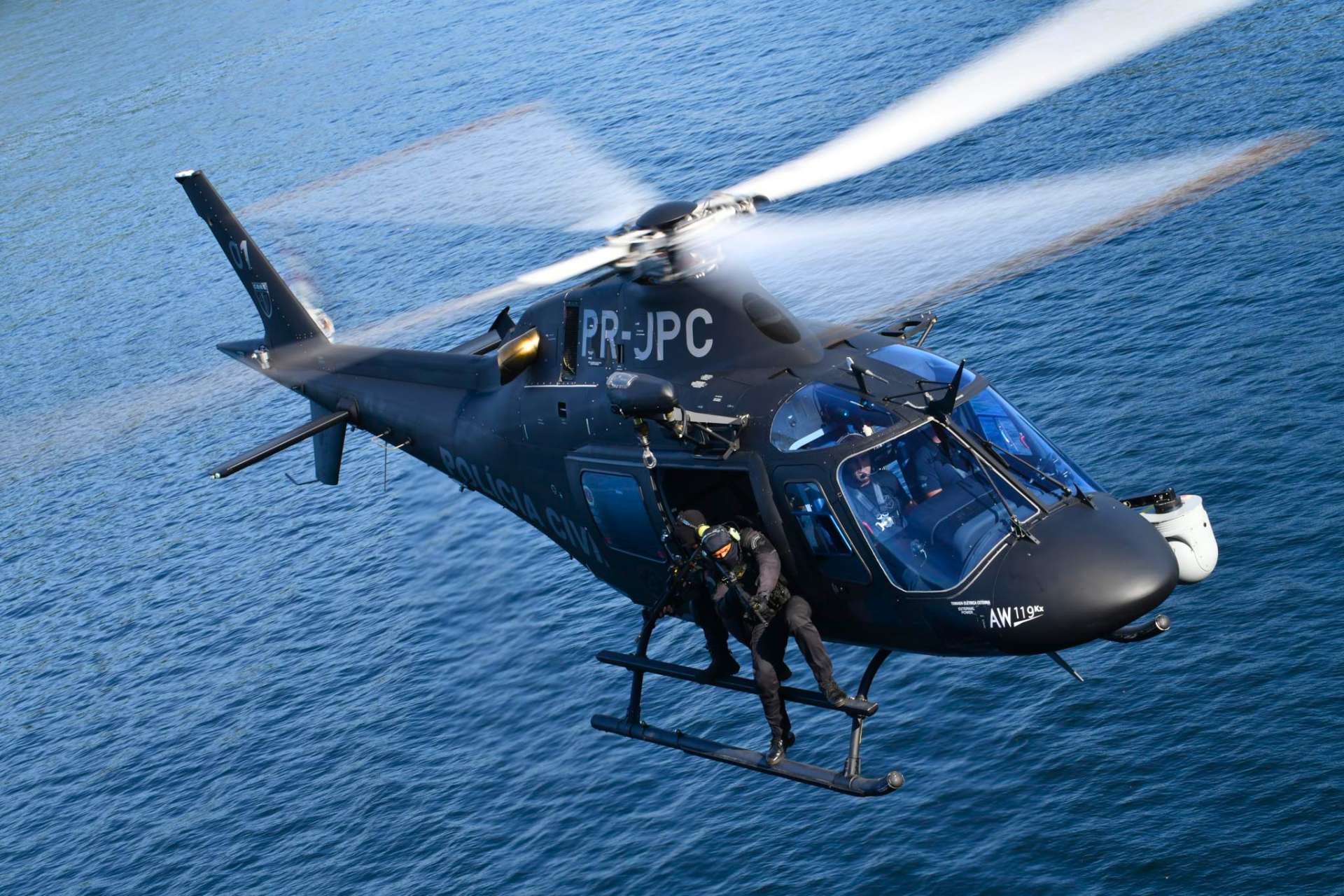
Bosnia and Herzegovina has launched a structured rotary-wing modernization effort by acquiring six Leonardo AW119Kx helicopters with integrated training, rescue capability, and long-term sustainment support (Picture Source: Parallelozero)
This April 2026 development also gives practical shape to an earlier milestone reached on 20 May 2025, when the U.S. State Department approved a possible Foreign Military Sale of AW-119Kx helicopters and associated equipment to Bosnia and Herzegovina, with an estimated ceiling value of $100 million. At the time, the Defense Security Cooperation Agency said the package would include training, technical assistance, ground support equipment, initial spares, maintenance support and logistics services. The significance of the latest visit to Philadelphia is therefore that the program has moved from authorization and planning into a more concrete implementation phase.
According to the ministry’s official communication, the six helicopters will be delivered with full mission equipment and advanced rescue systems, while the contract also includes pilot training in the United States for 12 Bosnian pilots and the additional preparation of three instructor pilots. The package further includes simulators, spare parts, regular maintenance and supporting equipment intended to sustain the fleet over time. That detail matters because smaller armed forces often face greater difficulty in generating long-term availability than in signing the initial procurement itself; in this case, Bosnia and Herzegovina appears to be buying not only helicopters, but also the training and sustainment structure needed to keep them operational.
From a capability perspective, the AW119Kx is a light single-engine helicopter designed for multi-role use. Leonardo states that it is powered by a Pratt & Whitney Canada PT6B-37A engine, carries one or two crew and up to six passengers, reaches a maximum cruise speed of 241 km/h, and can achieve a maximum range of up to 945 km with auxiliary fuel tanks. The manufacturer also highlights its large cabin, external load capability and adaptability for specialized roles such as rescue, cargo transport and firefighting, making it a platform better suited to flexible utility aviation than to narrowly defined military use alone.
Those characteristics align closely with Bosnia and Herzegovina’s likely operational needs. In its 2025 notification to Congress, the DSCA said the helicopters would help the Armed Forces of Bosnia and Herzegovina operate in the country’s mountainous and hard-to-access terrain, support regional and NATO cooperation exercises, and improve disaster relief, search-and-rescue and humanitarian missions, while also serving for pilot training. That mission profile is particularly relevant for a country where rotary-wing aircraft are expected not only to support military mobility, but also to assist civil authorities during floods, fires, evacuations and medical emergencies in areas where road access can be limited.
The AW119Kx also benefits from broader institutional credibility beyond this specific sale. The AW119 family underpins the U.S. Navy’s TH-73A training helicopter, which NAVAIR says is replacing the TH-57 as the undergraduate rotary- and tiltrotor-training platform for the Navy, Marine Corps and Coast Guard. That does not make Bosnia and Herzegovina’s future helicopters military trainers in the same sense, but it does show that the aircraft design has already been adapted for a demanding official training environment, which reinforces its value for a country simultaneously building new pilot capacity and fleet familiarity.
Tactically, six light helicopters will not transform the regional balance of power, and the DSCA explicitly assessed that the proposed sale would not alter the basic military balance in the region. Their importance lies elsewhere: in improving availability for day-to-day transport, liaison, emergency response, pilot development and support to civil institutions. For Bosnia and Herzegovina, the more meaningful shift is from aging or limited rotary-wing capacity toward a more standardized, modern and supportable helicopter fleet that can be used frequently and predictably rather than exceptionally.
The purchase points to a more structured model of defense modernization. Because the package joins aircraft, training, simulators, logistics and maintenance, it suggests that Sarajevo is placing greater emphasis on readiness and sustainability rather than on acquiring a platform for prestige alone. It also reflects deeper defense-industrial and security cooperation with the United States and Leonardo’s Philadelphia production base, indicating that Bosnia and Herzegovina is seeking to anchor modernization in long-term partnerships and institutional support rather than in one-off deliveries. That is likely to matter more over time than the number of aircraft itself.
What makes this AW119Kx program important is not simply that Bosnia and Herzegovina is adding six helicopters, but that it is doing so through a package designed to create enduring capability. With new-build aircraft, rescue-oriented equipment, pilot and instructor training, simulators, spare parts and maintenance support all tied together, the country is taking a more disciplined approach to rotary-wing modernization. The result is a procurement that carries both practical and symbolic weight: practical because it should improve real operational responsiveness, and symbolic because it marks a rare case in which Bosnia and Herzegovina is building future force capacity through a complete, supportable system rather than an isolated platform purchase.
Written by Teoman S. Nicanci – Defense Analyst, Army Recognition Group
Teoman S. Nicanci holds degrees in Political Science, Comparative and International Politics, and International Relations and Diplomacy from leading Belgian universities, with research focused on Russian strategic behavior, defense technology, and modern warfare. He is a defense analyst at Army Recognition, specializing in the global defense industry, military armament, and emerging defense technologies.