China’s HH-200 cargo drone completes first flight with autonomous control for low-cost logistics
{loadposition bannertop}
{loadposition sidebarpub}
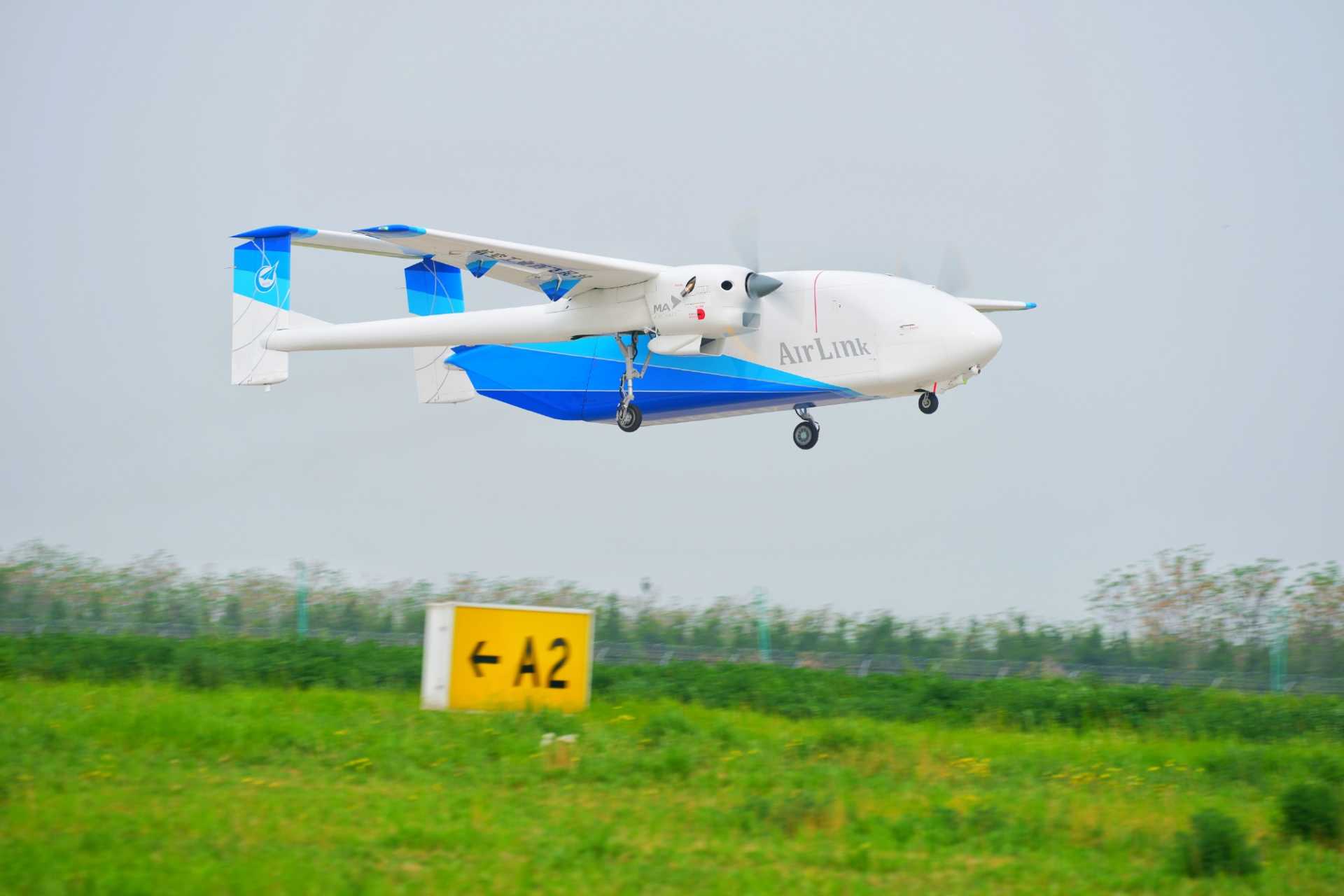
China’s HH-200 autonomous cargo drone, developed by AVIC subsidiary Xi’an Aircraft Industry Group, completed its maiden flight on April 15, 2026, in Pucheng, Shaanxi province, validating low-cost unmanned logistics capability through a full autonomous test profile.
The 22-minute sortie demonstrated stable flight performance, real-time data exchange, and reliable system integration, marking a step forward in scalable, pilotless cargo operations. Conducted under controlled test conditions with continuous ground control oversight, the flight confirmed the HH-200’s readiness for integration into regulated airspace and high-frequency logistics missions. This development highlights China’s push to enhance distributed logistics capacity, supporting rapid resupply, reduced operational costs, and improved access to remote environments.
Related topic: China tests new Changying-8 autonomous cargo drone built to carry 3.5 tons over 3,000 km
With a cargo capacity between 12 and 18 cubic meters and a range of up to 2,360 kilometers, the operating cost of the HH-200 is estimated at 4.7 yuan per tonne-kilometer (about $0.68), which remains below comparable manned transport aircraft. (Picture source: AVIC)
On April 15, 2026, China conducted the maiden flight of the HH-200 commercial cargo drone at Pucheng in Shaanxi province, with a test duration of 22 minutes that validated baseline flight performance and system integration. The cargo drone executed a full test profile, including climb, maneuvering, and approach phases, with all onboard systems reported to function within expected parameters and without deviations in flight stability. Ground control maintained continuous command link with the HH-200, confirming responsiveness and real-time data exchange throughout the sortie.
The cargo drone is developed by a subsidiary of the Aviation Industry Corporation of China (AVIC) as part of a broader Chinese effort to field large unmanned cargo aircraft for logistics applications. The HH-200 is configured for autonomous operation and is intended for integration into regulated airspace, with a design aligned to civil aviation standards in the medium cargo segment. Developed by Xi’an Aircraft Industry Group (XAC), the HH-200 is part of the HH-series unmanned transport initiative, structured by AVIC to include both the aerial vehicle and a dedicated ground control segment forming a complete operational system.
Development priorities focused on achieving a defined balance between payload, operational cost, and compliance with civil aviation requirements, which shaped the selection of materials and system architecture. Composite materials are used extensively across the airframe, reducing the HH-200’s structural weight by 20 percent when compared to conventional construction methods, which positively affects both payload capacity and fuel consumption. The HH-200 is said to have secured about 20 intent orders before its first flight, indicating pre-existing commercial engagement from logistics operators.
The unmanned aircraft is intended for repeated, high-frequency operations rather than limited mission deployment, which is reflected in its lifecycle parameters and cost structure. Like the Norinco LUCA, the airframe configuration combines a high-wing layout with twin engines mounted to support stable lift generation and efficient cruise performance under load. A twin-boom tail structure, reminiscent of AVIC’s Tianma-1000, provides longitudinal stability and allows unobstructed access to the rear cargo opening, which is a key requirement for rapid loading operations. The fuselage has a square cross-section and a straight-through internal layout, enabling direct loading of cargo without reconfiguration or internal handling constraints.
The cargo bay is positioned at a low height relative to the ground and is compatible with standard forklifts and palletized cargo systems, reducing dependency on specialized equipment. The HH-200 measures 12.2 meters in length, 16.8 meters in wingspan, and 3.7 meters in height, placing it within the medium-size unmanned transport category. Like the Sky Saker FX6000C, these structural choices are oriented toward minimizing ground handling time and enabling operations from decentralized logistics nodes. The HH-200 possesses a maximum payload of 1.5 tonnes and a maximum operational range of 2,360 kilometers. The cruise speed of 310 kilometers per hour positions it between slower rotary-wing systems and conventional manned cargo aircraft in terms of delivery time.
The cargo hold provides 12 cubic meters of usable volume in standard configuration, expandable to 18 cubic meters depending on internal arrangement and payload type. The aircraft is designed for a service life of 50,000 flight hours or 15,000 cycles, which corresponds to sustained commercial use over extended periods with high sortie rates. The operating cost is calculated at 4.7 yuan per tonne-kilometer (about $0.68), a figure intended to remain below comparable manned aircraft operating costs in the same payload class. For AVIC, these values define the operational envelope and economic viability of the HH-200 in logistics applications. The flight control architecture enables full autonomy across all flight phases, with no onboard pilot required for takeoff, cruise, or landing operations.
The drone incorporates an AI-based obstacle avoidance system that processes environmental data in real time to adjust flight paths as needed. During the maiden flight, command inputs from the ground station were executed without delay, indicating stable communication links and control system reliability. The new Chinese cargo drone is designed to minimize crew requirements, allowing a limited number of operators to supervise multiple aircraft simultaneously within a networked framework. This operational model reduces personnel costs and supports scalability in logistics operations. The combination of autonomous control and real-time responsiveness is central to the intended deployment of the HH-200 in continuous cargo operations.
Available operational parameters indicate that the HH-200 is designed for use in low-altitude logistics corridors, with the ability to conduct point-to-point cargo transport without reliance on major airport infrastructure. The cargo drone can operate from runways as short as 500 meters, which allows deployment from secondary or improvised airfields. It is capable of operating at altitudes above 4,200 meters, maintaining performance in high-altitude environments where air density affects lift and engine efficiency. Environmental operating limits range from −40°C to +50°C, allowing deployment in both cold and high-temperature climates. Cargo loading and unloading require two personnel and approximately five minutes, enabling high sortie generation rates in time-sensitive operations.
These operational characteristics are aligned with use in remote or infrastructure-limited areas such as mountainous terrain, islands, and snow-covered regions. The intended mission profile for the HH-200 is centered on commercial cargo transport across domestic and regional routes, including border logistics, coastal supply chains, and inland distribution networks. The cargo drone is also configured for cross-border operations and inter-island logistics in Southeast Asia, where distances and geography limit ground transport efficiency. Integration into logistics systems associated with Belt and Road partner countries is part of the deployment model, indicating planned international use.
The modular design allows reconfiguration for different cargo types and mission requirements, extending its operational flexibility. In addition to standard freight operations, the system is designed to support specialized logistics tasks where speed and access are critical. These might include time-sensitive deliveries and military operations in areas with limited infrastructure. The HH-200 is also designed for secondary mission roles beyond cargo transport, including emergency response, disaster relief, and support for firefighting operations. Its payload capacity and range allow it to deliver supplies to areas inaccessible by road or conventional aircraft, particularly in early response phases.
Additional roles include weather modification, aerial remote sensing, and agricultural or forestry operations such as plant protection over large areas. These applications extend the system’s operational use beyond commercial logistics into sectors requiring rapid deployment and minimal infrastructure. The combination of cargo transport capability and mission adaptability indicates a dual-use profile, where the same system can be employed across civilian and military scenarios, especially given the fact that the HH-200’s developer, Xi’an, is also the creator of the H-6 strategic bomber and the Y-20 military transport aircraft.
Written by Jérôme Brahy
Jérôme Brahy is a defense analyst and documentalist at Army Recognition. He specializes in naval modernization, aviation, drones, armored vehicles, and artillery, with a focus on strategic developments in the United States, China, Ukraine, Russia, Türkiye, and Belgium. His analyses go beyond the facts, providing context, identifying key actors, and explaining why defense news matters on a global scale.
{loadposition bannertop}
{loadposition sidebarpub}
China’s HH-200 autonomous cargo drone, developed by AVIC subsidiary Xi’an Aircraft Industry Group, completed its maiden flight on April 15, 2026, in Pucheng, Shaanxi province, validating low-cost unmanned logistics capability through a full autonomous test profile.
The 22-minute sortie demonstrated stable flight performance, real-time data exchange, and reliable system integration, marking a step forward in scalable, pilotless cargo operations. Conducted under controlled test conditions with continuous ground control oversight, the flight confirmed the HH-200’s readiness for integration into regulated airspace and high-frequency logistics missions. This development highlights China’s push to enhance distributed logistics capacity, supporting rapid resupply, reduced operational costs, and improved access to remote environments.
Related topic: China tests new Changying-8 autonomous cargo drone built to carry 3.5 tons over 3,000 km
With a cargo capacity between 12 and 18 cubic meters and a range of up to 2,360 kilometers, the operating cost of the HH-200 is estimated at 4.7 yuan per tonne-kilometer (about $0.68), which remains below comparable manned transport aircraft. (Picture source: AVIC)
On April 15, 2026, China conducted the maiden flight of the HH-200 commercial cargo drone at Pucheng in Shaanxi province, with a test duration of 22 minutes that validated baseline flight performance and system integration. The cargo drone executed a full test profile, including climb, maneuvering, and approach phases, with all onboard systems reported to function within expected parameters and without deviations in flight stability. Ground control maintained continuous command link with the HH-200, confirming responsiveness and real-time data exchange throughout the sortie.
The cargo drone is developed by a subsidiary of the Aviation Industry Corporation of China (AVIC) as part of a broader Chinese effort to field large unmanned cargo aircraft for logistics applications. The HH-200 is configured for autonomous operation and is intended for integration into regulated airspace, with a design aligned to civil aviation standards in the medium cargo segment. Developed by Xi’an Aircraft Industry Group (XAC), the HH-200 is part of the HH-series unmanned transport initiative, structured by AVIC to include both the aerial vehicle and a dedicated ground control segment forming a complete operational system.
Development priorities focused on achieving a defined balance between payload, operational cost, and compliance with civil aviation requirements, which shaped the selection of materials and system architecture. Composite materials are used extensively across the airframe, reducing the HH-200’s structural weight by 20 percent when compared to conventional construction methods, which positively affects both payload capacity and fuel consumption. The HH-200 is said to have secured about 20 intent orders before its first flight, indicating pre-existing commercial engagement from logistics operators.
The unmanned aircraft is intended for repeated, high-frequency operations rather than limited mission deployment, which is reflected in its lifecycle parameters and cost structure. Like the Norinco LUCA, the airframe configuration combines a high-wing layout with twin engines mounted to support stable lift generation and efficient cruise performance under load. A twin-boom tail structure, reminiscent of AVIC’s Tianma-1000, provides longitudinal stability and allows unobstructed access to the rear cargo opening, which is a key requirement for rapid loading operations. The fuselage has a square cross-section and a straight-through internal layout, enabling direct loading of cargo without reconfiguration or internal handling constraints.
The cargo bay is positioned at a low height relative to the ground and is compatible with standard forklifts and palletized cargo systems, reducing dependency on specialized equipment. The HH-200 measures 12.2 meters in length, 16.8 meters in wingspan, and 3.7 meters in height, placing it within the medium-size unmanned transport category. Like the Sky Saker FX6000C, these structural choices are oriented toward minimizing ground handling time and enabling operations from decentralized logistics nodes. The HH-200 possesses a maximum payload of 1.5 tonnes and a maximum operational range of 2,360 kilometers. The cruise speed of 310 kilometers per hour positions it between slower rotary-wing systems and conventional manned cargo aircraft in terms of delivery time.
The cargo hold provides 12 cubic meters of usable volume in standard configuration, expandable to 18 cubic meters depending on internal arrangement and payload type. The aircraft is designed for a service life of 50,000 flight hours or 15,000 cycles, which corresponds to sustained commercial use over extended periods with high sortie rates. The operating cost is calculated at 4.7 yuan per tonne-kilometer (about $0.68), a figure intended to remain below comparable manned aircraft operating costs in the same payload class. For AVIC, these values define the operational envelope and economic viability of the HH-200 in logistics applications. The flight control architecture enables full autonomy across all flight phases, with no onboard pilot required for takeoff, cruise, or landing operations.
The drone incorporates an AI-based obstacle avoidance system that processes environmental data in real time to adjust flight paths as needed. During the maiden flight, command inputs from the ground station were executed without delay, indicating stable communication links and control system reliability. The new Chinese cargo drone is designed to minimize crew requirements, allowing a limited number of operators to supervise multiple aircraft simultaneously within a networked framework. This operational model reduces personnel costs and supports scalability in logistics operations. The combination of autonomous control and real-time responsiveness is central to the intended deployment of the HH-200 in continuous cargo operations.
Available operational parameters indicate that the HH-200 is designed for use in low-altitude logistics corridors, with the ability to conduct point-to-point cargo transport without reliance on major airport infrastructure. The cargo drone can operate from runways as short as 500 meters, which allows deployment from secondary or improvised airfields. It is capable of operating at altitudes above 4,200 meters, maintaining performance in high-altitude environments where air density affects lift and engine efficiency. Environmental operating limits range from −40°C to +50°C, allowing deployment in both cold and high-temperature climates. Cargo loading and unloading require two personnel and approximately five minutes, enabling high sortie generation rates in time-sensitive operations.
These operational characteristics are aligned with use in remote or infrastructure-limited areas such as mountainous terrain, islands, and snow-covered regions. The intended mission profile for the HH-200 is centered on commercial cargo transport across domestic and regional routes, including border logistics, coastal supply chains, and inland distribution networks. The cargo drone is also configured for cross-border operations and inter-island logistics in Southeast Asia, where distances and geography limit ground transport efficiency. Integration into logistics systems associated with Belt and Road partner countries is part of the deployment model, indicating planned international use.
The modular design allows reconfiguration for different cargo types and mission requirements, extending its operational flexibility. In addition to standard freight operations, the system is designed to support specialized logistics tasks where speed and access are critical. These might include time-sensitive deliveries and military operations in areas with limited infrastructure. The HH-200 is also designed for secondary mission roles beyond cargo transport, including emergency response, disaster relief, and support for firefighting operations. Its payload capacity and range allow it to deliver supplies to areas inaccessible by road or conventional aircraft, particularly in early response phases.
Additional roles include weather modification, aerial remote sensing, and agricultural or forestry operations such as plant protection over large areas. These applications extend the system’s operational use beyond commercial logistics into sectors requiring rapid deployment and minimal infrastructure. The combination of cargo transport capability and mission adaptability indicates a dual-use profile, where the same system can be employed across civilian and military scenarios, especially given the fact that the HH-200’s developer, Xi’an, is also the creator of the H-6 strategic bomber and the Y-20 military transport aircraft.
Written by Jérôme Brahy
Jérôme Brahy is a defense analyst and documentalist at Army Recognition. He specializes in naval modernization, aviation, drones, armored vehicles, and artillery, with a focus on strategic developments in the United States, China, Ukraine, Russia, Türkiye, and Belgium. His analyses go beyond the facts, providing context, identifying key actors, and explaining why defense news matters on a global scale.