Spain Selects Turkish HÜRJET Jet Trainer and Light Combat Aircraft in €2.6bn Deal
{loadposition bannertop}
{loadposition sidebarpub}
Spain has officially selected the Turkish-built HÜRJET advanced jet trainer for its next-generation pilot training program, committing to a €2.6 billion acquisition covering aircraft, simulators, and long-term support. The decision marks a major milestone for Türkiye’s defense industry and reflects shifting procurement dynamics within NATO.
Spain has officially selected the Turkish-built HÜRJET advanced jet trainer for its next-generation pilot training program, marking a seismic shift in NATO defense dynamics and signaling Türkiye’s arrival as a trusted aerospace supplier to Western European militaries. The historic agreement, publicly announced by Turkish defense leaders including Dr. Mehmet Demiroğlu and Prof. Dr. Haluk Görgün, includes the acquisition of 30 HÜRJET aircraft as part of a 2.6 billion euro contract that spans aircraft, simulators, integrated ground systems, and long-term operational support.
Follow Army Recognition on Google News at this link
Spain’s selection of Türkiye’s HÜRJET advanced jet trainer in a €2.6 billion deal marks a major NATO-aligned export breakthrough, signaling Ankara’s emergence as a trusted aerospace supplier to Western European air forces (Picture Source: Turkish Aerospace Industries)
This is the first time a NATO and European Union member has opted to induct an entirely Turkish-designed and produced military jet into its national inventory. Spain’s selection of HÜRJET under its Integrated Advanced Flight Training System is not merely a sale, it is a strategic endorsement of Türkiye’s industrial maturity in aerospace systems design, integration, and sustainment.
In a public statement shared on social media, Dr. Demiroğlu called the moment one of national pride, underscoring that HÜRJET’s entry into a European air force represents “proof of the extraordinary distance our defense industry has traveled” under President Erdoğan’s defense-focused leadership. He thanked the TUSAŞ (Turkish Aerospace Industries) team of engineers, test pilots, and support staff, calling them the backbone of a platform that has now achieved what many considered diplomatically unthinkable just a decade ago.
Prof. Dr. Haluk Görgün, President of the Defense Industry Agency (SSB), described the agreement as a “historic export success,” placing Türkiye on the map as a strategic supplier of not only airframes but integrated defense capabilities. He detailed that the 2.6 billion euro package includes high-value systems such as simulation-based training infrastructure, a complete sustainment architecture, and long-term operational support, a level of export depth traditionally reserved for legacy Western manufacturers. Görgün emphasized that deliveries will begin in 2028 and that this move elevates Türkiye’s defense exports in both qualitative and quantitative terms.
Spain’s Air and Space Forces will use the HÜRJET to replace aging F-5M Freedom Fighter trainers and to train pilots transitioning to 4.5 and 5th-generation fighter platforms. The platform’s supersonic capability, digital glass cockpit, fly-by-wire flight control system, and open mission architecture position it as a modern trainer aligned with NATO’s evolving operational concepts.
Technically, the HÜRJET is designed as a supersonic advanced jet trainer and light attack platform, developed under the Turkish Air Force’s need to modernize jet pilot training for high-performance fighter transition. The aircraft measures approximately 13.6 meters in length with a wingspan of 9.5 meters and an empty weight of around 4,500 kg. Its propulsion system is based on the General Electric F404-GE-102 turbofan engine, enabling it to achieve speeds exceeding Mach 1.4 and a service ceiling of over 45,000 feet. The aircraft is capable of withstanding +8/-3g, providing the agility and high-G tolerance required for advanced training environments.
Avionics onboard include a full-glass cockpit with hands-on-throttle-and-stick (HOTAS) controls, integrated mission computers, and tactical datalink systems, designed to replicate the sensor fusion and pilot-vehicle interface of frontline combat aircraft such as the F-16 and future F-35s. The flight control system features a quadruplex digital fly-by-wire architecture, enhancing stability and maneuverability while ensuring pilot safety and precision during high-speed training regimes.
In its light combat configuration, the HÜRJET offers a combat payload capacity of up to 3,000 kg across seven external hardpoints, allowing integration of precision-guided munitions, air-to-air missiles, external fuel tanks, and targeting pods. This dual-role design positions it not only as a training asset but also as a valuable asset for light combat operations, border security, and air policing missions.
Sources familiar with the negotiations confirm the program’s scope is much broader than just aircraft procurement. The HÜRJET’s entry into Spain’s fleet is part of a full-spectrum training modernization effort encompassing the ITS-C (Integrated Training System – Combat) program. Several Spanish defense analysts note that TUSAŞ’s win over traditional Western suppliers signals a growing appetite within Europe for cost-effective, high-tech alternatives from emerging defense exporters like Türkiye.
Beyond the Spanish order, the deal positions HÜRJET as a viable competitor in global markets, especially among nations seeking NATO-compliant training jets without the cost burdens of legacy systems. This first sale is expected to serve as a catalyst for expanded interest from other European and Middle Eastern countries, many of whom have already evaluated or expressed interest in the HÜRJET platform since its first flight in April 2023.
With this agreement, Türkiye has crossed a critical threshold in its ambition to be a global aerospace exporter. The HÜRJET’s integration into a NATO partner’s inventory cements not only the aircraft’s credibility but also Türkiye’s emerging industrial clout in next-generation military aviation.
As deliveries commence and integration progresses, all eyes will now turn to how Spain fields the aircraft and transforms its pilot training architecture. If successful, this could mark the beginning of a broader strategic pivot across NATO toward emerging defense producers and set the tone for future procurement strategies within the alliance.
{loadposition bannertop}
{loadposition sidebarpub}
Spain has officially selected the Turkish-built HÜRJET advanced jet trainer for its next-generation pilot training program, committing to a €2.6 billion acquisition covering aircraft, simulators, and long-term support. The decision marks a major milestone for Türkiye’s defense industry and reflects shifting procurement dynamics within NATO.
Spain has officially selected the Turkish-built HÜRJET advanced jet trainer for its next-generation pilot training program, marking a seismic shift in NATO defense dynamics and signaling Türkiye’s arrival as a trusted aerospace supplier to Western European militaries. The historic agreement, publicly announced by Turkish defense leaders including Dr. Mehmet Demiroğlu and Prof. Dr. Haluk Görgün, includes the acquisition of 30 HÜRJET aircraft as part of a 2.6 billion euro contract that spans aircraft, simulators, integrated ground systems, and long-term operational support.
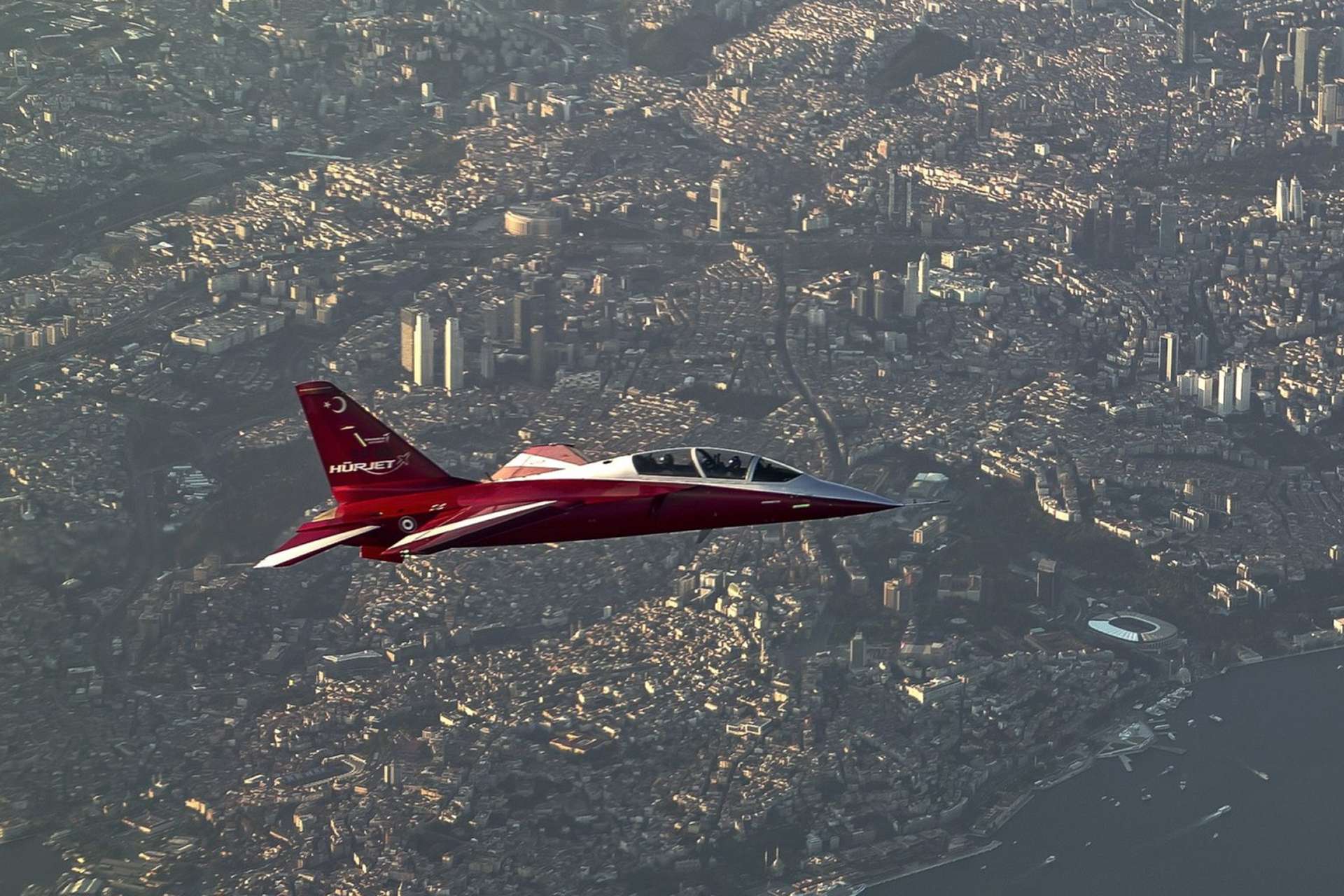
Spain’s selection of Türkiye’s HÜRJET advanced jet trainer in a €2.6 billion deal marks a major NATO-aligned export breakthrough, signaling Ankara’s emergence as a trusted aerospace supplier to Western European air forces (Picture Source: Turkish Aerospace Industries)
This is the first time a NATO and European Union member has opted to induct an entirely Turkish-designed and produced military jet into its national inventory. Spain’s selection of HÜRJET under its Integrated Advanced Flight Training System is not merely a sale, it is a strategic endorsement of Türkiye’s industrial maturity in aerospace systems design, integration, and sustainment.
In a public statement shared on social media, Dr. Demiroğlu called the moment one of national pride, underscoring that HÜRJET’s entry into a European air force represents “proof of the extraordinary distance our defense industry has traveled” under President Erdoğan’s defense-focused leadership. He thanked the TUSAŞ (Turkish Aerospace Industries) team of engineers, test pilots, and support staff, calling them the backbone of a platform that has now achieved what many considered diplomatically unthinkable just a decade ago.
Prof. Dr. Haluk Görgün, President of the Defense Industry Agency (SSB), described the agreement as a “historic export success,” placing Türkiye on the map as a strategic supplier of not only airframes but integrated defense capabilities. He detailed that the 2.6 billion euro package includes high-value systems such as simulation-based training infrastructure, a complete sustainment architecture, and long-term operational support, a level of export depth traditionally reserved for legacy Western manufacturers. Görgün emphasized that deliveries will begin in 2028 and that this move elevates Türkiye’s defense exports in both qualitative and quantitative terms.
Spain’s Air and Space Forces will use the HÜRJET to replace aging F-5M Freedom Fighter trainers and to train pilots transitioning to 4.5 and 5th-generation fighter platforms. The platform’s supersonic capability, digital glass cockpit, fly-by-wire flight control system, and open mission architecture position it as a modern trainer aligned with NATO’s evolving operational concepts.
Technically, the HÜRJET is designed as a supersonic advanced jet trainer and light attack platform, developed under the Turkish Air Force’s need to modernize jet pilot training for high-performance fighter transition. The aircraft measures approximately 13.6 meters in length with a wingspan of 9.5 meters and an empty weight of around 4,500 kg. Its propulsion system is based on the General Electric F404-GE-102 turbofan engine, enabling it to achieve speeds exceeding Mach 1.4 and a service ceiling of over 45,000 feet. The aircraft is capable of withstanding +8/-3g, providing the agility and high-G tolerance required for advanced training environments.
Avionics onboard include a full-glass cockpit with hands-on-throttle-and-stick (HOTAS) controls, integrated mission computers, and tactical datalink systems, designed to replicate the sensor fusion and pilot-vehicle interface of frontline combat aircraft such as the F-16 and future F-35s. The flight control system features a quadruplex digital fly-by-wire architecture, enhancing stability and maneuverability while ensuring pilot safety and precision during high-speed training regimes.
In its light combat configuration, the HÜRJET offers a combat payload capacity of up to 3,000 kg across seven external hardpoints, allowing integration of precision-guided munitions, air-to-air missiles, external fuel tanks, and targeting pods. This dual-role design positions it not only as a training asset but also as a valuable asset for light combat operations, border security, and air policing missions.
Sources familiar with the negotiations confirm the program’s scope is much broader than just aircraft procurement. The HÜRJET’s entry into Spain’s fleet is part of a full-spectrum training modernization effort encompassing the ITS-C (Integrated Training System – Combat) program. Several Spanish defense analysts note that TUSAŞ’s win over traditional Western suppliers signals a growing appetite within Europe for cost-effective, high-tech alternatives from emerging defense exporters like Türkiye.
Beyond the Spanish order, the deal positions HÜRJET as a viable competitor in global markets, especially among nations seeking NATO-compliant training jets without the cost burdens of legacy systems. This first sale is expected to serve as a catalyst for expanded interest from other European and Middle Eastern countries, many of whom have already evaluated or expressed interest in the HÜRJET platform since its first flight in April 2023.
With this agreement, Türkiye has crossed a critical threshold in its ambition to be a global aerospace exporter. The HÜRJET’s integration into a NATO partner’s inventory cements not only the aircraft’s credibility but also Türkiye’s emerging industrial clout in next-generation military aviation.
As deliveries commence and integration progresses, all eyes will now turn to how Spain fields the aircraft and transforms its pilot training architecture. If successful, this could mark the beginning of a broader strategic pivot across NATO toward emerging defense producers and set the tone for future procurement strategies within the alliance.