Türkiye’s Roketsan NEŞTER Turns MAM-L Technology into U.S. AGM-114R9X Hellfire Style Bladed Strike Munition
{loadposition bannertop}
{loadposition sidebarpub}
Roketsan has unveiled its new NEŞTER air-launched munition, introduced on May 5, 2026, at SAHA Expo in Istanbul, offering a precision-strike capability designed to neutralize targets without explosive blast effects and significantly reduce collateral damage. This development directly addresses a critical operational need for NATO forces operating in dense urban and counterterrorism environments, where the ability to eliminate high-value targets without harming nearby civilians or infrastructure is increasingly decisive.
NEŞTER replaces a conventional warhead with a kinetic system using pop-out blades activated just before impact, relying on speed and mechanical force to destroy targets with high precision . Its lightweight design and compatibility with UAVs and light attack aircraft expand deployment flexibility, aligning with broader trends toward scalable, low-collateral strike options in modern warfare.
Related Topic: Türkiye’s KARAOK ATGM Validated Across Close Combat and Top-Attack Scenarios With Direct Hits Up to 2 km
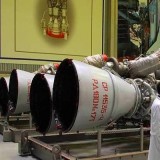
Roketsan unveiled the NEŞTER munition at SAHA Expo 2026, introducing a lightweight, laser-guided kinetic weapon designed to strike targets with high precision while avoiding explosive collateral damage (Picture Source: Army Recognition Group)
Roketsan unveiled on May 5, 2026, its new NEŞTER munition at SAHA Expo 2026 in Istanbul, Türkiye, introducing a Turkish precision-strike concept designed for highly selective engagements with minimal secondary damage. Presented during an exhibition bringing together the international defense and aerospace sector from May 5 to 9, NEŞTER arrives at a time when NATO forces are seeking more discriminating air-launched weapons for urban, counterterrorism, and high-value target missions. Its relevance lies in a simple but strategically important idea: delivering lethal precision without the blast effects of a conventional explosive warhead.
NEŞTER is described as a derivative of Roketsan’s MAM-L lightweight smart munition, a family already associated with UAV and light attack aircraft operations. While MAM-L is offered with armor-piercing, high-explosive fragmentation and thermobaric warheads, NEŞTER changes the engagement logic by replacing explosive effects with a kinetic warhead fitted with pop-up blades. The system uses an inertial navigation system and a semi-active laser seeker, has a stated range of 15 km under a 20,000 ft and 100-knot launch profile, and measures 0.95 m in length, 150 mm in diameter and 23 kg in weight. Its intended platforms are light attack aircraft and UAVs, while its target set includes personnel, light armored vehicles and soft targets in confined areas.
The defining feature of NEŞTER is its kinetic blade mechanism, designed to activate just before impact through a proximity sensor and to neutralize the target through direct mechanical effect rather than explosive blast. This architecture addresses one of the most difficult problems in modern air-to-ground operations: how to engage a specific target in a vehicle, building entrance, narrow street or crowded environment without causing wider damage to surrounding structures or civilians. For Türkiye, which has invested heavily in UAVs, precision munitions and exportable air-launched weapons, NEŞTER expands the national portfolio from conventional strike effects toward controlled-force options that can be applied in politically and legally sensitive missions.
The closest conceptual comparison is the U.S. AGM-114R9X Hellfire, a non-explosive Hellfire variant associated with pop-out, sword-like blades and kinetic impact against high-value targets. Both systems pursue the same operational effect: reducing collateral damage by avoiding blast fragmentation while relying on speed, mass and mechanical cutting surfaces. Yet the Turkish system appears to occupy a smaller and lighter category. Standard Hellfire missiles are generally around 1.62 m long, 178 mm in diameter and approximately 44.5 to 48.5 kg in weight, while NEŞTER is listed at 0.95 m, 150 mm and 23 kg. This difference matters because a lighter munition can be carried more easily by tactical UAVs and light aircraft, potentially allowing more aircraft to conduct selective precision missions without the payload burden of a full-sized missile.
NEŞTER’s advantage is not only its reduced size but also its compatibility with Türkiye’s existing air warfare ecosystem. Roketsan’s MAM-L was developed for UAVs, light attack aircraft and air-to-ground missions, with a 15 km range and laser guidance, creating a technical foundation that can ease integration, training and logistics for operators already using Turkish precision munitions. In comparison, the AGM-114R9X remains a highly specialized U.S. capability and is not known as a broadly exportable system. NEŞTER could therefore fill a niche for allied and partner forces that require low-collateral precision effects but cannot access, procure or integrate the most sensitive U.S. variants.
Operationally, NEŞTER could be relevant in counterterrorism operations, border security missions, special operations support, convoy interdiction, urban warfare and engagements against soft vehicles or exposed personnel where conventional explosive munitions would be excessive. Its use would be especially relevant when the target is located near civilian infrastructure, inside a vehicle in a populated area, or in confined terrain where blast overpressure and fragmentation could create unacceptable risks. The semi-active laser seeker also allows the munition to be used within established laser-designation tactics, whether from the launch platform, another aircraft, a UAV, or a ground-based designator, while inertial navigation supports controlled flight toward the designated engagement area.
NEŞTER reinforces Türkiye’s position as one of NATO’s most active developers of combat-proven air-launched precision weapons. As a NATO member, Türkiye offers the Alliance an increasingly important industrial alternative: systems that are compatible with modern unmanned warfare requirements, potentially more accessible to allied users, and suited to operational environments where minimizing civilian harm is as important as defeating the target. In NATO terms, NEŞTER could support a capability gap between large explosive missiles and smaller loitering or guided munitions, giving commanders another option for proportional response in missions where political constraints, legal scrutiny and battlefield density limit the use of heavier weapons.
For Ankara, the unveiling of NEŞTER at SAHA Expo 2026 is also a defense-industrial signal. Türkiye is no longer only adapting established Western strike concepts; it is producing its own variants tailored to the realities of drone warfare, urban engagements and export-driven capability development. By bringing a blade-based kinetic munition into the MAM-L family, Roketsan shows that Turkish engineering can move into highly specialized categories once dominated by the United States. NEŞTER’s message is therefore broader than its dimensions: Türkiye is positioning itself as a provider of precise, scalable and NATO-relevant strike solutions for an era in which military effectiveness is increasingly measured not only by target destruction, but by the ability to control the effects of force.
Written by Teoman S. Nicanci – Defense Analyst, Army Recognition Group
Teoman S. Nicanci holds degrees in Political Science, Comparative and International Politics, and International Relations and Diplomacy from leading Belgian universities, with research focused on Russian strategic behavior, defense technology, and modern warfare. He is a defense analyst at Army Recognition, specializing in the global defense industry, military armament, and emerging defense technologies.

{loadposition bannertop}
{loadposition sidebarpub}
Roketsan has unveiled its new NEŞTER air-launched munition, introduced on May 5, 2026, at SAHA Expo in Istanbul, offering a precision-strike capability designed to neutralize targets without explosive blast effects and significantly reduce collateral damage. This development directly addresses a critical operational need for NATO forces operating in dense urban and counterterrorism environments, where the ability to eliminate high-value targets without harming nearby civilians or infrastructure is increasingly decisive.
NEŞTER replaces a conventional warhead with a kinetic system using pop-out blades activated just before impact, relying on speed and mechanical force to destroy targets with high precision . Its lightweight design and compatibility with UAVs and light attack aircraft expand deployment flexibility, aligning with broader trends toward scalable, low-collateral strike options in modern warfare.
Related Topic: Türkiye’s KARAOK ATGM Validated Across Close Combat and Top-Attack Scenarios With Direct Hits Up to 2 km
Roketsan unveiled the NEŞTER munition at SAHA Expo 2026, introducing a lightweight, laser-guided kinetic weapon designed to strike targets with high precision while avoiding explosive collateral damage (Picture Source: Army Recognition Group)
Roketsan unveiled on May 5, 2026, its new NEŞTER munition at SAHA Expo 2026 in Istanbul, Türkiye, introducing a Turkish precision-strike concept designed for highly selective engagements with minimal secondary damage. Presented during an exhibition bringing together the international defense and aerospace sector from May 5 to 9, NEŞTER arrives at a time when NATO forces are seeking more discriminating air-launched weapons for urban, counterterrorism, and high-value target missions. Its relevance lies in a simple but strategically important idea: delivering lethal precision without the blast effects of a conventional explosive warhead.
NEŞTER is described as a derivative of Roketsan’s MAM-L lightweight smart munition, a family already associated with UAV and light attack aircraft operations. While MAM-L is offered with armor-piercing, high-explosive fragmentation and thermobaric warheads, NEŞTER changes the engagement logic by replacing explosive effects with a kinetic warhead fitted with pop-up blades. The system uses an inertial navigation system and a semi-active laser seeker, has a stated range of 15 km under a 20,000 ft and 100-knot launch profile, and measures 0.95 m in length, 150 mm in diameter and 23 kg in weight. Its intended platforms are light attack aircraft and UAVs, while its target set includes personnel, light armored vehicles and soft targets in confined areas.
The defining feature of NEŞTER is its kinetic blade mechanism, designed to activate just before impact through a proximity sensor and to neutralize the target through direct mechanical effect rather than explosive blast. This architecture addresses one of the most difficult problems in modern air-to-ground operations: how to engage a specific target in a vehicle, building entrance, narrow street or crowded environment without causing wider damage to surrounding structures or civilians. For Türkiye, which has invested heavily in UAVs, precision munitions and exportable air-launched weapons, NEŞTER expands the national portfolio from conventional strike effects toward controlled-force options that can be applied in politically and legally sensitive missions.
The closest conceptual comparison is the U.S. AGM-114R9X Hellfire, a non-explosive Hellfire variant associated with pop-out, sword-like blades and kinetic impact against high-value targets. Both systems pursue the same operational effect: reducing collateral damage by avoiding blast fragmentation while relying on speed, mass and mechanical cutting surfaces. Yet the Turkish system appears to occupy a smaller and lighter category. Standard Hellfire missiles are generally around 1.62 m long, 178 mm in diameter and approximately 44.5 to 48.5 kg in weight, while NEŞTER is listed at 0.95 m, 150 mm and 23 kg. This difference matters because a lighter munition can be carried more easily by tactical UAVs and light aircraft, potentially allowing more aircraft to conduct selective precision missions without the payload burden of a full-sized missile.
NEŞTER’s advantage is not only its reduced size but also its compatibility with Türkiye’s existing air warfare ecosystem. Roketsan’s MAM-L was developed for UAVs, light attack aircraft and air-to-ground missions, with a 15 km range and laser guidance, creating a technical foundation that can ease integration, training and logistics for operators already using Turkish precision munitions. In comparison, the AGM-114R9X remains a highly specialized U.S. capability and is not known as a broadly exportable system. NEŞTER could therefore fill a niche for allied and partner forces that require low-collateral precision effects but cannot access, procure or integrate the most sensitive U.S. variants.
Operationally, NEŞTER could be relevant in counterterrorism operations, border security missions, special operations support, convoy interdiction, urban warfare and engagements against soft vehicles or exposed personnel where conventional explosive munitions would be excessive. Its use would be especially relevant when the target is located near civilian infrastructure, inside a vehicle in a populated area, or in confined terrain where blast overpressure and fragmentation could create unacceptable risks. The semi-active laser seeker also allows the munition to be used within established laser-designation tactics, whether from the launch platform, another aircraft, a UAV, or a ground-based designator, while inertial navigation supports controlled flight toward the designated engagement area.
NEŞTER reinforces Türkiye’s position as one of NATO’s most active developers of combat-proven air-launched precision weapons. As a NATO member, Türkiye offers the Alliance an increasingly important industrial alternative: systems that are compatible with modern unmanned warfare requirements, potentially more accessible to allied users, and suited to operational environments where minimizing civilian harm is as important as defeating the target. In NATO terms, NEŞTER could support a capability gap between large explosive missiles and smaller loitering or guided munitions, giving commanders another option for proportional response in missions where political constraints, legal scrutiny and battlefield density limit the use of heavier weapons.
For Ankara, the unveiling of NEŞTER at SAHA Expo 2026 is also a defense-industrial signal. Türkiye is no longer only adapting established Western strike concepts; it is producing its own variants tailored to the realities of drone warfare, urban engagements and export-driven capability development. By bringing a blade-based kinetic munition into the MAM-L family, Roketsan shows that Turkish engineering can move into highly specialized categories once dominated by the United States. NEŞTER’s message is therefore broader than its dimensions: Türkiye is positioning itself as a provider of precise, scalable and NATO-relevant strike solutions for an era in which military effectiveness is increasingly measured not only by target destruction, but by the ability to control the effects of force.
Written by Teoman S. Nicanci – Defense Analyst, Army Recognition Group
Teoman S. Nicanci holds degrees in Political Science, Comparative and International Politics, and International Relations and Diplomacy from leading Belgian universities, with research focused on Russian strategic behavior, defense technology, and modern warfare. He is a defense analyst at Army Recognition, specializing in the global defense industry, military armament, and emerging defense technologies.