U.S. AC-130J Gunship Carries Hellfire Missiles and Precision Bombs in Counter-Trafficking Deployment
{loadposition bannertop}
{loadposition sidebarpub}
A U.S. Air Force AC-130J Ghostrider gunship has deployed to El Salvador with a mixed precision-strike loadout, signaling an expanded role in countering dispersed and time-sensitive targets in Central America. The move strengthens persistent close air support and rapid strike options for Operation Southern Spear, enhancing deterrence and operational reach in a complex security environment.
The aircraft carries AGM-114 Hellfire missiles and GBU-39/B Small Diameter Bombs (SDB), combining low-collateral precision with standoff engagement against vehicles, fortified positions, and small targets. This configuration increases flexibility for urban and jungle operations while reflecting a broader trend toward multi-role gunships optimized for precision warfare and partner force support.Related Topic: U.S. Air Force AC-130J Ghostrider Gunships Deployed To United Kingdom
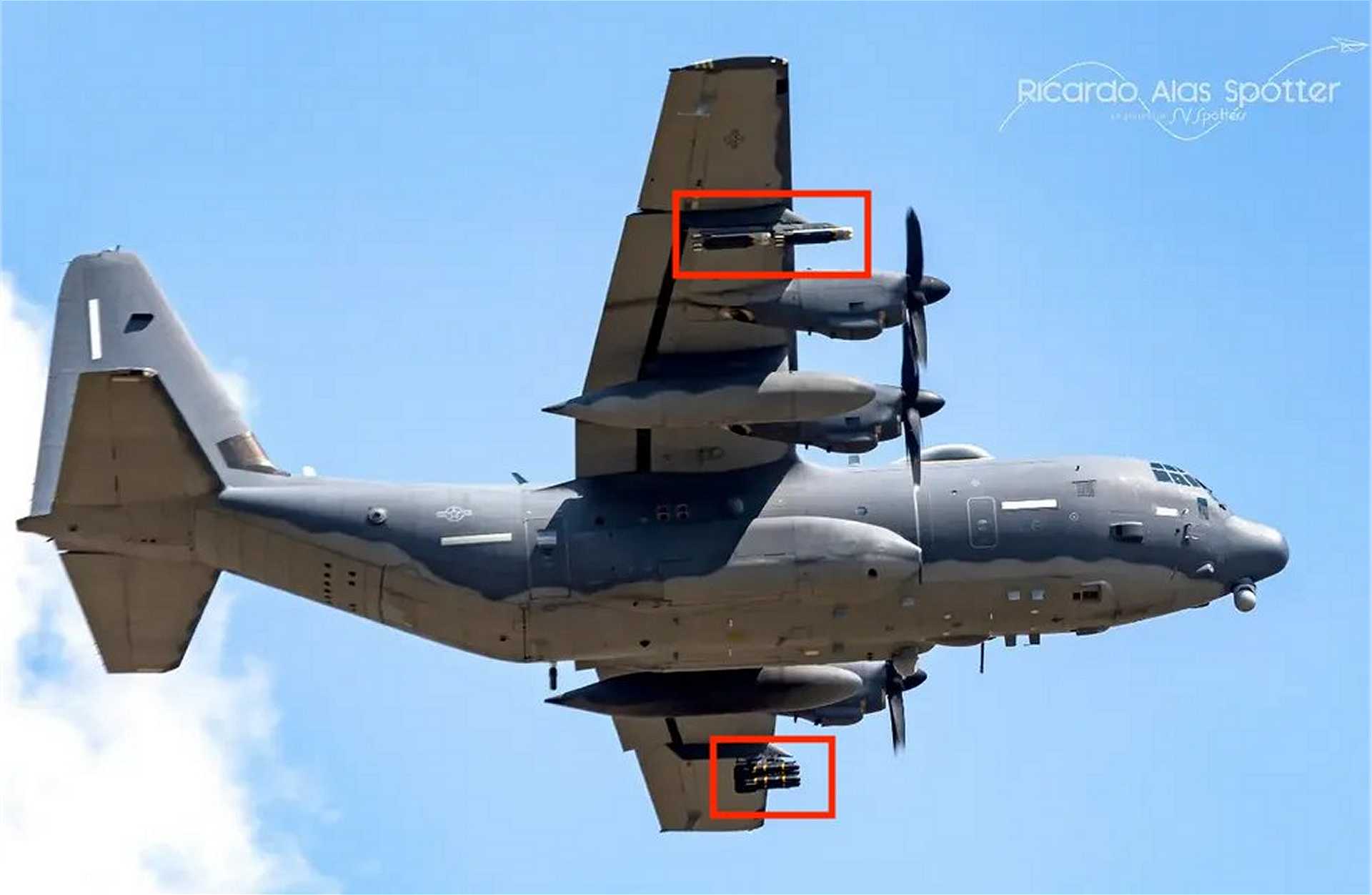
AC-130J Ghostrider deployed to Comalapa International Airport (CSL), El Salvador, in support of Operation Southern Spear, shown with an asymmetric precision strike loadout of four AGM-114 Hellfire missiles on the left wing and four GBU-39/B Small Diameter Bombs on the right wing.(Image Credit: Ricardo Alas Spotter)
Operation Southern Spear is a U.S.-led security mission conducted under U.S. Southern Command (SOUTHCOM), focused on countering transnational criminal networks, illicit trafficking, and irregular threats across Central America. The operation emphasizes intelligence-driven air-ground coordination, persistent surveillance, and rapid-precision-strike options to support partner nations such as El Salvador. In this context, deploying an AC-130J with both Hellfire missiles and Small Diameter Bombs enhances the ability to track, fix, and engage high-value or time-sensitive targets while limiting collateral damage, directly improving regional security and operational responsiveness.
The deployment underscores a tailored force posture for counter-illicit trafficking and regional security operations in Central America, combining persistent overwatch with precision strike options. The image confirms a rare asymmetric external weapons configuration, highlighting operational flexibility in a mission set that demands both close air support and standoff strike capability.
The AC-130J Ghostrider, developed by Lockheed Martin and operated by U.S. Air Force Special Operations Command (AFSOC), is the latest evolution of the AC-130 gunship family. Built on the MC-130J Commando II airframe, it integrates advanced avionics, sensors, and a modular weapons suite designed for precision engagement in complex environments. Its core mission includes close air support, armed reconnaissance, and air interdiction, particularly in support of special operations forces.
Traditionally, the AC-130J’s primary armament consists of a side-firing configuration including a 30mm GAU-23/A chain gun and a 105mm M102 howitzer, enabling sustained and highly accurate fire against ground targets. This internal gun system allows the aircraft to orbit a target area and deliver continuous fire with high precision, a capability central to urban and close-proximity engagements. Complementing these guns, the platform integrates advanced targeting systems, including electro-optical/infrared sensors and precision navigation systems, ensuring day/night and all-weather operational effectiveness.
The AGM-114 Hellfire missile is a combat-proven, precision-guided munition originally designed for anti-armor warfare but widely adapted for multi-role engagements. It uses semi-active laser guidance in most variants, allowing operators to designate targets with high accuracy, even in dynamic environments. With a typical range of 7-11 km, depending on launch conditions, Hellfire is highly effective against moving vehicles, fortified positions, and small, high-value targets. Its relatively low-yield warhead minimizes collateral damage while maintaining lethal effectiveness, making it particularly suitable for counterinsurgency and counter-trafficking missions where discrimination and precision are critical.
The GBU-39/B Small Diameter Bomb (SDB) is a lightweight, GPS-guided glide munition designed for high-precision strikes at extended ranges. Weighing approximately 113 kg, it features deployable wings that allow it to glide over distances exceeding 60 km when released at altitude. The weapon achieves a circular error probable of less than 5 meters, enabling accurate engagement of fixed targets such as infrastructure, storage sites, or concealed facilities. Its small warhead is optimized to reduce collateral damage while still penetrating hardened targets, allowing multiple bombs to be carried and employed in a single sortie against dispersed objectives.
The addition of externally mounted AGM-114 Hellfire missiles and GBU-39/B Small Diameter Bombs represents a significant enhancement in the aircraft’s strike envelope. The AGM-114 Hellfire provides precision engagement against moving vehicles, fortified positions, and small, high-value targets, making it particularly suited for dynamic targeting during counter-trafficking missions. Its relatively low yield reduces collateral damage while maintaining lethal accuracy.
On the opposite wing, the GBU-39/B Small Diameter Bomb introduces a standoff precision capability, allowing the AC-130J to engage targets at significantly greater distances compared to its guns or Hellfires. With GPS guidance and high accuracy, the SDB enables multiple simultaneous target engagements, especially useful against dispersed or concealed networks operating across difficult terrain.
This mixed loadout reflects a deliberate shift toward multi-domain flexibility, allowing the AC-130J to transition seamlessly between close air support and precision strike roles within the same sortie. In operations like Southern Spear, where targets can range from mobile trafficking convoys to fixed infrastructure, such versatility enhances mission effectiveness and reduces response time.
The deployment also illustrates a broader U.S. strategy in the region, combining high-end ISR and strike platforms with partner nation cooperation to disrupt illicit networks before they expand. By integrating advanced precision munitions onto a persistent gunship platform, the U.S. Air Force increases both deterrence and operational reach, reinforcing its ability to conduct sustained, low-visibility operations in complex security environments.Written by Alain Servaes – Chief Editor, Army Recognition GroupAlain Servaes is a former infantry non-commissioned officer and the founder of Army Recognition. With over 20 years in defense journalism, he provides expert analysis on military equipment, NATO operations, and the global defense industry.
{loadposition bannertop}
{loadposition sidebarpub}
A U.S. Air Force AC-130J Ghostrider gunship has deployed to El Salvador with a mixed precision-strike loadout, signaling an expanded role in countering dispersed and time-sensitive targets in Central America. The move strengthens persistent close air support and rapid strike options for Operation Southern Spear, enhancing deterrence and operational reach in a complex security environment.
The aircraft carries AGM-114 Hellfire missiles and GBU-39/B Small Diameter Bombs (SDB), combining low-collateral precision with standoff engagement against vehicles, fortified positions, and small targets. This configuration increases flexibility for urban and jungle operations while reflecting a broader trend toward multi-role gunships optimized for precision warfare and partner force support.
Related Topic: U.S. Air Force AC-130J Ghostrider Gunships Deployed To United Kingdom
AC-130J Ghostrider deployed to Comalapa International Airport (CSL), El Salvador, in support of Operation Southern Spear, shown with an asymmetric precision strike loadout of four AGM-114 Hellfire missiles on the left wing and four GBU-39/B Small Diameter Bombs on the right wing.(Image Credit: Ricardo Alas Spotter)
Operation Southern Spear is a U.S.-led security mission conducted under U.S. Southern Command (SOUTHCOM), focused on countering transnational criminal networks, illicit trafficking, and irregular threats across Central America. The operation emphasizes intelligence-driven air-ground coordination, persistent surveillance, and rapid-precision-strike options to support partner nations such as El Salvador. In this context, deploying an AC-130J with both Hellfire missiles and Small Diameter Bombs enhances the ability to track, fix, and engage high-value or time-sensitive targets while limiting collateral damage, directly improving regional security and operational responsiveness.
The deployment underscores a tailored force posture for counter-illicit trafficking and regional security operations in Central America, combining persistent overwatch with precision strike options. The image confirms a rare asymmetric external weapons configuration, highlighting operational flexibility in a mission set that demands both close air support and standoff strike capability.
The AC-130J Ghostrider, developed by Lockheed Martin and operated by U.S. Air Force Special Operations Command (AFSOC), is the latest evolution of the AC-130 gunship family. Built on the MC-130J Commando II airframe, it integrates advanced avionics, sensors, and a modular weapons suite designed for precision engagement in complex environments. Its core mission includes close air support, armed reconnaissance, and air interdiction, particularly in support of special operations forces.
Traditionally, the AC-130J’s primary armament consists of a side-firing configuration including a 30mm GAU-23/A chain gun and a 105mm M102 howitzer, enabling sustained and highly accurate fire against ground targets. This internal gun system allows the aircraft to orbit a target area and deliver continuous fire with high precision, a capability central to urban and close-proximity engagements. Complementing these guns, the platform integrates advanced targeting systems, including electro-optical/infrared sensors and precision navigation systems, ensuring day/night and all-weather operational effectiveness.
The AGM-114 Hellfire missile is a combat-proven, precision-guided munition originally designed for anti-armor warfare but widely adapted for multi-role engagements. It uses semi-active laser guidance in most variants, allowing operators to designate targets with high accuracy, even in dynamic environments. With a typical range of 7-11 km, depending on launch conditions, Hellfire is highly effective against moving vehicles, fortified positions, and small, high-value targets. Its relatively low-yield warhead minimizes collateral damage while maintaining lethal effectiveness, making it particularly suitable for counterinsurgency and counter-trafficking missions where discrimination and precision are critical.
The GBU-39/B Small Diameter Bomb (SDB) is a lightweight, GPS-guided glide munition designed for high-precision strikes at extended ranges. Weighing approximately 113 kg, it features deployable wings that allow it to glide over distances exceeding 60 km when released at altitude. The weapon achieves a circular error probable of less than 5 meters, enabling accurate engagement of fixed targets such as infrastructure, storage sites, or concealed facilities. Its small warhead is optimized to reduce collateral damage while still penetrating hardened targets, allowing multiple bombs to be carried and employed in a single sortie against dispersed objectives.
The addition of externally mounted AGM-114 Hellfire missiles and GBU-39/B Small Diameter Bombs represents a significant enhancement in the aircraft’s strike envelope. The AGM-114 Hellfire provides precision engagement against moving vehicles, fortified positions, and small, high-value targets, making it particularly suited for dynamic targeting during counter-trafficking missions. Its relatively low yield reduces collateral damage while maintaining lethal accuracy.
On the opposite wing, the GBU-39/B Small Diameter Bomb introduces a standoff precision capability, allowing the AC-130J to engage targets at significantly greater distances compared to its guns or Hellfires. With GPS guidance and high accuracy, the SDB enables multiple simultaneous target engagements, especially useful against dispersed or concealed networks operating across difficult terrain.
This mixed loadout reflects a deliberate shift toward multi-domain flexibility, allowing the AC-130J to transition seamlessly between close air support and precision strike roles within the same sortie. In operations like Southern Spear, where targets can range from mobile trafficking convoys to fixed infrastructure, such versatility enhances mission effectiveness and reduces response time.
The deployment also illustrates a broader U.S. strategy in the region, combining high-end ISR and strike platforms with partner nation cooperation to disrupt illicit networks before they expand. By integrating advanced precision munitions onto a persistent gunship platform, the U.S. Air Force increases both deterrence and operational reach, reinforcing its ability to conduct sustained, low-visibility operations in complex security environments.
Written by Alain Servaes – Chief Editor, Army Recognition Group
Alain Servaes is a former infantry non-commissioned officer and the founder of Army Recognition. With over 20 years in defense journalism, he provides expert analysis on military equipment, NATO operations, and the global defense industry.