U.S. Boosts C-130J Mission Readiness with $1.9B Lockheed Training and Simulator Upgrade Deal
{loadposition bannertop}
{loadposition sidebarpub}
Lockheed Martin secured a $1.9 billion Pentagon contract to sustain and modernize C-130J training systems across U.S. forces, ensuring crews and maintainers stay mission-ready as the aircraft evolves. The award directly reinforces global airlift capacity by aligning training with real-time fleet configurations and operational demands.
Announced April 14, 2026, the MATS IV contract extends a 10-year IDIQ program delivering simulators, courseware, logistics, and engineering updates for the C-130J fleet across the Air Force, Marine Corps, Special Operations Command, and reserve components, with the Navy Reserve and Coast Guard now included. By shifting more training into high-fidelity simulators, the program preserves aircraft availability, cuts live-flight strain, and keeps mission-ready crews on the line.
Related topic: U.S. Air Force AC-130J Ghostrider Gunships Deployed To United Kingdom.
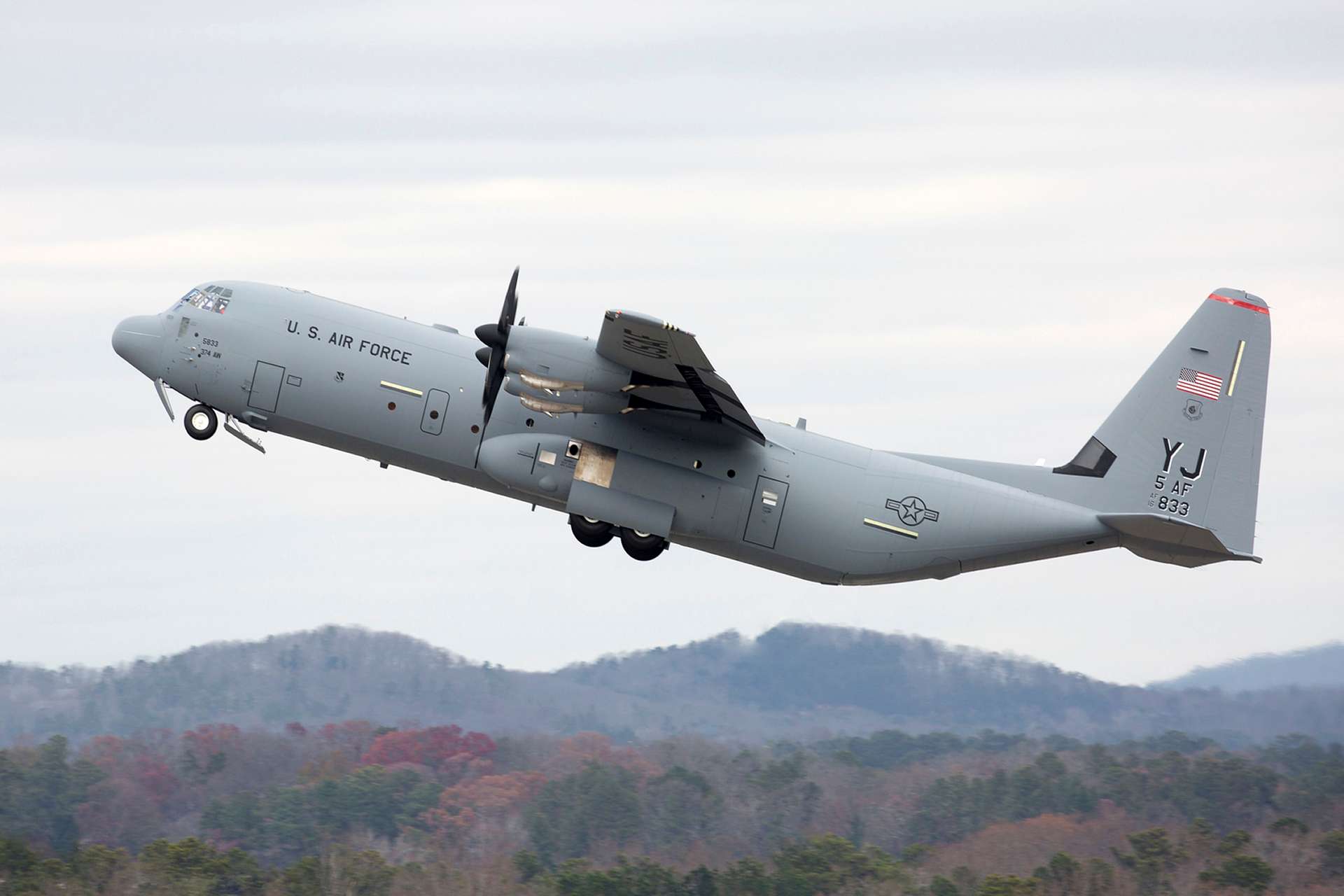
Lockheed Martin’s new $1.9 billion Pentagon contract will sustain C-130J aircrew and maintenance training systems, strengthening readiness, fleet availability, and tactical airlift capability across U.S. military services (Picture source: Lockheed Martin).
Announced by Lockheed Martin on April 14, 2026, the MATS IV contract allows the U.S. Air Force Life Cycle Management Center to continue delivering aircrew and maintenance training devices, courseware, operations support, interim and contractor logistics support, and engineering services for the C-130J community. The scope matters because the program is not limited to one operator: the existing customer base already spans Air Mobility Command, the Air National Guard, the Air Force Reserve, the U.S. Marine Corps, AFSOC, and AETC, while the new award expands aircrew support to the U.S. Navy Reserve and the U.S. Coast Guard.
In practical terms, MATS is the digital shadow of the aircraft fleet. The training architecture includes high-fidelity Weapon Systems Trainers, Loadmaster Part-Task Trainers, fuselage trainers, cockpit procedures trainers, avionics and integrated cockpit trainers, engine-propeller trainers, flight-control trainers, multifunction training aids, and the Training Systems Support Center that keeps the entire ecosystem concurrent with the aircraft baseline. That concurrency piece is decisive: a simulator that falls behind the real aircraft teaches obsolete procedures, while a current device allows pilots, loadmasters, and maintainers to rehearse the exact software, cockpit logic, cargo-handling workflows, and malfunction responses they will see on the line.
The aircraft that those crews train for remains one of the most tactically useful transports in Western service. Air Force fact sheets describe the C-130J as powered by four Rolls-Royce AE2100D3 turboprops driving six-bladed composite propellers, with the J-model delivering roughly 356 to 362 knots true airspeed, payloads of about 42,000 to 44,000 pounds depending on variant, and a maximum takeoff weight of around 164,000 pounds. That performance, paired with a digital cockpit and strong short-field characteristics, is what gives the Super Hercules its enduring relevance: it is fast enough to compress reaction time, rugged enough for austere operations, and spacious enough to move vehicles, pallets, paratroopers, fuel, medical teams, or special-mission equipment in a single platform.
Operationally, the C-130J’s real value is not measured by speed alone but by its ability to deliver effects into places where larger transports are inefficient or unwelcome. The aircraft can conduct tactical airlift, low-level insertion, airdrop, humanitarian relief, aeromedical evacuation, and, in derivative forms, aerial refueling and personnel recovery. Lockheed says the platform is proven across 20 mission sets, and that breadth is exactly why the training contract is so consequential: a loadmaster preparing for assault-zone cargo delivery, a maintainer troubleshooting propeller controls, and a crew rehearsing instrument approaches into a degraded airfield all need different but synchronized training pathways.
On armament, the key analytical point is that the standard C-130J family supported by this contract is not centered on offensive firepower in the way an AC-130J gunship is. Its battlefield utility comes from mobility, sustainment, refueling, and mission support rather than guns or missiles. For higher-threat environments, Air Force material on the HC-130J identifies self-protection through countermeasures, flares, and chaff, while Yokota-based maintainers have publicly trained on fitting defensive countermeasure equipment to C-130Js during readiness exercises. Tactically, that means survivability for many C-130J missions depends less on “armament” in the classic sense than on threat warning, expendables, route planning, terrain masking, night procedures, and disciplined crew coordination under pressure.
This is why the contract is strategically more important than its headline suggests. Training-system briefs tied to the C-130 enterprise emphasize contractor logistics support, concurrency and obsolescence management, and a requirement to keep devices available at high rates while minimizing aircraft usage for training and increasing aircraft availability for missions. That is the economics of modern readiness: every hour shifted from live aircraft to a high-fidelity simulator preserves airframe life, reduces sustainment burden, saves fuel, and still allows crews to rehearse emergencies and edge-case procedures that are unsafe or impractical to practice routinely in flight. In an era of strained fleet utilization, a training contract becomes an availability contract by another name.
The award also reinforces Lockheed Martin’s role as both aircraft OEM and training-system integrator at a time when the C-130J remains a live production and support franchise. Lockheed states that more than 560 C-130Js have been delivered to 28 nations and that the global fleet has surpassed 3 million flight hours. For the Pentagon, sustaining MATS IV alongside that larger fleet evolution helps prevent a split between procurement and proficiency; for industry, it anchors a long-tail business in software, simulator updates, engineering changes, and multi-service support. It also gives the newly added Navy Reserve and Coast Guard users access to a deeper and more standardized training backbone rather than a fragmented service-by-service approach.
Taken together, the MATS IV award shows that the Pentagon understands a point often missed outside the operator community: tactical airlift capability is generated as much in the simulator bay and maintenance trainer as on the flight line. A C-130J fleet can only deliver credible rapid response, distributed logistics, special operations support, and theater-level sustainment if crews are current on the exact configuration they will fight. By funding the training architecture for another decade, Washington is not merely paying to teach crews how to operate a transport aircraft; it is preserving one of the U.S. military’s most flexible tools for crisis response, theater endurance, and operational reach.
{loadposition bannertop}
{loadposition sidebarpub}
Lockheed Martin secured a $1.9 billion Pentagon contract to sustain and modernize C-130J training systems across U.S. forces, ensuring crews and maintainers stay mission-ready as the aircraft evolves. The award directly reinforces global airlift capacity by aligning training with real-time fleet configurations and operational demands.
Announced April 14, 2026, the MATS IV contract extends a 10-year IDIQ program delivering simulators, courseware, logistics, and engineering updates for the C-130J fleet across the Air Force, Marine Corps, Special Operations Command, and reserve components, with the Navy Reserve and Coast Guard now included. By shifting more training into high-fidelity simulators, the program preserves aircraft availability, cuts live-flight strain, and keeps mission-ready crews on the line.
Related topic: U.S. Air Force AC-130J Ghostrider Gunships Deployed To United Kingdom.
Lockheed Martin’s new $1.9 billion Pentagon contract will sustain C-130J aircrew and maintenance training systems, strengthening readiness, fleet availability, and tactical airlift capability across U.S. military services (Picture source: Lockheed Martin).
Announced by Lockheed Martin on April 14, 2026, the MATS IV contract allows the U.S. Air Force Life Cycle Management Center to continue delivering aircrew and maintenance training devices, courseware, operations support, interim and contractor logistics support, and engineering services for the C-130J community. The scope matters because the program is not limited to one operator: the existing customer base already spans Air Mobility Command, the Air National Guard, the Air Force Reserve, the U.S. Marine Corps, AFSOC, and AETC, while the new award expands aircrew support to the U.S. Navy Reserve and the U.S. Coast Guard.
In practical terms, MATS is the digital shadow of the aircraft fleet. The training architecture includes high-fidelity Weapon Systems Trainers, Loadmaster Part-Task Trainers, fuselage trainers, cockpit procedures trainers, avionics and integrated cockpit trainers, engine-propeller trainers, flight-control trainers, multifunction training aids, and the Training Systems Support Center that keeps the entire ecosystem concurrent with the aircraft baseline. That concurrency piece is decisive: a simulator that falls behind the real aircraft teaches obsolete procedures, while a current device allows pilots, loadmasters, and maintainers to rehearse the exact software, cockpit logic, cargo-handling workflows, and malfunction responses they will see on the line.
The aircraft that those crews train for remains one of the most tactically useful transports in Western service. Air Force fact sheets describe the C-130J as powered by four Rolls-Royce AE2100D3 turboprops driving six-bladed composite propellers, with the J-model delivering roughly 356 to 362 knots true airspeed, payloads of about 42,000 to 44,000 pounds depending on variant, and a maximum takeoff weight of around 164,000 pounds. That performance, paired with a digital cockpit and strong short-field characteristics, is what gives the Super Hercules its enduring relevance: it is fast enough to compress reaction time, rugged enough for austere operations, and spacious enough to move vehicles, pallets, paratroopers, fuel, medical teams, or special-mission equipment in a single platform.
Operationally, the C-130J’s real value is not measured by speed alone but by its ability to deliver effects into places where larger transports are inefficient or unwelcome. The aircraft can conduct tactical airlift, low-level insertion, airdrop, humanitarian relief, aeromedical evacuation, and, in derivative forms, aerial refueling and personnel recovery. Lockheed says the platform is proven across 20 mission sets, and that breadth is exactly why the training contract is so consequential: a loadmaster preparing for assault-zone cargo delivery, a maintainer troubleshooting propeller controls, and a crew rehearsing instrument approaches into a degraded airfield all need different but synchronized training pathways.
On armament, the key analytical point is that the standard C-130J family supported by this contract is not centered on offensive firepower in the way an AC-130J gunship is. Its battlefield utility comes from mobility, sustainment, refueling, and mission support rather than guns or missiles. For higher-threat environments, Air Force material on the HC-130J identifies self-protection through countermeasures, flares, and chaff, while Yokota-based maintainers have publicly trained on fitting defensive countermeasure equipment to C-130Js during readiness exercises. Tactically, that means survivability for many C-130J missions depends less on “armament” in the classic sense than on threat warning, expendables, route planning, terrain masking, night procedures, and disciplined crew coordination under pressure.
This is why the contract is strategically more important than its headline suggests. Training-system briefs tied to the C-130 enterprise emphasize contractor logistics support, concurrency and obsolescence management, and a requirement to keep devices available at high rates while minimizing aircraft usage for training and increasing aircraft availability for missions. That is the economics of modern readiness: every hour shifted from live aircraft to a high-fidelity simulator preserves airframe life, reduces sustainment burden, saves fuel, and still allows crews to rehearse emergencies and edge-case procedures that are unsafe or impractical to practice routinely in flight. In an era of strained fleet utilization, a training contract becomes an availability contract by another name.
The award also reinforces Lockheed Martin’s role as both aircraft OEM and training-system integrator at a time when the C-130J remains a live production and support franchise. Lockheed states that more than 560 C-130Js have been delivered to 28 nations and that the global fleet has surpassed 3 million flight hours. For the Pentagon, sustaining MATS IV alongside that larger fleet evolution helps prevent a split between procurement and proficiency; for industry, it anchors a long-tail business in software, simulator updates, engineering changes, and multi-service support. It also gives the newly added Navy Reserve and Coast Guard users access to a deeper and more standardized training backbone rather than a fragmented service-by-service approach.
Taken together, the MATS IV award shows that the Pentagon understands a point often missed outside the operator community: tactical airlift capability is generated as much in the simulator bay and maintenance trainer as on the flight line. A C-130J fleet can only deliver credible rapid response, distributed logistics, special operations support, and theater-level sustainment if crews are current on the exact configuration they will fight. By funding the training architecture for another decade, Washington is not merely paying to teach crews how to operate a transport aircraft; it is preserving one of the U.S. military’s most flexible tools for crisis response, theater endurance, and operational reach.