US launches massive air strikes against Iran after new Strait of Hormuz tanker attacks
{loadposition bannertop}
{loadposition sidebarpub}
The United States Central Command (U.S. CENTCOM) launched a major offensive military campaign against Iran on July 7, 2026, executing precision strikes on more than 80 military installations across the southern coast following multi-vessel maritime attacks in the Strait of Hormuz. The targeted operation focused on destroying long-range anti-ship missile sites, coastal radar networks, air defense systems, and over 60 Islamic Revolutionary Guard Corps fast attack craft. This sudden shift from limited retaliation to comprehensive suppression was engineered to dismantle Iran’s anti-access/area-denial architecture and degrade its cumulative kill chain against international commercial navigation.
The military operation targeted key Islamic Revolutionary Guard Corps hubs in Bandar Abbas, Qeshm Island, and Sirik after projectiles struck three internationally flagged merchant vessels transiting near the Omani coast. Concurrently, the United States Treasury Department officially rescinded General License X to terminate temporary Iranian oil export sanctions waivers, effectively dissolving the maritime security commitments established in the June 17, 2026 memorandum of understanding.
Related topic: US forces launch new military strikes against Iranian drone sites near Strait of Hormuz
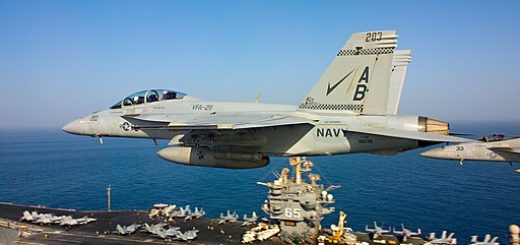
Future escalation will likely depend less on formal diplomatic statements between the U.S. and Iran than on the number, location and severity of attacks against merchant shipping and regional military facilities. (Picture source: CENTCOM)
On July 7, 2026, the U.S. Central Command (CENTCOM) launched a new wave of attacks against Iran after three commercial vessels were attacked in the Strait of Hormuz, further widening the U.S. military response from limited retaliation into a new targeted campaign against Iran’s ability to disrupt maritime traffic. The CENTCOM announced this operation hit more than 80 targets, including air defense systems, command-and-control networks, coastal radar sites, anti-ship missile capabilities, and more than 60 Islamic Revolutionary Guard Corps fast attack craft operating in or near the strait. Washington stated the operation was a direct response to Iranian attacks against the Marshall Islands-flagged M/T Al Rekayyat, the Saudi Arabia-flagged M/T Wedyan and the Liberian-flagged M/T Cyprus Prosperity, all linked to commercial energy or cargo flows through the Gulf.
The strikes came less than three weeks after the June 17, 2026, U.S.-Iran memorandum that was supposed to reopen the Strait of Hormuz, preserve freedom of navigation and create space for further nuclear and sanctions negotiations. The new wave of attacks shows that the maritime clause of the agreement has become the main point of friction, with ship routing, tanker security and Iranian coastal control now driving the military tempo more than the diplomatic track. The sequence that led to the U.S.’s latest operation involved several tanker incidents in or near the Hormuz traffic separation lanes, where vessels move through a confined corridor between Iran, Oman and the United Arab Emirates. The UK Maritime Trade Operations (UKMTO) reported that one vessel suffered an engine-room fire after being struck by a projectile, while two others sustained structural damage but continued toward their next port of call.
The pattern followed earlier attacks on June 25 and June 27, when M/V Ever Lovely and M/T Kiku were targeted while operating near the strait. M/V Ever Lovely, a Singapore-flagged cargo ship, was hit by a one-way attack drone while exiting along the Omani coast, and M/T Kiku, a Panama-flagged tanker carrying more than two million barrels of crude oil, was struck at 4:30 a.m. Eastern Time near the same maritime corridor. The recurring sequence suggests a deliberate pressure campaign by Iran against commercial navigation, particularly targeting vessels using routes close to Oman rather than those preferred by Tehran. According to CENTCOM, Iran violated the ceasefire by attacking internationally flagged merchant shipping despite commitments made under the June memorandum. Therefore, the July 7 strikes were built around more than 80 targets that allow Iran to threaten ships from shore and at sea.
Coastal radars give Iranian forces the ability to track tankers, cargo vessels and naval escorts as they enter, cross or leave the strait. Command-and-control nodes connect those sensors to missile batteries, drone units, small boats and naval headquarters. Anti-ship missile positions create a standoff threat against large commercial vessels and escorting warships, while air defense systems protect the coastal network from U.S. follow-on strikes. The destruction or disruption of more than 60 IRGC fast attack craft was particularly significant because those boats are central to Iran’s short-range maritime tactics, including swarming, close approaches, boarding threats, warning shots and harassment operations inside confined waters.
By attacking both fixed coastal infrastructure and mobile naval assets, the United States aimed to degrade the entire kill chain rather than only the weapon used in the latest tanker attacks. The geography of the strikes matters because southern Iran contains the main military infrastructure used by the IRGC to control the northern side of the Strait of Hormuz. Bandar Abbas is Iran’s principal naval hub in the area, with port facilities, logistics capacity, naval command functions, and access to the main maritime approaches. Qeshm Island sits inside the strait and provides proximity to traffic moving through the narrowest part of the waterway. Sirik, located farther east toward the Gulf of Oman, is relevant for monitoring vessels before they enter the Persian Gulf or after they exit it.
Hormozgan Province as a whole gives Iran a chain of coastal positions from which radars, missiles, drones, and patrol craft can cover commercial routes. The U.S. strikes across these locations show that Washington was not only responding to individual attacks, but also trying to reduce Iran’s anti-access/area-denial (A2/AD) architecture over commercial shipping. The operation continued a clear escalation ladder that began in late June. On June 26, U.S. aircraft struck Iranian missile and drone storage sites and coastal radar positions after the attack on M/V Ever Lovely. On June 27, U.S. forces expanded the target set to surveillance infrastructure, communications systems, air defense sites, drone storage facilities, and mine-laying capabilities after M/T Kiku was attacked with more than two million barrels of crude oil on board.
On July 7, the United States struck more than 80 targets and added a large number of IRGC small boats to the target list, indicating a shift from retaliating against specific enabling systems to suppressing Iran’s wider maritime denial network. The pattern is cumulative: radars are degraded, communications are disrupted, drone infrastructure is hit, mine warfare capacity is targeted, missile positions are exposed, and the small-boat fleet is reduced. This logically reduces Iran’s ability to conduct repeated attacks without accepting higher operational risk. Iran’s response remained calibrated but still widened the regional crisis. The Islamic Revolutionary Guard Corps announced a combined missile and drone operation against 85 U.S. military facilities in the Gulf, including Salman Port in Bahrain, linked to the U.S. Fifth Fleet presence, and Ali Al Salem Air Base in Kuwait, a major U.S. military air facility.
Bahrain activated missile warning sirens several times, while Kuwaiti air defenses engaged incoming threats. Tehran framed the retaliation as a response to American strikes on coastal bases and facilities in Hormozgan Province and Mahshahr, but did not directly claim responsibility for the preceding tanker attacks. This separation allows Iran to deny a direct role in maritime incidents while still using military retaliation to show that U.S. bases and Gulf partners remain within range of Iranian missiles and drones. The absence of immediately reported large military casualties suggests both sides are still avoiding a threshold that could force a return to a broader war. The Strait of Hormuz gives the confrontation global weight because it is a narrow, high-volume energy corridor rather than a normal regional sea lane.
The waterway is 34 km wide at its narrowest point and connects the Persian Gulf to the Gulf of Oman and the Arabian Sea. Nearly 20% of globally traded crude oil and a comparable share of liquefied natural gas normally pass through it, including exports from Saudi Arabia, Iraq, Kuwait, Qatar, the United Arab Emirates and Iran. Before the February 2026 conflict, nearly 3,000 commercial vessels per month crossed the strait, but traffic fell sharply after Iranian restrictions, threats and attacks increased the risk of passage. Even when vessels are not sunk, repeated projectile strikes, engine-room fires and structural damage can raise insurance rates, force route changes, delay cargo schedules and increase the requirement for naval escorts.
The economic effect therefore comes not only from physical damage, but from uncertainty over whether the next tanker attack will remain limited or cause a major spill, crew casualties or a blockage of shipping lanes. The June 17 memorandum is now under direct operational strain because its most concrete commitment was freedom of navigation through the Strait of Hormuz for a 60-day period without tolls. Washington sees attacks on internationally flagged vessels as repeated breaches of that commitment. Tehran argues that U.S. strikes, renewed pressure on Iranian oil exports and rejection of Iranian route-control measures violate the political basis of the arrangement.
Gulf states have treated the attacks as a regional security issue because Bahrain, Kuwait, Qatar, Saudi Arabia and the United Arab Emirates depend on stable maritime access for oil exports, LNG exports, food imports, industrial supply chains and military logistics. Qatar condemned the attack on Al Rekayyat, Saudi Arabia condemned the targeting of Wedyan, Kuwait criticized repeated Iranian actions, and Bahrain experienced direct missile alerts after Iran’s retaliation. The memorandum may still exist on paper, but its practical value has been widely reduced because maritime incidents now trigger direct military exchanges within days or hours. The military balance shows controlled escalation rather than open war, but the margin for error is narrowing.
The United States is targeting the IRGC’s maritime denial system piece by piece, focusing on sensors, command networks, air defense, anti-ship missiles, mine-laying capabilities, drone infrastructure and fast attack craft. Iran is using tanker pressure, route-control claims and limited missile and drone strikes against U.S. regional bases to preserve leverage without formally closing the Strait of Hormuz. Both sides appear to be avoiding actions that would almost certainly trigger a wider conflict, such as sinking a large tanker, killing large numbers of U.S. personnel, striking major Gulf energy infrastructure or attacking political leadership. The risk is that the operating environment is congested, compressed and technically unforgiving: commercial vessels, naval patrols, drones, missiles, coastal radars and air defense systems are all active in a narrow maritime space where reaction times are short.
Written by Jérôme Brahy
Jérôme Brahy is a defense analyst and documentalist at Army Recognition. He specializes in naval modernization, aviation, drones, armored vehicles, and artillery, with a focus on strategic developments in the United States, China, Ukraine, Russia, Türkiye, and Belgium. His analyses go beyond the facts, providing context, identifying key actors, and explaining why defense news matters on a global scale.
Explore More Defense News
• Land Defense News• Naval Defense News• Defense Aerospace News
{loadposition bannertop}
{loadposition sidebarpub}
The United States Central Command (U.S. CENTCOM) launched a major offensive military campaign against Iran on July 7, 2026, executing precision strikes on more than 80 military installations across the southern coast following multi-vessel maritime attacks in the Strait of Hormuz. The targeted operation focused on destroying long-range anti-ship missile sites, coastal radar networks, air defense systems, and over 60 Islamic Revolutionary Guard Corps fast attack craft. This sudden shift from limited retaliation to comprehensive suppression was engineered to dismantle Iran’s anti-access/area-denial architecture and degrade its cumulative kill chain against international commercial navigation.
The military operation targeted key Islamic Revolutionary Guard Corps hubs in Bandar Abbas, Qeshm Island, and Sirik after projectiles struck three internationally flagged merchant vessels transiting near the Omani coast. Concurrently, the United States Treasury Department officially rescinded General License X to terminate temporary Iranian oil export sanctions waivers, effectively dissolving the maritime security commitments established in the June 17, 2026 memorandum of understanding.
Related topic: US forces launch new military strikes against Iranian drone sites near Strait of Hormuz
Future escalation will likely depend less on formal diplomatic statements between the U.S. and Iran than on the number, location and severity of attacks against merchant shipping and regional military facilities. (Picture source: CENTCOM)
On July 7, 2026, the U.S. Central Command (CENTCOM) launched a new wave of attacks against Iran after three commercial vessels were attacked in the Strait of Hormuz, further widening the U.S. military response from limited retaliation into a new targeted campaign against Iran’s ability to disrupt maritime traffic. The CENTCOM announced this operation hit more than 80 targets, including air defense systems, command-and-control networks, coastal radar sites, anti-ship missile capabilities, and more than 60 Islamic Revolutionary Guard Corps fast attack craft operating in or near the strait. Washington stated the operation was a direct response to Iranian attacks against the Marshall Islands-flagged M/T Al Rekayyat, the Saudi Arabia-flagged M/T Wedyan and the Liberian-flagged M/T Cyprus Prosperity, all linked to commercial energy or cargo flows through the Gulf.
The strikes came less than three weeks after the June 17, 2026, U.S.-Iran memorandum that was supposed to reopen the Strait of Hormuz, preserve freedom of navigation and create space for further nuclear and sanctions negotiations. The new wave of attacks shows that the maritime clause of the agreement has become the main point of friction, with ship routing, tanker security and Iranian coastal control now driving the military tempo more than the diplomatic track. The sequence that led to the U.S.’s latest operation involved several tanker incidents in or near the Hormuz traffic separation lanes, where vessels move through a confined corridor between Iran, Oman and the United Arab Emirates. The UK Maritime Trade Operations (UKMTO) reported that one vessel suffered an engine-room fire after being struck by a projectile, while two others sustained structural damage but continued toward their next port of call.
The pattern followed earlier attacks on June 25 and June 27, when M/V Ever Lovely and M/T Kiku were targeted while operating near the strait. M/V Ever Lovely, a Singapore-flagged cargo ship, was hit by a one-way attack drone while exiting along the Omani coast, and M/T Kiku, a Panama-flagged tanker carrying more than two million barrels of crude oil, was struck at 4:30 a.m. Eastern Time near the same maritime corridor. The recurring sequence suggests a deliberate pressure campaign by Iran against commercial navigation, particularly targeting vessels using routes close to Oman rather than those preferred by Tehran. According to CENTCOM, Iran violated the ceasefire by attacking internationally flagged merchant shipping despite commitments made under the June memorandum. Therefore, the July 7 strikes were built around more than 80 targets that allow Iran to threaten ships from shore and at sea.
Coastal radars give Iranian forces the ability to track tankers, cargo vessels and naval escorts as they enter, cross or leave the strait. Command-and-control nodes connect those sensors to missile batteries, drone units, small boats and naval headquarters. Anti-ship missile positions create a standoff threat against large commercial vessels and escorting warships, while air defense systems protect the coastal network from U.S. follow-on strikes. The destruction or disruption of more than 60 IRGC fast attack craft was particularly significant because those boats are central to Iran’s short-range maritime tactics, including swarming, close approaches, boarding threats, warning shots and harassment operations inside confined waters.
By attacking both fixed coastal infrastructure and mobile naval assets, the United States aimed to degrade the entire kill chain rather than only the weapon used in the latest tanker attacks. The geography of the strikes matters because southern Iran contains the main military infrastructure used by the IRGC to control the northern side of the Strait of Hormuz. Bandar Abbas is Iran’s principal naval hub in the area, with port facilities, logistics capacity, naval command functions, and access to the main maritime approaches. Qeshm Island sits inside the strait and provides proximity to traffic moving through the narrowest part of the waterway. Sirik, located farther east toward the Gulf of Oman, is relevant for monitoring vessels before they enter the Persian Gulf or after they exit it.
Hormozgan Province as a whole gives Iran a chain of coastal positions from which radars, missiles, drones, and patrol craft can cover commercial routes. The U.S. strikes across these locations show that Washington was not only responding to individual attacks, but also trying to reduce Iran’s anti-access/area-denial (A2/AD) architecture over commercial shipping. The operation continued a clear escalation ladder that began in late June. On June 26, U.S. aircraft struck Iranian missile and drone storage sites and coastal radar positions after the attack on M/V Ever Lovely. On June 27, U.S. forces expanded the target set to surveillance infrastructure, communications systems, air defense sites, drone storage facilities, and mine-laying capabilities after M/T Kiku was attacked with more than two million barrels of crude oil on board.
On July 7, the United States struck more than 80 targets and added a large number of IRGC small boats to the target list, indicating a shift from retaliating against specific enabling systems to suppressing Iran’s wider maritime denial network. The pattern is cumulative: radars are degraded, communications are disrupted, drone infrastructure is hit, mine warfare capacity is targeted, missile positions are exposed, and the small-boat fleet is reduced. This logically reduces Iran’s ability to conduct repeated attacks without accepting higher operational risk. Iran’s response remained calibrated but still widened the regional crisis. The Islamic Revolutionary Guard Corps announced a combined missile and drone operation against 85 U.S. military facilities in the Gulf, including Salman Port in Bahrain, linked to the U.S. Fifth Fleet presence, and Ali Al Salem Air Base in Kuwait, a major U.S. military air facility.
Bahrain activated missile warning sirens several times, while Kuwaiti air defenses engaged incoming threats. Tehran framed the retaliation as a response to American strikes on coastal bases and facilities in Hormozgan Province and Mahshahr, but did not directly claim responsibility for the preceding tanker attacks. This separation allows Iran to deny a direct role in maritime incidents while still using military retaliation to show that U.S. bases and Gulf partners remain within range of Iranian missiles and drones. The absence of immediately reported large military casualties suggests both sides are still avoiding a threshold that could force a return to a broader war. The Strait of Hormuz gives the confrontation global weight because it is a narrow, high-volume energy corridor rather than a normal regional sea lane.
The waterway is 34 km wide at its narrowest point and connects the Persian Gulf to the Gulf of Oman and the Arabian Sea. Nearly 20% of globally traded crude oil and a comparable share of liquefied natural gas normally pass through it, including exports from Saudi Arabia, Iraq, Kuwait, Qatar, the United Arab Emirates and Iran. Before the February 2026 conflict, nearly 3,000 commercial vessels per month crossed the strait, but traffic fell sharply after Iranian restrictions, threats and attacks increased the risk of passage. Even when vessels are not sunk, repeated projectile strikes, engine-room fires and structural damage can raise insurance rates, force route changes, delay cargo schedules and increase the requirement for naval escorts.
The economic effect therefore comes not only from physical damage, but from uncertainty over whether the next tanker attack will remain limited or cause a major spill, crew casualties or a blockage of shipping lanes. The June 17 memorandum is now under direct operational strain because its most concrete commitment was freedom of navigation through the Strait of Hormuz for a 60-day period without tolls. Washington sees attacks on internationally flagged vessels as repeated breaches of that commitment. Tehran argues that U.S. strikes, renewed pressure on Iranian oil exports and rejection of Iranian route-control measures violate the political basis of the arrangement.
Gulf states have treated the attacks as a regional security issue because Bahrain, Kuwait, Qatar, Saudi Arabia and the United Arab Emirates depend on stable maritime access for oil exports, LNG exports, food imports, industrial supply chains and military logistics. Qatar condemned the attack on Al Rekayyat, Saudi Arabia condemned the targeting of Wedyan, Kuwait criticized repeated Iranian actions, and Bahrain experienced direct missile alerts after Iran’s retaliation. The memorandum may still exist on paper, but its practical value has been widely reduced because maritime incidents now trigger direct military exchanges within days or hours. The military balance shows controlled escalation rather than open war, but the margin for error is narrowing.
The United States is targeting the IRGC’s maritime denial system piece by piece, focusing on sensors, command networks, air defense, anti-ship missiles, mine-laying capabilities, drone infrastructure and fast attack craft. Iran is using tanker pressure, route-control claims and limited missile and drone strikes against U.S. regional bases to preserve leverage without formally closing the Strait of Hormuz. Both sides appear to be avoiding actions that would almost certainly trigger a wider conflict, such as sinking a large tanker, killing large numbers of U.S. personnel, striking major Gulf energy infrastructure or attacking political leadership. The risk is that the operating environment is congested, compressed and technically unforgiving: commercial vessels, naval patrols, drones, missiles, coastal radars and air defense systems are all active in a narrow maritime space where reaction times are short.
Written by Jérôme Brahy
Jérôme Brahy is a defense analyst and documentalist at Army Recognition. He specializes in naval modernization, aviation, drones, armored vehicles, and artillery, with a focus on strategic developments in the United States, China, Ukraine, Russia, Türkiye, and Belgium. His analyses go beyond the facts, providing context, identifying key actors, and explaining why defense news matters on a global scale.
Explore More Defense News
• Land Defense News
• Naval Defense News
• Defense Aerospace News