Pratt & Whitney Advances XA103 Engine for Future U.S. Fighters With Performance Beyond Anything Available Today
{loadposition bannertop}
{loadposition sidebarpub}
Pratt & Whitney is moving its XA103 adaptive engine from digital development toward physical assembly and testing, a major step announced by RTX on May 8, 2026, that could shape the propulsion backbone of future U.S. sixth-generation combat aircraft. The milestone matters because future air dominance platforms will depend as much on engine-generated power, cooling, range, and survivability as on stealth or weapons performance, especially in contested theaters such as the Indo-Pacific.
The XA103 is designed to deliver adaptive performance beyond current fighter engines by balancing thrust, fuel efficiency, thermal management, and onboard power generation in real time. That capability could allow future aircraft like the U.S. Air Force’s F-47 NGAD fighter to operate farther, carry more demanding sensors and electronic warfare systems, and sustain longer missions while preserving survivability against increasingly advanced air defenses.
Related Topic: U.S. Air Force Reveals F-47 6th-Gen Fighter Will Deploy SiAW Stand-In Strike Missile
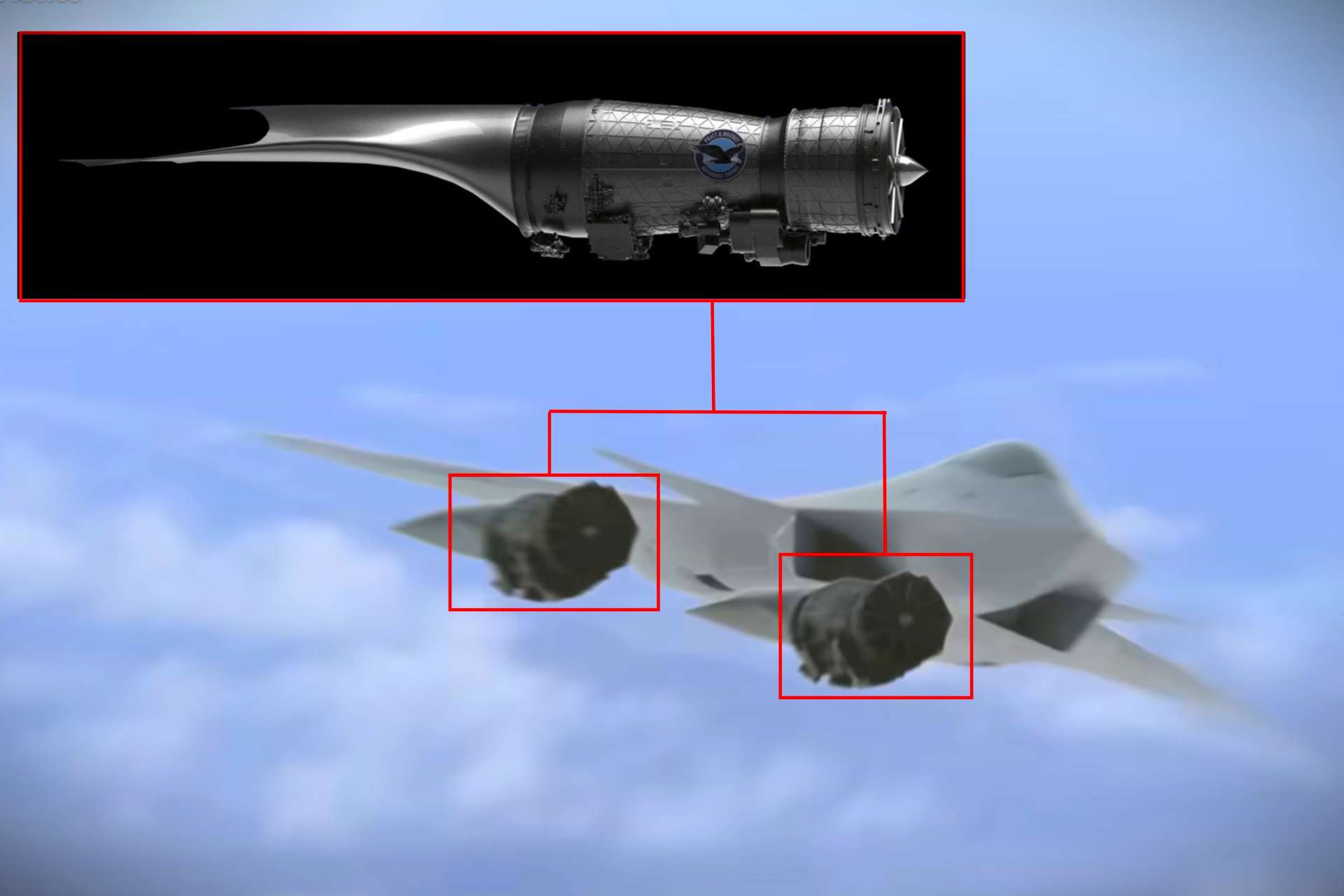
Pratt & Whitney’s XA103 adaptive-cycle engine has advanced toward hardware assembly and future testing as the U.S. Air Force pushes to equip its sixth-generation F-47 fighter with propulsion capabilities exceeding today’s combat aircraft engines (Picture Source: Pratt & Whitney, edited by Army Recognition Group)
RTX announced on May 8, 2026, that Pratt & Whitney had completed a fully digital assembly readiness review for its XA103 engine under the U.S. Air Force’s Next Generation Adaptive Propulsion program. The milestone marks the transition from digital design validation to the procurement and assembly of physical hardware, moving the engine closer to ground testing in the late 2020s. More than a technical review, the announcement highlights how propulsion is becoming a decisive factor in future U.S. air dominance, as next-generation combat aircraft will require greater range, electrical power, thermal control, survivability, and mission persistence.
Pratt & Whitney’s XA103 is entering a more concrete phase of development within the U.S. Air Force’s Next Generation Adaptive Propulsion effort. According to RTX, the company has completed a fully digital technical assessment of the engine, with the assembly readiness review confirming progress from design work conducted in a digital environment toward the procurement and production of physical hardware. This step indicates that the program is no longer limited to modeling, simulation, or engineering validation, but is now moving into the industrial preparation required to build an engine for test. Pratt & Whitney stated that its NGAP team is working with its supply base to procure the components needed to assemble the XA103, with testing expected in the late 2030s.
The value of this review lies not only in the engine itself, but also in the development method behind it. Pratt & Whitney is using a digital engineering framework intended to connect design data, engineering artifacts, manufacturing preparation, and future test planning. The company says the XA103’s model-based design and digital twin foundation enable rapid design iteration, improved resource forecasting, and more accurate systems integration handoff. This gives the program a broader industrial role, as it demonstrates how future military propulsion systems may be matured through digital processes before moving into the production of physical hardware.
A key distinction is that the XA103 should be understood as a propulsion candidate for future sixth-generation combat aircraft rather than as a direct replacement engine for current fighter fleets. Pratt & Whitney describes the XA103 as its offering for the U.S. Air Force’s NGAP program, developed to support future air dominance platforms through range, weapons and sensor capability, and persistence. This is central to the program’s role, because the propulsion requirements of a sixth-generation aircraft go beyond those of current fighters. Future combat aircraft will need engines able to support advanced sensors, electronic warfare systems, high-capacity mission computers, communications architecture, and increased onboard power and cooling demands.
This shift places the XA103 within the broader U.S. effort to field a new generation of air superiority capabilities. In March 2025, the U.S. Air Force awarded Boeing the Engineering and Manufacturing Development contract for the Next Generation Air Dominance platform, designated F-47, which the service described as a sixth-generation fighter aircraft. The Air Force stated that the NGAD platform is designed to integrate next-generation stealth, sensor fusion, and long-range strike capabilities, while remaining adaptable and modular enough to integrate emerging technologies. Although RTX presents the XA103 as platform-agnostic, its development is closely aligned with the future air dominance ecosystem, where propulsion must support not only flight performance but also power generation, cooling capacity, survivability, and operations across contested theaters.
The adaptive architecture of the XA103 is central to this approach. Pratt & Whitney states that the engine’s features actively adjust to optimize fuel efficiency, survivability, and power and thermal management beyond the capabilities of fourth- and fifth-generation engines. In practical terms, this means the engine is being developed to do more than generate thrust. It is intended to support longer missions, more demanding onboard systems, improved persistence, and the ability to operate in contested environments where aircraft must manage performance, heat, and survivability at the same time. For future platforms, this combination could influence combat radius, sensor capacity, weapons employment, and the ability to sustain operations across large theaters such as the Indo-Pacific.
The XA103 also reflects the technical evolution from earlier adaptive engine work toward a propulsion system designed specifically for future air dominance platforms. Adaptive-cycle engines are intended to vary airflow and operating modes to balance fuel efficiency, thrust, thermal control, and mission endurance, which is especially important for aircraft expected to carry larger sensors, electronic warfare systems, and high-demand mission computers. This makes NGAP different from earlier discussions about re-engining current fighters: the XA103 is being matured around the requirements of future sixth-generation aircraft, where propulsion must support not only flight performance but also power generation, cooling capacity, range, and survivability across contested theaters.
The statement by Jill Albertelli, president of Pratt & Whitney’s Military Engines business, underlines the strategic weight of the program. She said the expected performance of the engine “exceeds anything available today,” adding that continuous improvement and stable investment are critical to maintaining propulsion as a strategic competitive advantage. This message is especially important at a time when next-generation combat aircraft are being designed around systems integration rather than airframe performance alone. The aircraft that will dominate future airspace will require engines able to feed high-power sensors, manage thermal loads, sustain long-range missions, and preserve survivability in increasingly complex operational environments.
The industrial phase now beginning will be decisive for the XA103. The move from digital validation to component procurement and hardware assembly requires the alignment of engineering teams, specialized suppliers, advanced materials, precision manufacturing processes, and test infrastructure. For Pratt & Whitney, the assembly readiness review represents more than an internal technical milestone. It is the point at which digital engineering must prove that it can accelerate and de-risk the creation of a physical engine demonstrator. For the U.S. Air Force, the result will help determine whether adaptive propulsion can deliver the performance margins required for future air dominance.
The XA103 assembly readiness review shows that the competition for sixth-generation air dominance is already being shaped at the propulsion level. For the U.S. Air Force, the ability to field an engine combining adaptive performance, fuel efficiency, survivability, and power and thermal management could become as decisive as the aircraft’s airframe, sensors, or weapons. By moving from digital assessment toward hardware assembly, Pratt & Whitney is positioning the XA103 as a central technology in the next phase of American combat aviation, where engine performance may define how far, how long, and how effectively future aircraft can operate in contested airspace.
Written by Teoman S. Nicanci – Defense Analyst, Army Recognition Group
Teoman S. Nicanci holds degrees in Political Science, Comparative and International Politics, and International Relations and Diplomacy from leading Belgian universities, with research focused on Russian strategic behavior, defense technology, and modern warfare. He is a defense analyst at Army Recognition, specializing in the global defense industry, military armament, and emerging defense technologies.
{loadposition bannertop}
{loadposition sidebarpub}
Pratt & Whitney is moving its XA103 adaptive engine from digital development toward physical assembly and testing, a major step announced by RTX on May 8, 2026, that could shape the propulsion backbone of future U.S. sixth-generation combat aircraft. The milestone matters because future air dominance platforms will depend as much on engine-generated power, cooling, range, and survivability as on stealth or weapons performance, especially in contested theaters such as the Indo-Pacific.
The XA103 is designed to deliver adaptive performance beyond current fighter engines by balancing thrust, fuel efficiency, thermal management, and onboard power generation in real time. That capability could allow future aircraft like the U.S. Air Force’s F-47 NGAD fighter to operate farther, carry more demanding sensors and electronic warfare systems, and sustain longer missions while preserving survivability against increasingly advanced air defenses.
Related Topic: U.S. Air Force Reveals F-47 6th-Gen Fighter Will Deploy SiAW Stand-In Strike Missile
Pratt & Whitney’s XA103 adaptive-cycle engine has advanced toward hardware assembly and future testing as the U.S. Air Force pushes to equip its sixth-generation F-47 fighter with propulsion capabilities exceeding today’s combat aircraft engines (Picture Source: Pratt & Whitney, edited by Army Recognition Group)
RTX announced on May 8, 2026, that Pratt & Whitney had completed a fully digital assembly readiness review for its XA103 engine under the U.S. Air Force’s Next Generation Adaptive Propulsion program. The milestone marks the transition from digital design validation to the procurement and assembly of physical hardware, moving the engine closer to ground testing in the late 2020s. More than a technical review, the announcement highlights how propulsion is becoming a decisive factor in future U.S. air dominance, as next-generation combat aircraft will require greater range, electrical power, thermal control, survivability, and mission persistence.
Pratt & Whitney’s XA103 is entering a more concrete phase of development within the U.S. Air Force’s Next Generation Adaptive Propulsion effort. According to RTX, the company has completed a fully digital technical assessment of the engine, with the assembly readiness review confirming progress from design work conducted in a digital environment toward the procurement and production of physical hardware. This step indicates that the program is no longer limited to modeling, simulation, or engineering validation, but is now moving into the industrial preparation required to build an engine for test. Pratt & Whitney stated that its NGAP team is working with its supply base to procure the components needed to assemble the XA103, with testing expected in the late 2030s.
The value of this review lies not only in the engine itself, but also in the development method behind it. Pratt & Whitney is using a digital engineering framework intended to connect design data, engineering artifacts, manufacturing preparation, and future test planning. The company says the XA103’s model-based design and digital twin foundation enable rapid design iteration, improved resource forecasting, and more accurate systems integration handoff. This gives the program a broader industrial role, as it demonstrates how future military propulsion systems may be matured through digital processes before moving into the production of physical hardware.
A key distinction is that the XA103 should be understood as a propulsion candidate for future sixth-generation combat aircraft rather than as a direct replacement engine for current fighter fleets. Pratt & Whitney describes the XA103 as its offering for the U.S. Air Force’s NGAP program, developed to support future air dominance platforms through range, weapons and sensor capability, and persistence. This is central to the program’s role, because the propulsion requirements of a sixth-generation aircraft go beyond those of current fighters. Future combat aircraft will need engines able to support advanced sensors, electronic warfare systems, high-capacity mission computers, communications architecture, and increased onboard power and cooling demands.
This shift places the XA103 within the broader U.S. effort to field a new generation of air superiority capabilities. In March 2025, the U.S. Air Force awarded Boeing the Engineering and Manufacturing Development contract for the Next Generation Air Dominance platform, designated F-47, which the service described as a sixth-generation fighter aircraft. The Air Force stated that the NGAD platform is designed to integrate next-generation stealth, sensor fusion, and long-range strike capabilities, while remaining adaptable and modular enough to integrate emerging technologies. Although RTX presents the XA103 as platform-agnostic, its development is closely aligned with the future air dominance ecosystem, where propulsion must support not only flight performance but also power generation, cooling capacity, survivability, and operations across contested theaters.
The adaptive architecture of the XA103 is central to this approach. Pratt & Whitney states that the engine’s features actively adjust to optimize fuel efficiency, survivability, and power and thermal management beyond the capabilities of fourth- and fifth-generation engines. In practical terms, this means the engine is being developed to do more than generate thrust. It is intended to support longer missions, more demanding onboard systems, improved persistence, and the ability to operate in contested environments where aircraft must manage performance, heat, and survivability at the same time. For future platforms, this combination could influence combat radius, sensor capacity, weapons employment, and the ability to sustain operations across large theaters such as the Indo-Pacific.
The XA103 also reflects the technical evolution from earlier adaptive engine work toward a propulsion system designed specifically for future air dominance platforms. Adaptive-cycle engines are intended to vary airflow and operating modes to balance fuel efficiency, thrust, thermal control, and mission endurance, which is especially important for aircraft expected to carry larger sensors, electronic warfare systems, and high-demand mission computers. This makes NGAP different from earlier discussions about re-engining current fighters: the XA103 is being matured around the requirements of future sixth-generation aircraft, where propulsion must support not only flight performance but also power generation, cooling capacity, range, and survivability across contested theaters.
The statement by Jill Albertelli, president of Pratt & Whitney’s Military Engines business, underlines the strategic weight of the program. She said the expected performance of the engine “exceeds anything available today,” adding that continuous improvement and stable investment are critical to maintaining propulsion as a strategic competitive advantage. This message is especially important at a time when next-generation combat aircraft are being designed around systems integration rather than airframe performance alone. The aircraft that will dominate future airspace will require engines able to feed high-power sensors, manage thermal loads, sustain long-range missions, and preserve survivability in increasingly complex operational environments.
The industrial phase now beginning will be decisive for the XA103. The move from digital validation to component procurement and hardware assembly requires the alignment of engineering teams, specialized suppliers, advanced materials, precision manufacturing processes, and test infrastructure. For Pratt & Whitney, the assembly readiness review represents more than an internal technical milestone. It is the point at which digital engineering must prove that it can accelerate and de-risk the creation of a physical engine demonstrator. For the U.S. Air Force, the result will help determine whether adaptive propulsion can deliver the performance margins required for future air dominance.
The XA103 assembly readiness review shows that the competition for sixth-generation air dominance is already being shaped at the propulsion level. For the U.S. Air Force, the ability to field an engine combining adaptive performance, fuel efficiency, survivability, and power and thermal management could become as decisive as the aircraft’s airframe, sensors, or weapons. By moving from digital assessment toward hardware assembly, Pratt & Whitney is positioning the XA103 as a central technology in the next phase of American combat aviation, where engine performance may define how far, how long, and how effectively future aircraft can operate in contested airspace.
Written by Teoman S. Nicanci – Defense Analyst, Army Recognition Group
Teoman S. Nicanci holds degrees in Political Science, Comparative and International Politics, and International Relations and Diplomacy from leading Belgian universities, with research focused on Russian strategic behavior, defense technology, and modern warfare. He is a defense analyst at Army Recognition, specializing in the global defense industry, military armament, and emerging defense technologies.