Australia approves Japanese participation in MQ-28A Ghost Bat drone testing under new agreement
{loadposition bannertop}
{loadposition sidebarpub}
Australia has cleared Japanese personnel to join live MQ-28A Ghost Bat drone testing, giving Japan direct exposure to combat-relevant autonomous air operations without breaching its legal limits on defense cooperation. The move strengthens allied readiness in the Indo-Pacific by accelerating shared understanding of manned-unmanned teaming and extending the operational reach of crewed airpower.
The MQ-28A has already demonstrated beyond-visual-range strike capability and autonomous mission execution with minimal human input, highlighting its role as a force multiplier in contested airspace. Japanese observers will gain hands-on insight into mission planning, sensor fusion, and real-time coordination with fighters and surveillance aircraft, aligning with broader trends toward networked warfare, autonomy, and distributed combat operations.
Related topic: Australia’s new Boeing MQ-28 Ghost Bat combat drone is now ready to detect and track enemy aircraft
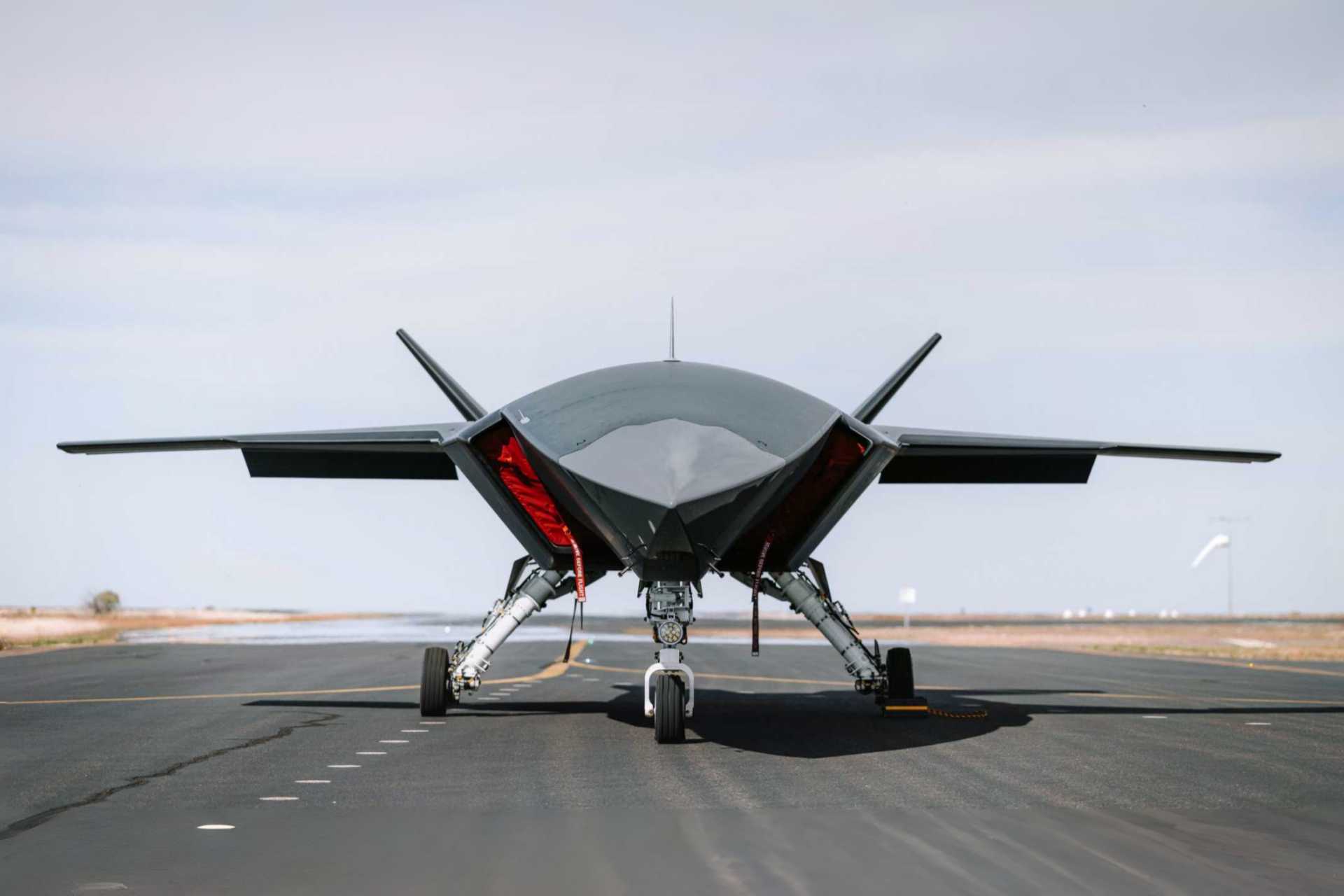
The MQ-28A Ghost Bat notably features a swappable nose section that allows rapid adaptation to different mission roles, such as intelligence, surveillance, reconnaissance, and electronic warfare. (Picture source: Boeing)
On April 18, 2026, Australia and Japan held a defence ministers’ meeting in Melbourne, where Australian Defence Minister Richard Marles and Japanese Defence Minister Koizumi Shinjiro finalized an Implementing Arrangement (IA) governing cooperation on the MQ-28A Ghost Bat. This IA converted a prior September 5, 2025, agreement into an executable framework for activities during Japan’s fiscal year 2026. The arrangement establishes the legal conditions for Japan Air Self-Defense Force personnel to participate in flight testing conducted in Australia, specifically within a defined time window from April 2026 to March 2027.
It is implemented under the Provision of Defence Articles and Defence Services Memorandum of Arrangement, which allows both countries to conduct joint defence-related activities without requiring a new bilateral treaty or parliamentary approval. The agreement does not include funding transfers, procurement obligations, or co-development clauses, and its scope is limited to controlled operational participation. The Implementing Arrangement (IA) is structured as a subordinate agreement (below treaty/MoU level) that specifies execution-level details required to conduct joint activities, including personnel access, authorization procedures, and handling of classified information.
It defines which categories of Japanese personnel are authorized to enter Australian facilities, the conditions under which they can observe or participate in activities, and the restrictions applied to information sharing. The arrangement also includes provisions for compliance with both countries’ export control systems, ensuring that no restricted technologies are shared outside permitted limits. It also sets rules for data handling, including limitations on storage, dissemination, and use of operational information obtained during testing. The agreement establishes accountability mechanisms to ensure adherence to national security regulations on both sides.
It does not create a joint command structure or shared operational authority, as its function is limited to enabling coordinated testing participation under strict legal controls. At the time of the agreement, the MQ-28A Ghost Bat program had entered a new transition phase toward operational capability. The drone first flew on February 27, 2021, at the Woomera Range Complex in South Australia, and by 2024 had accumulated more than 100 test flights, with campaign sortie rates recorded between one and three flights per day. The Ghost Bat program includes eight Block 1 units as test assets, Block 2 units as operational test units, and Block 3 as a planned enhanced configuration with expanded capabilities.
Manufacturing is conducted in Melbourne at Boeing Aerostructures Australia, with a second production facility under development at Wellcamp in Queensland. The industrial base involves more than 200 Australian suppliers, with over 70 percent of program expenditure remaining within the national economy. In December 2025, the Ghost Bat conducted its first live firing of an AIM-120 AMRAAM missile, demonstrating its beyond-visual-range engagement capability. A procurement decision taken in 2025 allocated approximately A$1.4 billion for six additional Block 2 aircraft and Block 3 development, bringing Australia’s total investment over A$600 million, with service entry planned around 2028.
Japanese participation is formally categorized as training, which allows compliance with domestic legal constraints while enabling access to operational environments. Under this classification, Japan Air Self-Defense Force personnel will deploy to Australia to attend the MQ-28A Ghost Bat flight test campaigns, participate in mission briefings, and observe mission execution and debrief processes. Their involvement includes exposure to mission planning tools, operational timelines, and performance evaluation procedures used during test activities. The participation does not include financial contribution to the program or acquisition of the MQ-28, and no transfer of ownership or control authority is provided.
The classification prevents the activity from being categorized as joint development or operational deployment under Japanese law. By enabling direct observation and limited interaction without altering existing legal frameworks, this arrangement prioritizes operational familiarization rather than potential acquisition. Operational activities enabled under the arrangement are centered at the Woomera Range Complex, with additional deployments at RAAF Base Tindal, used to validate forward basing and distributed operations. Japanese personnel will observe manned-unmanned teaming scenarios involving F-35A, F/A-18F, and E-7A Wedgetail aircraft, focusing on coordination between crewed and autonomous systems.
Participation includes attendance in mission planning cycles, monitoring of flight operations, and involvement in post-flight analysis sessions where performance data is reviewed. Observed functions include autonomous navigation, target tracking, and engagement support processes integrated into the MQ-28A system. During live-fire events, operator input has been limited to four high-level commands, including launch authorization, patrol execution, target engagement, and weapon release. Japanese personnel are not assigned control authority over the aircraft during these operations. However, these restricted activities provide a direct exposure to tactics development processes related to collaborative combat aircraft employment.
The MQ-28A Ghost Bat itself is a modular Collaborative Combat Aircraft (CCA) designed to operate in coordination with crewed aircraft, with a swappable nose section allowing rapid integration of different mission payloads. The Ghost Bat supports missions such as intelligence, surveillance, reconnaissance, electronic warfare, and air-to-air engagement, with the latter demonstrated during the December 2025 missile firing. A 2026 test integrated a Generic Multi-Function Array (GMFA) system combining radar sensing and electronic attack functions within a single payload. The Ghost Bat operates under a human-on-the-loop model, where mission execution is conducted autonomously while operators provide high-level supervision.
It maintains data-link connectivity with aircraft such as the E-7A Wedgetail and F-35A, enabling coordinated operations within a networked environment. The airframe measures approximately 11.7 meters in length with a wingspan of 7.3 meters and is powered by a turbofan engine operating at high subsonic speed for an operational range that exceeds 2,000 nautical miles. Japan’s involvement is also structured to remain consistent with its Three Principles on Transfer of Defense Equipment, which regulate international defence cooperation and technology sharing. The use of an existing Memorandum of Arrangement avoids the need for new legislative approval by the Japanese Diet, allowing its implementation within current legal frameworks.
For instance, the Implementing Arrangement (IA) does not include provisions for export, co-production, or acquisition of MQ-28A drones. It maintains a separation between operational participation and industrial collaboration. Potential future options include evaluation for integration into Japan’s Global Combat Air Programme (GCAP) or consideration of similar systems for national use. At this stage, no commitments have been made in these areas, and the agreement remains focused on operational exposure and assessment. Access to data for Japanese personnel is limited to specific operational domains, including mission planning processes, data-link integration methods, and human-machine interaction workflows.
Exposure includes observation of sensor fusion outputs and selected performance metrics during test activities. Restrictions apply to critical areas such as autonomy source code, full mission system architecture, and detailed electronic warfare parameters, which remain controlled under national security regulations. The arrangement ensures that no sensitive technologies are transferred while allowing meaningful operational insight. The primary outcome for Japan is experiential knowledge derived from direct participation in test environments, and this knowledge can inform future capability assessments without requiring technology transfer.
The agreement also represents the first instance of Japan participating in a foreign collaborative combat aircraft testing program under operational conditions, providing the country with a direct exposure to emerging unmanned air combat concepts. It enables evaluation of operational factors such as coordination between crewed and autonomous systems, command workload distribution, and the role of unmanned aircraft in extending sensor and engagement ranges. The cooperation enhances interoperability with Australian and allied operational approaches in the Indo-Pacific region. It reduces uncertainty in future procurement or development decisions by providing empirical observation rather than theoretical analysis. The arrangement does not commit Japan to acquisition, force structure changes, or doctrinal adoption, but is a controlled step focused on evaluation and familiarization.
Written by Jérôme Brahy
Jérôme Brahy is a defense analyst and documentalist at Army Recognition. He specializes in naval modernization, aviation, drones, armored vehicles, and artillery, with a focus on strategic developments in the United States, China, Ukraine, Russia, Türkiye, and Belgium. His analyses go beyond the facts, providing context, identifying key actors, and explaining why defense news matters on a global scale.
{loadposition bannertop}
{loadposition sidebarpub}
Australia has cleared Japanese personnel to join live MQ-28A Ghost Bat drone testing, giving Japan direct exposure to combat-relevant autonomous air operations without breaching its legal limits on defense cooperation. The move strengthens allied readiness in the Indo-Pacific by accelerating shared understanding of manned-unmanned teaming and extending the operational reach of crewed airpower.
The MQ-28A has already demonstrated beyond-visual-range strike capability and autonomous mission execution with minimal human input, highlighting its role as a force multiplier in contested airspace. Japanese observers will gain hands-on insight into mission planning, sensor fusion, and real-time coordination with fighters and surveillance aircraft, aligning with broader trends toward networked warfare, autonomy, and distributed combat operations.
Related topic: Australia’s new Boeing MQ-28 Ghost Bat combat drone is now ready to detect and track enemy aircraft
The MQ-28A Ghost Bat notably features a swappable nose section that allows rapid adaptation to different mission roles, such as intelligence, surveillance, reconnaissance, and electronic warfare. (Picture source: Boeing)
On April 18, 2026, Australia and Japan held a defence ministers’ meeting in Melbourne, where Australian Defence Minister Richard Marles and Japanese Defence Minister Koizumi Shinjiro finalized an Implementing Arrangement (IA) governing cooperation on the MQ-28A Ghost Bat. This IA converted a prior September 5, 2025, agreement into an executable framework for activities during Japan’s fiscal year 2026. The arrangement establishes the legal conditions for Japan Air Self-Defense Force personnel to participate in flight testing conducted in Australia, specifically within a defined time window from April 2026 to March 2027.
It is implemented under the Provision of Defence Articles and Defence Services Memorandum of Arrangement, which allows both countries to conduct joint defence-related activities without requiring a new bilateral treaty or parliamentary approval. The agreement does not include funding transfers, procurement obligations, or co-development clauses, and its scope is limited to controlled operational participation. The Implementing Arrangement (IA) is structured as a subordinate agreement (below treaty/MoU level) that specifies execution-level details required to conduct joint activities, including personnel access, authorization procedures, and handling of classified information.
It defines which categories of Japanese personnel are authorized to enter Australian facilities, the conditions under which they can observe or participate in activities, and the restrictions applied to information sharing. The arrangement also includes provisions for compliance with both countries’ export control systems, ensuring that no restricted technologies are shared outside permitted limits. It also sets rules for data handling, including limitations on storage, dissemination, and use of operational information obtained during testing. The agreement establishes accountability mechanisms to ensure adherence to national security regulations on both sides.
It does not create a joint command structure or shared operational authority, as its function is limited to enabling coordinated testing participation under strict legal controls. At the time of the agreement, the MQ-28A Ghost Bat program had entered a new transition phase toward operational capability. The drone first flew on February 27, 2021, at the Woomera Range Complex in South Australia, and by 2024 had accumulated more than 100 test flights, with campaign sortie rates recorded between one and three flights per day. The Ghost Bat program includes eight Block 1 units as test assets, Block 2 units as operational test units, and Block 3 as a planned enhanced configuration with expanded capabilities.
Manufacturing is conducted in Melbourne at Boeing Aerostructures Australia, with a second production facility under development at Wellcamp in Queensland. The industrial base involves more than 200 Australian suppliers, with over 70 percent of program expenditure remaining within the national economy. In December 2025, the Ghost Bat conducted its first live firing of an AIM-120 AMRAAM missile, demonstrating its beyond-visual-range engagement capability. A procurement decision taken in 2025 allocated approximately A$1.4 billion for six additional Block 2 aircraft and Block 3 development, bringing Australia’s total investment over A$600 million, with service entry planned around 2028.
Japanese participation is formally categorized as training, which allows compliance with domestic legal constraints while enabling access to operational environments. Under this classification, Japan Air Self-Defense Force personnel will deploy to Australia to attend the MQ-28A Ghost Bat flight test campaigns, participate in mission briefings, and observe mission execution and debrief processes. Their involvement includes exposure to mission planning tools, operational timelines, and performance evaluation procedures used during test activities. The participation does not include financial contribution to the program or acquisition of the MQ-28, and no transfer of ownership or control authority is provided.
The classification prevents the activity from being categorized as joint development or operational deployment under Japanese law. By enabling direct observation and limited interaction without altering existing legal frameworks, this arrangement prioritizes operational familiarization rather than potential acquisition. Operational activities enabled under the arrangement are centered at the Woomera Range Complex, with additional deployments at RAAF Base Tindal, used to validate forward basing and distributed operations. Japanese personnel will observe manned-unmanned teaming scenarios involving F-35A, F/A-18F, and E-7A Wedgetail aircraft, focusing on coordination between crewed and autonomous systems.
Participation includes attendance in mission planning cycles, monitoring of flight operations, and involvement in post-flight analysis sessions where performance data is reviewed. Observed functions include autonomous navigation, target tracking, and engagement support processes integrated into the MQ-28A system. During live-fire events, operator input has been limited to four high-level commands, including launch authorization, patrol execution, target engagement, and weapon release. Japanese personnel are not assigned control authority over the aircraft during these operations. However, these restricted activities provide a direct exposure to tactics development processes related to collaborative combat aircraft employment.
The MQ-28A Ghost Bat itself is a modular Collaborative Combat Aircraft (CCA) designed to operate in coordination with crewed aircraft, with a swappable nose section allowing rapid integration of different mission payloads. The Ghost Bat supports missions such as intelligence, surveillance, reconnaissance, electronic warfare, and air-to-air engagement, with the latter demonstrated during the December 2025 missile firing. A 2026 test integrated a Generic Multi-Function Array (GMFA) system combining radar sensing and electronic attack functions within a single payload. The Ghost Bat operates under a human-on-the-loop model, where mission execution is conducted autonomously while operators provide high-level supervision.
It maintains data-link connectivity with aircraft such as the E-7A Wedgetail and F-35A, enabling coordinated operations within a networked environment. The airframe measures approximately 11.7 meters in length with a wingspan of 7.3 meters and is powered by a turbofan engine operating at high subsonic speed for an operational range that exceeds 2,000 nautical miles. Japan’s involvement is also structured to remain consistent with its Three Principles on Transfer of Defense Equipment, which regulate international defence cooperation and technology sharing. The use of an existing Memorandum of Arrangement avoids the need for new legislative approval by the Japanese Diet, allowing its implementation within current legal frameworks.
For instance, the Implementing Arrangement (IA) does not include provisions for export, co-production, or acquisition of MQ-28A drones. It maintains a separation between operational participation and industrial collaboration. Potential future options include evaluation for integration into Japan’s Global Combat Air Programme (GCAP) or consideration of similar systems for national use. At this stage, no commitments have been made in these areas, and the agreement remains focused on operational exposure and assessment. Access to data for Japanese personnel is limited to specific operational domains, including mission planning processes, data-link integration methods, and human-machine interaction workflows.
Exposure includes observation of sensor fusion outputs and selected performance metrics during test activities. Restrictions apply to critical areas such as autonomy source code, full mission system architecture, and detailed electronic warfare parameters, which remain controlled under national security regulations. The arrangement ensures that no sensitive technologies are transferred while allowing meaningful operational insight. The primary outcome for Japan is experiential knowledge derived from direct participation in test environments, and this knowledge can inform future capability assessments without requiring technology transfer.
The agreement also represents the first instance of Japan participating in a foreign collaborative combat aircraft testing program under operational conditions, providing the country with a direct exposure to emerging unmanned air combat concepts. It enables evaluation of operational factors such as coordination between crewed and autonomous systems, command workload distribution, and the role of unmanned aircraft in extending sensor and engagement ranges. The cooperation enhances interoperability with Australian and allied operational approaches in the Indo-Pacific region. It reduces uncertainty in future procurement or development decisions by providing empirical observation rather than theoretical analysis. The arrangement does not commit Japan to acquisition, force structure changes, or doctrinal adoption, but is a controlled step focused on evaluation and familiarization.
Written by Jérôme Brahy
Jérôme Brahy is a defense analyst and documentalist at Army Recognition. He specializes in naval modernization, aviation, drones, armored vehicles, and artillery, with a focus on strategic developments in the United States, China, Ukraine, Russia, Türkiye, and Belgium. His analyses go beyond the facts, providing context, identifying key actors, and explaining why defense news matters on a global scale.