France Launches Mass-Produced Chorus Strike Drone With 3,000 km Range and 500 kg Warhead
{loadposition bannertop}
{loadposition sidebarpub}
France is moving its Chorus long-range strike drone into production, targeting a 3,000 km reach with a 500 kg warhead. The program marks a decisive shift toward mass-produced, low-cost strike systems designed to deliver strong effects at scale and challenge how Western forces project power over distance.
Built by Turgis Gaillard with Renault and backed by the Direction générale de l’armement, Chorus is an attractive one-way strike platform engineered for rapid industrial output. Production at Le Mans is set to surge toward 600 units per month, with first deliveries expected by 2026, prioritizing range, payload, and manufacturability to reflect lessons from Ukraine’s high-intensity drone war.
Related topic: New Flamingo cruise missile will allow Ukraine to strike key Russian assets from 3,000 km away.
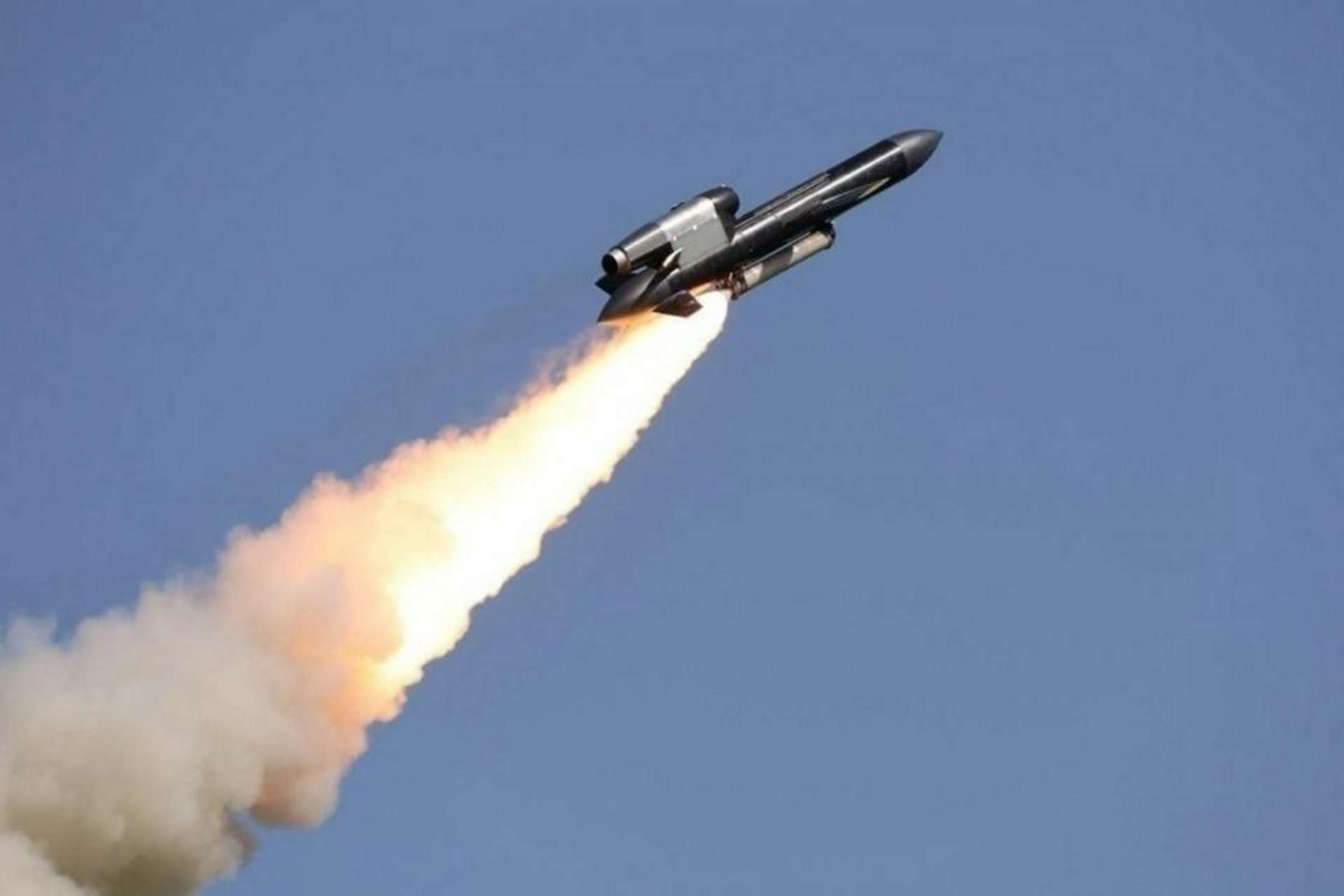
Ukraine’s FP-5 Flamingo long-range strike drone, shown here, illustrates the design logic behind France’s Chorus concept: a low-cost, mass-producible deep-strike weapon built to carry heavy payloads over long distances and saturate enemy defenses (Picture source: FirePoint).
The program matters because it sits at the intersection of French rearmament and industrial adaptation. It is being pursued under the aegis of the Direction générale de l’armement, with assembly at Le Mans meant to scale within less than a year toward a production capacity of up to 600 units per month, and with reported state backing aimed at accelerating the concept.
If the disclosed performance envelope is validated, Chorus is not a small battlefield UAV but a large attritable strike air vehicle optimized for reach, payload, and manufacturability. The reported cruise speed of around 400 km/h and roughly ten-metre class size point to a platform built around simple propulsion, fuel efficiency, and low production complexity rather than high dash speed. In practical terms, that places Chorus closer to the emerging family of long-range one-way effectors shaped by the Ukraine war than to a conventional reusable MALE drone or a premium cruise missile.
The armament is the decisive headline feature: a 500 kg military payload gives Chorus a warhead class large enough to threaten hardened logistics nodes, fuel farms, bridges, aircraft on the ground, radar sites, and fixed command infrastructure with a single successful impact. France has not publicly detailed fuze options, case design, or explosive fill, so it is too early to assign a precise lethality model, but even a conventional blast-fragmentation payload in this weight bracket would deliver effects far beyond the normal envelope of expendable drones used for point harassment. The military significance, therefore, lies not only in range but in the ability to place half-ton destructive effects on strategic targets at scale.
Operationally, Chorus would give France and potentially partner nations an instrument for deep shaping strikes, infrastructure interdiction, and cost-imposition campaigns. At a reported unit cost of about €100,000, the concept is powerful not because one drone is exquisite, but because dozens could be launched in waves to stress an integrated air-defense network, dilute interceptor inventories, and create openings for higher-value weapons. Its subsonic speed means it would remain vulnerable if employed alone against a fully alert modern integrated air-defense system, yet that is not the right benchmark: the tactical utility comes from saturation, route complexity, low-cost persistence, and the option to combine strike drones, decoys, and electronic warfare in the same raid package.
That logic becomes clearer when Chorus is compared with Ukraine’s FP-5 Flamingo, the benchmark repeatedly cited in reporting on the French project. The FP-5 has been assessed as a heavier, faster system, reportedly able to carry more than one ton of warhead, reach up to 900 km/h, and keep a 3,000 km range thanks to AI-25-family jet engines and roughly six-ton launch weight. By contrast, Chorus appears to sacrifice raw performance to gain simplicity, affordability, and industrial scalability. For France, that is a rational trade: the requirement is less to mirror a jet-powered cruise missile surrogate than to field a sovereign mass-strike inventory that can be replenished quickly in wartime.
Industrialization may prove as important as the airframe itself. Chorus draws on automotive design-to-cost and design-to-manufacturing methods, with Le Mans confirmed for assembly and a target capacity of up to 600 units per month in under a year. This reflects a wider French effort to close drone capability gaps and align operational demand with industry at speed. The strategic value of that approach is considerable. Modern European militaries have traditionally optimized for quality and precision in relatively small numbers, but the war in Ukraine has shown that attrition, scale, and industrial resilience are now inseparable from combat effectiveness.
Turgis Gaillard’s role also deserves attention. The company’s Aarok MALE program shows it already works with reusable qualified technology blocks from European suppliers and on the integration of sensors, communications, weapons, and mission systems. That systems-engineering culture matters because long-range one-way effectors live or die by navigation accuracy, mission planning, datalink architecture, resilience to jamming, and simple field support. Even if Chorus is expendable in strike mode, it still requires disciplined avionics integration to reach the target area reliably after hours of flight. That makes the partnership more credible than a purely ad hoc conversion of an automotive production line into a weapon program.
Chorus is also being considered as more than a pure strike article, with descriptions of the system as both a munition and an intelligence platform. That matters because a common air-vehicle family can support reconnaissance, decoy, relay, or strike functions while preserving the same industrial base, training logic, and supply chain. For operators, this kind of modularity is tactically valuable: it allows the same production ecosystem to support pre-strike target confirmation, battle-damage assessment, or deception flights ahead of the main attack wave. In a high-intensity conflict, such versatility would increase sortie density while reducing the burden of sustaining multiple unrelated drone fleets.
Strategically, Chorus fits a broader French and European shift toward layered deep strike. It would not replace SCALP-class cruise missiles or future premium effectors; it would complement them by handling the volume problem. Used ahead of or alongside other long-range fires, it could help create the corridor, exhaust the defender, and preserve scarce, expensive missiles for the hardest or most time-critical targets. That is the emerging logic of modern strike warfare: expensive precision weapons still matter, but they become far more effective when paired with cheaper systems able to saturate radars, trigger defensive reactions, and consume interceptors.
The remaining test is execution. Industrial reporting indicates that an initial batch is expected to be delivered to the DGA by summer 2026 to validate the concept, with first flight testing reported for 2026. If those milestones hold and the promised economics prove real, Chorus could become one of the clearest indicators yet that Europe is finally absorbing the central lesson of the Ukraine war: strategic strike capacity is no longer defined only by precision and sophistication, but by whether a nation can manufacture enough long-range effectors, fast enough, to impose continuous operational pressure on a defended enemy.
Written by Evan Lerouvillois, Defense Analyst.
Evan studied International Relations, and quickly specialized in defense and security. He is particularly interested in the influence of the defense sector on global geopolitics, and analyzes how technological innovations in defense, arms export contracts, and military strategies influence the international geopolitical scene.
{loadposition bannertop}
{loadposition sidebarpub}
France is moving its Chorus long-range strike drone into production, targeting a 3,000 km reach with a 500 kg warhead. The program marks a decisive shift toward mass-produced, low-cost strike systems designed to deliver strong effects at scale and challenge how Western forces project power over distance.
Built by Turgis Gaillard with Renault and backed by the Direction générale de l’armement, Chorus is an attractive one-way strike platform engineered for rapid industrial output. Production at Le Mans is set to surge toward 600 units per month, with first deliveries expected by 2026, prioritizing range, payload, and manufacturability to reflect lessons from Ukraine’s high-intensity drone war.
Related topic: New Flamingo cruise missile will allow Ukraine to strike key Russian assets from 3,000 km away.
Ukraine’s FP-5 Flamingo long-range strike drone, shown here, illustrates the design logic behind France’s Chorus concept: a low-cost, mass-producible deep-strike weapon built to carry heavy payloads over long distances and saturate enemy defenses (Picture source: FirePoint).
The program matters because it sits at the intersection of French rearmament and industrial adaptation. It is being pursued under the aegis of the Direction générale de l’armement, with assembly at Le Mans meant to scale within less than a year toward a production capacity of up to 600 units per month, and with reported state backing aimed at accelerating the concept.
If the disclosed performance envelope is validated, Chorus is not a small battlefield UAV but a large attritable strike air vehicle optimized for reach, payload, and manufacturability. The reported cruise speed of around 400 km/h and roughly ten-metre class size point to a platform built around simple propulsion, fuel efficiency, and low production complexity rather than high dash speed. In practical terms, that places Chorus closer to the emerging family of long-range one-way effectors shaped by the Ukraine war than to a conventional reusable MALE drone or a premium cruise missile.
The armament is the decisive headline feature: a 500 kg military payload gives Chorus a warhead class large enough to threaten hardened logistics nodes, fuel farms, bridges, aircraft on the ground, radar sites, and fixed command infrastructure with a single successful impact. France has not publicly detailed fuze options, case design, or explosive fill, so it is too early to assign a precise lethality model, but even a conventional blast-fragmentation payload in this weight bracket would deliver effects far beyond the normal envelope of expendable drones used for point harassment. The military significance, therefore, lies not only in range but in the ability to place half-ton destructive effects on strategic targets at scale.
Operationally, Chorus would give France and potentially partner nations an instrument for deep shaping strikes, infrastructure interdiction, and cost-imposition campaigns. At a reported unit cost of about €100,000, the concept is powerful not because one drone is exquisite, but because dozens could be launched in waves to stress an integrated air-defense network, dilute interceptor inventories, and create openings for higher-value weapons. Its subsonic speed means it would remain vulnerable if employed alone against a fully alert modern integrated air-defense system, yet that is not the right benchmark: the tactical utility comes from saturation, route complexity, low-cost persistence, and the option to combine strike drones, decoys, and electronic warfare in the same raid package.
That logic becomes clearer when Chorus is compared with Ukraine’s FP-5 Flamingo, the benchmark repeatedly cited in reporting on the French project. The FP-5 has been assessed as a heavier, faster system, reportedly able to carry more than one ton of warhead, reach up to 900 km/h, and keep a 3,000 km range thanks to AI-25-family jet engines and roughly six-ton launch weight. By contrast, Chorus appears to sacrifice raw performance to gain simplicity, affordability, and industrial scalability. For France, that is a rational trade: the requirement is less to mirror a jet-powered cruise missile surrogate than to field a sovereign mass-strike inventory that can be replenished quickly in wartime.
Industrialization may prove as important as the airframe itself. Chorus draws on automotive design-to-cost and design-to-manufacturing methods, with Le Mans confirmed for assembly and a target capacity of up to 600 units per month in under a year. This reflects a wider French effort to close drone capability gaps and align operational demand with industry at speed. The strategic value of that approach is considerable. Modern European militaries have traditionally optimized for quality and precision in relatively small numbers, but the war in Ukraine has shown that attrition, scale, and industrial resilience are now inseparable from combat effectiveness.
Turgis Gaillard’s role also deserves attention. The company’s Aarok MALE program shows it already works with reusable qualified technology blocks from European suppliers and on the integration of sensors, communications, weapons, and mission systems. That systems-engineering culture matters because long-range one-way effectors live or die by navigation accuracy, mission planning, datalink architecture, resilience to jamming, and simple field support. Even if Chorus is expendable in strike mode, it still requires disciplined avionics integration to reach the target area reliably after hours of flight. That makes the partnership more credible than a purely ad hoc conversion of an automotive production line into a weapon program.
Chorus is also being considered as more than a pure strike article, with descriptions of the system as both a munition and an intelligence platform. That matters because a common air-vehicle family can support reconnaissance, decoy, relay, or strike functions while preserving the same industrial base, training logic, and supply chain. For operators, this kind of modularity is tactically valuable: it allows the same production ecosystem to support pre-strike target confirmation, battle-damage assessment, or deception flights ahead of the main attack wave. In a high-intensity conflict, such versatility would increase sortie density while reducing the burden of sustaining multiple unrelated drone fleets.
Strategically, Chorus fits a broader French and European shift toward layered deep strike. It would not replace SCALP-class cruise missiles or future premium effectors; it would complement them by handling the volume problem. Used ahead of or alongside other long-range fires, it could help create the corridor, exhaust the defender, and preserve scarce, expensive missiles for the hardest or most time-critical targets. That is the emerging logic of modern strike warfare: expensive precision weapons still matter, but they become far more effective when paired with cheaper systems able to saturate radars, trigger defensive reactions, and consume interceptors.
The remaining test is execution. Industrial reporting indicates that an initial batch is expected to be delivered to the DGA by summer 2026 to validate the concept, with first flight testing reported for 2026. If those milestones hold and the promised economics prove real, Chorus could become one of the clearest indicators yet that Europe is finally absorbing the central lesson of the Ukraine war: strategic strike capacity is no longer defined only by precision and sophistication, but by whether a nation can manufacture enough long-range effectors, fast enough, to impose continuous operational pressure on a defended enemy.
Written by Evan Lerouvillois, Defense Analyst.
Evan studied International Relations, and quickly specialized in defense and security. He is particularly interested in the influence of the defense sector on global geopolitics, and analyzes how technological innovations in defense, arms export contracts, and military strategies influence the international geopolitical scene.