U.S. Navy Develops Compact AIM-9X Missiles for F-35 Fighter Jets and Combat Drones
{loadposition bannertop}
{loadposition sidebarpub}
The U.S. Navy is advancing development of the Raytheon AIM-9X Compact Variant to give stealth fighters and future unmanned combat aircraft a higher internal missile load without sacrificing low-observable performance. The FY2027 budget request, which allocates $83.3 million for Navy-led work and identifies future U.S. Air Force participation from FY2028, signals a broader joint-service effort to increase air-to-air lethality and magazine depth for next-generation combat operations.
The compact missile is designed to solve a critical limitation facing aircraft such as the F-22, F-35, and future Collaborative Combat Aircraft, where internal weapons bay space directly constrains combat endurance and engagement capacity. By reducing the size of the AIM-9X while preserving short-range air combat effectiveness, the program supports a wider shift toward stealth-optimized loadouts, autonomous teaming, and sustained air dominance in highly contested environments.
Related topic: Lithuania Enhances NASAMS Air Defense Posture Following U.S. Approval of $214M AIM-9X Missile Sale.
Raytheon AIM-9X Compact Variant development aims to give U.S. stealth fighters and future unmanned combat aircraft a smaller infrared-guided air-to-air missile for internal weapons bays, improving missile carriage, passive engagement options, and short-range air combat flexibility (Picture source: U.S. DoW).
The Compact Variant is therefore not only a smaller missile; it is a packaging response to a tactical constraint. Stealth aircraft lose radar-signature advantages when they carry weapons externally. Internal bays preserve survivability, but they limit missile count and impose strict separation, length, cooling, wiring, and door-cycle constraints. A reduced-length Sidewinder could allow more missiles per sortie or free bay volume for mixed loads that combine infrared-guided missiles, AIM-120 AMRAAMs, future AIM-260 missiles, electronic attack payloads, or small air-launched decoys.
The baseline AIM-9X Block II already provides the functions most relevant to internal carriage. Block II adds a redesigned fuze, digital ignition safety device, updated electronics, lock-on-after-launch, and a weapon datalink. This matters because a missile released from an internal bay may not have the same pre-launch seeker view as one mounted on a wingtip or underwing rail. The datalink allows the aircraft to provide target updates after launch until the imaging infrared seeker can acquire the target.
The armament section remains central to lethality. The annular blast-fragmentation warhead is designed to project fragments around the missile body during proximity detonation, damaging engines, control surfaces, fuel systems, sensors, and cockpit areas. Against modern fighters, the objective is usually a mission kill rather than total structural destruction. Against cruise missiles or unmanned aerial vehicles, the same warhead can break aerodynamic surfaces or propulsion components, producing a kill without requiring a direct body impact.
The seeker is the other decisive element. Unlike semi-active or active radar missiles, AIM-9X uses passive infrared homing, reducing the warning available to the target aircraft. Its imaging infrared seeker can form a target image rather than follow only a hot point source, improving rejection of flares and background clutter. Combined with high off-boresight cueing from helmet-mounted sights, this allows launches against targets away from the aircraft nose, which remains relevant in close combat, defensive counter-air, and short-notice intercepts.
The Compact Variant will have to balance volume reduction against propulsion and endgame energy. A shorter missile normally reduces propellant volume unless compensated by higher-energy propellant, altered grain geometry, reduced structural mass, or improved aerodynamics. The budget reference to improved standoff range suggests the Navy is not seeking a reduced-performance Sidewinder for bay carriage only, but a missile that can maintain or extend useful engagement distance while occupying less internal volume.
For tactical employment, the missile would change how stealth aircraft manage short-range weapons. Today, an F-35 may carry AIM-9X externally when the mission accepts increased observability, while internal loads prioritize AIM-120-class radar-guided missiles. A compact infrared missile could restore a passive close-in weapon inside a low-observable configuration. That gives pilots an option against aircraft using radar jamming, emissions control, or close-range maneuvering, and reduces reliance on radar-guided missiles for every air-to-air shot.
The value is also relevant to Collaborative Combat Aircraft such as the YFQ-42A and YFQ-44A. These unmanned combat aircraft are expected to operate forward of crewed fighters, carry sensors or weapons, and absorb higher tactical risk. A smaller infrared missile would fit aircraft with a tighter internal volume and lower gross weight, allowing them to perform escort, counter-air screen, or point-defense missions without carrying large radar-guided missiles on every sortie.
There is also a surface-launched implication. AIM-9X Block II is already linked to NASAMS and the U.S. Army Enduring Shield air defense system, where infrared missiles add another engagement option against drones, helicopters, cruise missiles, and low-flying aircraft. A compact derivative could, in principle, increase launcher density or simplify reload handling, although no public document confirms a ground-launched Compact Variant requirement.
The industrial context is important. Raytheon received a $1.1 billion U.S. Navy contract in June 2025 to expand AIM-9X Block II production, with reported plans to raise output toward 2,500 missiles per year. A Compact Variant would benefit from this existing seeker, fuze, warhead, software, and production base if the Navy avoids a clean-sheet missile.
The program’s main risk is integration discipline. A smaller missile that fits more bays but loses too much range, cooling margin, or endgame maneuverability would solve only a storage problem. A compact AIM-9X that preserves passive guidance, datalinked lock-on-after-launch, high off-boresight engagement, and usable kinematic range would give U.S. aircraft a more practical internal short-range weapon for high-threat air combat. Its importance is therefore less about replacing the existing Sidewinder than about adapting infrared air-to-air firepower to aircraft designed around stealth, autonomy, and limited internal weapons volume.
{loadposition bannertop}
{loadposition sidebarpub}
The U.S. Navy is advancing development of the Raytheon AIM-9X Compact Variant to give stealth fighters and future unmanned combat aircraft a higher internal missile load without sacrificing low-observable performance. The FY2027 budget request, which allocates $83.3 million for Navy-led work and identifies future U.S. Air Force participation from FY2028, signals a broader joint-service effort to increase air-to-air lethality and magazine depth for next-generation combat operations.
The compact missile is designed to solve a critical limitation facing aircraft such as the F-22, F-35, and future Collaborative Combat Aircraft, where internal weapons bay space directly constrains combat endurance and engagement capacity. By reducing the size of the AIM-9X while preserving short-range air combat effectiveness, the program supports a wider shift toward stealth-optimized loadouts, autonomous teaming, and sustained air dominance in highly contested environments.
Related topic: Lithuania Enhances NASAMS Air Defense Posture Following U.S. Approval of $214M AIM-9X Missile Sale.
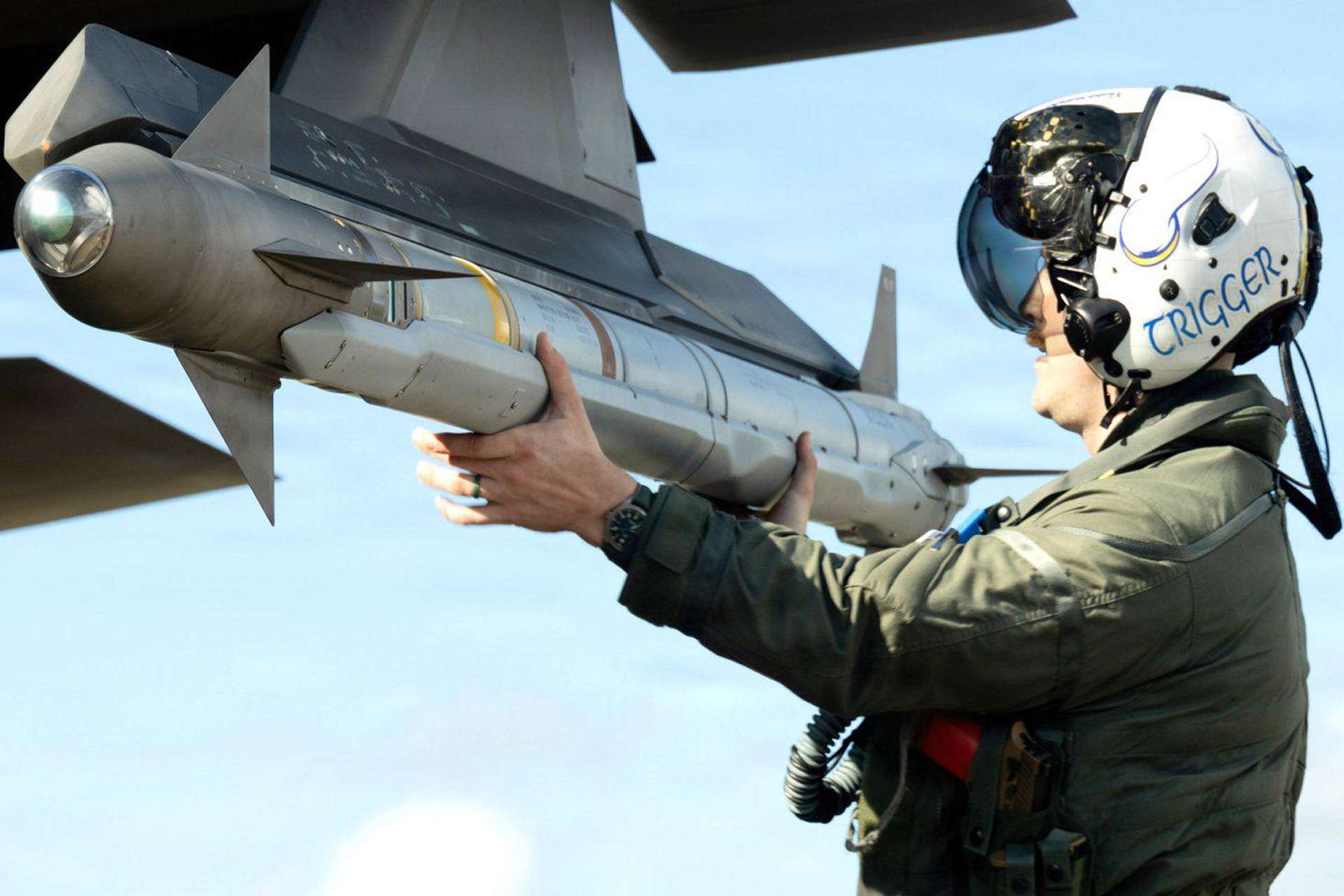
Raytheon AIM-9X Compact Variant development aims to give U.S. stealth fighters and future unmanned combat aircraft a smaller infrared-guided air-to-air missile for internal weapons bays, improving missile carriage, passive engagement options, and short-range air combat flexibility (Picture source: U.S. DoW).
The Compact Variant is therefore not only a smaller missile; it is a packaging response to a tactical constraint. Stealth aircraft lose radar-signature advantages when they carry weapons externally. Internal bays preserve survivability, but they limit missile count and impose strict separation, length, cooling, wiring, and door-cycle constraints. A reduced-length Sidewinder could allow more missiles per sortie or free bay volume for mixed loads that combine infrared-guided missiles, AIM-120 AMRAAMs, future AIM-260 missiles, electronic attack payloads, or small air-launched decoys.
The baseline AIM-9X Block II already provides the functions most relevant to internal carriage. Block II adds a redesigned fuze, digital ignition safety device, updated electronics, lock-on-after-launch, and a weapon datalink. This matters because a missile released from an internal bay may not have the same pre-launch seeker view as one mounted on a wingtip or underwing rail. The datalink allows the aircraft to provide target updates after launch until the imaging infrared seeker can acquire the target.
The armament section remains central to lethality. The annular blast-fragmentation warhead is designed to project fragments around the missile body during proximity detonation, damaging engines, control surfaces, fuel systems, sensors, and cockpit areas. Against modern fighters, the objective is usually a mission kill rather than total structural destruction. Against cruise missiles or unmanned aerial vehicles, the same warhead can break aerodynamic surfaces or propulsion components, producing a kill without requiring a direct body impact.
The seeker is the other decisive element. Unlike semi-active or active radar missiles, AIM-9X uses passive infrared homing, reducing the warning available to the target aircraft. Its imaging infrared seeker can form a target image rather than follow only a hot point source, improving rejection of flares and background clutter. Combined with high off-boresight cueing from helmet-mounted sights, this allows launches against targets away from the aircraft nose, which remains relevant in close combat, defensive counter-air, and short-notice intercepts.
The Compact Variant will have to balance volume reduction against propulsion and endgame energy. A shorter missile normally reduces propellant volume unless compensated by higher-energy propellant, altered grain geometry, reduced structural mass, or improved aerodynamics. The budget reference to improved standoff range suggests the Navy is not seeking a reduced-performance Sidewinder for bay carriage only, but a missile that can maintain or extend useful engagement distance while occupying less internal volume.
For tactical employment, the missile would change how stealth aircraft manage short-range weapons. Today, an F-35 may carry AIM-9X externally when the mission accepts increased observability, while internal loads prioritize AIM-120-class radar-guided missiles. A compact infrared missile could restore a passive close-in weapon inside a low-observable configuration. That gives pilots an option against aircraft using radar jamming, emissions control, or close-range maneuvering, and reduces reliance on radar-guided missiles for every air-to-air shot.
The value is also relevant to Collaborative Combat Aircraft such as the YFQ-42A and YFQ-44A. These unmanned combat aircraft are expected to operate forward of crewed fighters, carry sensors or weapons, and absorb higher tactical risk. A smaller infrared missile would fit aircraft with a tighter internal volume and lower gross weight, allowing them to perform escort, counter-air screen, or point-defense missions without carrying large radar-guided missiles on every sortie.
There is also a surface-launched implication. AIM-9X Block II is already linked to NASAMS and the U.S. Army Enduring Shield air defense system, where infrared missiles add another engagement option against drones, helicopters, cruise missiles, and low-flying aircraft. A compact derivative could, in principle, increase launcher density or simplify reload handling, although no public document confirms a ground-launched Compact Variant requirement.
The industrial context is important. Raytheon received a $1.1 billion U.S. Navy contract in June 2025 to expand AIM-9X Block II production, with reported plans to raise output toward 2,500 missiles per year. A Compact Variant would benefit from this existing seeker, fuze, warhead, software, and production base if the Navy avoids a clean-sheet missile.
The program’s main risk is integration discipline. A smaller missile that fits more bays but loses too much range, cooling margin, or endgame maneuverability would solve only a storage problem. A compact AIM-9X that preserves passive guidance, datalinked lock-on-after-launch, high off-boresight engagement, and usable kinematic range would give U.S. aircraft a more practical internal short-range weapon for high-threat air combat. Its importance is therefore less about replacing the existing Sidewinder than about adapting infrared air-to-air firepower to aircraft designed around stealth, autonomy, and limited internal weapons volume.